Categories
Jewelry Others

HPHT Lab Grown Diamonds

All Blue Nile diamonds are worth buying? 1,Both milky tint and brown hue:Tap to see full diamond info 2,The diamond has milkiness:Click to view detailed diamond information 3,The diamond has medium green fluorescence.:View diamond details 4,The diamond has a cavity:See the diamond details

HPHT is one of the earliest invented ways to make lab-grown diamonds, and this technology is already very mature. HPHT stands for High Pressure High Temperature, which we call high temperature and high pressure method for making cultivated diamonds. This tech copies the natural environment where real diamonds form deep inside the earth’s mantle. The machine used to make synthetic diamonds looks just like a huge pressure cooker. Inside a tiny sealed chamber, workers put carbon materials under extreme pressure, around 5 to 6 GPa, and high temperature from 1400 to 1600 degrees Celsius. Under such conditions, carbon atoms will rearrange and turn into brand new diamonds.

The production steps of HPHT diamonds

First of all, we need to get all raw materials ready. Inside a carefully built press chamber, we place high purity carbon sources, most of them are graphite, and a very small diamond seed crystal.

Next step is adding catalyst. People put metal catalyst into the chamber. It is usually alloy mixed with iron, nickel and cobalt. These metal materials can lower the energy needed for diamond to form under high heat and pressure. It helps graphite change into diamonds much easier.

Then we create the extreme growing environment. Turn on the big press machine. The chamber will get pressure as strong as the place more than 150 kilometers under the ground. The pressure keeps at 5-6 GPa, and temperature stays between 1400℃ and 1600℃ all the time.

After that comes melting and crystal growing. In this tough environment, the metal catalyst melts first, and then it dissolves the graphite carbon. The dissolved carbon atoms move through the hot liquid metal, and stick on the small diamond seed which has a little lower temperature. Little by little, the crystal grows bigger and bigger.

When the growth is done, we start to cool down and release pressure. The whole growing process can take several days or even weeks. After temperature and pressure back to normal, we take out the rough diamond crystal. At this moment, the raw diamond is always covered with metal catalyst on its surface.

The last work is cutting and polishing. Workers clean off all the metal stuff on rough diamonds. Then professional craftsmen cut and polish the crystals carefully. Finally, we get finished diamonds ready to sell.

Features of HPHT diamonds

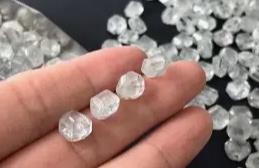
The rough crystals of HPHT diamonds usually have a special shape, mixed with cube and octahedron form. It is totally different from natural diamonds which are mostly octahedron, and CVD diamonds that look like flat plates.

HPHT tech is really good at making colorless diamonds in D-E-F color grade, and blue diamonds too. The blue color comes from boron element inside the crystal. It can also produce many other fancy colored diamonds, such as yellow and yellow-green ones.

Because metal catalyst is used during production, tiny metal inclusions can be found inside some HPHT diamonds. If you look under a microscope, these inclusions are small dark dots with metal shine. What’s more, most of these diamonds have magnetism. You can use a strong magnet to test it, the stone will be attracted.

Famous gem labs like GIA and IGI can do full identification for finished HPHT diamonds. Every official certificate will clearly mark it as Laboratory-Grown diamond, and note HPHT as its growing method. The metal inclusions and unique fluorescence pattern are the main clues for experts to tell HPHT diamonds apart.
HPHT Lab-Grown Diamonds

HPHT and CVD technology comparison

There are two main technologies to make lab diamonds in the market, HPHT and CVD. They work in different ways.

HPHT imitates the underground nature environment. It melts graphite carbon with high pressure and heat, then makes it recrystallize into diamonds. CVD uses gas as raw material. Carbon atoms separate from gas and slowly build up on diamond seeds.

Their crystal shapes are not the same. HPHT diamonds are cube or octahedron shape. CVD diamonds are flat and board-like.

In color performance, HPHT works best for colorless diamonds, blue diamonds and fancy yellow diamonds. Most original CVD diamonds have brown or grey tint. People often use HPHT treatment later to remove the bad color and turn them colorless.

For inclusions inside stones, HPHT has metal inclusions with magnetism. CVD diamonds contain graphite or other non-metal impurities, and they do not have magnetism at all.

When it comes to usage, HPHT is widely used for small diamonds, colorless stones and colored diamonds. It also acts as a color improvement process for CVD diamonds. CVD is more popular for big size diamonds and fancy shaped diamonds in the market.

HPHT is a steady and well-developed lab diamond technology. It gains great reputation for nice colorless and colored diamonds. When you plan to buy one, please check the official certificate first. Learn about its possible magnet feature, and choose honest and reliable sellers. In this way, you can get a satisfying HPHT diamond.

HPHT lab-grown diamonds are real diamonds. They share the same chemical composition, physical property, hardness and optical effect with natural diamonds. They are not diamond simulants like moissanite or cubic zirconia.

The price of HPHT diamonds is much lower. It is only one sixth to one thirteenth of natural diamonds in same grade. Even people with limited budget can afford big and high quality diamonds now. Always ask sellers for certificates from GIA or IGI. The papers can prove the diamond’s real 4C standard and confirm it is lab-grown.

Some HPHT diamonds have weak magnetism because of inner metal inclusions. You can test it with a strong neodymium magnet. This is a normal feature of HPHT diamonds, not a quality defect. But sellers should tell buyers this point clearly before deal. CVD diamonds never have magnetic property.

HPHT has great advantages on cost and efficiency when producing small melee diamonds and colored diamonds, especially blue and yellow ones. A large number of colorless CVD diamonds on sale today are processed by HPHT heat treatment to get rid of unwanted color tone.
Categories
Jewelry Others

CVD lab-grown diamond

All Blue Nile diamonds are worth buying? 1,Both milky tint and brown hue:Tap to see full diamond info 2,The diamond has milkiness:Click to view detailed diamond information 3,The diamond has medium green fluorescence.:View diamond details 4,The diamond has a cavity:See the diamond details

CVD lab grown diamonds

CVD lab-grown diamond is one of the most popular technologies for making lab diamonds right now. It is a kind of gem made by modern advanced technology, and it is exactly the same as natural diamond in all aspects. It gives people a good choice to get bigger and better quality diamonds at a much lower cost. When you plan to buy one, remember to pick reliable sellers and check official certificates carefully.

CVD stands for Chemical Vapor Deposition, its Chinese name is chemical vapor deposition method. This tech can create a natural-like environment inside a lab, and let diamond grow layer by layer. Many people describe it as growing diamonds like planting crops. Workers put a tiny diamond seed into a sealed chamber. Then they fill the space with carbon-rich gas such as methane, and add energy with microwave equipment. The carbon atoms in the gas will fall down on the seed little by little, just like snowflakes. After a period of time, these atoms build up and turn into rough diamond crystals.

The production steps of CVD lab-grown diamonds

First step is preparing the diamond seed. People place a thin slice of natural diamond or existing lab-grown diamond as the base seed, and put it into a sealed vacuum growth chamber.

Next is gas injection. The chamber will be heated up to a high temperature, around 800 degrees Celsius. Then workers pump carbon-containing gas like methane and hydrogen gas into the closed space.

The third step is gas ionization. Microwave energy is used to ionize the mixed gas, turning it into plasma with high chemical activity. In this state, carbon atoms are separated from methane molecules completely.

Then comes carbon atom deposition. Those free carbon atoms float in the chamber and settle on the diamond seed slowly, one layer after another just like fine dust.

After that is crystal growth. All carbon atoms arrange themselves following the standard diamond crystal structure. They keep stacking day after day. This process usually takes several weeks or even longer, until a complete rough diamond crystal is formed.

The last step is cutting and polishing. The rough diamond is sent to professional cutting factories. Experienced craftsmen cut and polish it in the same way they deal with natural diamonds. Finally, the raw stone becomes finished diamond products.

Main features of CVD diamonds

CVD diamonds usually have high clarity. The whole growing process is easy to control, so there are fewer metal catalyst inclusions inside. But they may have special inclusions, such as black carbon or graphite spots.

Most raw CVD diamonds show light brown or grey color tone. Most of them need extra HPHT high pressure and high temperature treatment later. This common industry process can turn them into colorless diamonds graded D to F, or near-colorless ones from G to J. This kind of post-treatment is widely used and well known in the diamond business.

This technology is good for making flat-shaped diamond crystals. It is perfect for producing fancy shapes like princess cut, cushion cut and radiant cut diamonds. However, if people want to make large round brilliant diamonds with CVD method, it will waste more raw materials.

Professional gem labs such as GIA and IGI can fully identify CVD lab-grown diamonds. They will issue formal grading certificates, which clearly mark that the diamond is lab-grown and produced by CVD technology.

CVD VS HPHT, two main lab diamond technologies

CVD and HPHT are the two leading ways to create man-made diamonds in the market. Their working principles are quite different.

For CVD technology, carbon atoms separate from gas and deposit on the seed crystal. It is like growing diamonds from gas. As for HPHT, it simulates the deep underground environment of the earth. Workers melt carbon sources like graphite under extreme high temperature and pressure, then let carbon recrystallize into diamonds.

CVD diamonds mostly form flat plate-shaped crystals. HPHT diamonds often appear in cube or octahedron shapes.

In color performance, original CVD diamonds often carry brown or grey shades. They almost need post treatment to improve color. HPHT diamonds tend to show blue or yellow hints because of boron and nitrogen elements inside, while it is also easy to make colorless HPHT diamonds.

In terms of clarity, CVD diamonds generally have better clarity, and their main inclusions are carbon spots. HPHT diamonds may contain metal catalyst inclusions. Some of them can be slightly attracted by strong magnets.

Nowadays, CVD takes a larger share in the market, especially for medium and large sized diamonds. HPHT is a more traditional method. It is widely used for small diamonds and color enhancement treatment.

It is very important to know that CVD lab-grown diamond is real diamond. It shares the same chemical composition, physical features and optical performance with natural diamonds. Both are pure carbon cubic crystals. Its Mohs hardness reaches level 10. The fire and sparkle of CVD diamonds are no different from natural ones at all.

The price of CVD lab-grown diamond is only one sixth to one fifteenth of natural diamond with the same 4C grade. It has an extremely high cost performance. When shopping, always choose diamonds with official certificates from GIA, IGI and other authoritative organizations. These certificates can prove the true quality of 4C standards, and clearly label the stone as Laboratory-Grown diamond.

Almost all colorless CVD diamonds sold on the market have gone through HPHT post-treatment to remove brown color. This is a normal and acceptable optimization method in the industry. Honest and trustworthy sellers should take the initiative to tell customers about this treatment. On GIA certificates, there will be notes saying Indications of post-growth treatment to record this situation.

As a high-tech product, producing CVD diamonds causes much less damage to the environment compared with traditional diamond mining. It also avoids the problems of conflict diamonds. It fits the eco-friendly and ethical consumption ideas of modern people.

Categories
Others

Diamond Inclusions – Cloud

All Blue Nile diamonds are worth buying? 1,Both milky tint and brown hue:Tap to see full diamond info 2,The diamond has milkiness:Click to view detailed diamond information 3,The diamond has medium green fluorescence.:View diamond details 4,The diamond has a cavity:See the diamond details

Cloud is a very common yet special type of clarity inclusion inside diamonds. It may barely change a diamond’s look, or it can cause serious problems. So you need to learn about it carefully before buying.

What is a Cloud?

A cloud is not a single dot inclusion. It forms when countless tiny pinpoints gather together. These tiny spots are packed so closely that they look like a hazy mist under a 10x magnifying glass. That is why people name this kind of inclusion “cloud”.

In appearance, a cloud usually shows as a pale grey blurry area with no clear edges. It looks just like a soft fog trapped inside the diamond.

How Clouds Affect Diamonds

The influence of clouds varies a lot. It all depends on their density, size and position inside the stone.

GIA report mark cloud inclusion

Mild impact (Most common cases)

If a cloud is made of widely spaced tiny pinpoints and covers only a small area, it will not hurt the diamond’s clarity grade or outer look.

It may just make a small part of the stone a little less transparent under magnification. You cannot see it with your naked eye at all. It will not reduce the diamond’s fire and brightness. Such clouds often appear in diamonds graded VS or SI clarity.

Severe impact: Milky diamond

This is the most risky situation you must watch out for.

When a cloud is extremely large and dense, spreading across most parts of the diamond, it creates a milky haze effect. In the trade, we call such stones milky diamonds.

A milky diamond looks foggy all over, as if covered by a thin white mist. Its transparency and shine drop sharply. The stone turns dull and lifeless. It loses sparkle and fire completely.

Milky diamonds never worth their certified clarity grade. For example, a VS2 diamond with heavy cloud may look even worse than a clean I1 diamond. This is a big trap for buyers, and you should try your best to avoid it.

How to Identify Clouds on GIA Reports

A GIA diamond report is the best tool to check cloud risks.

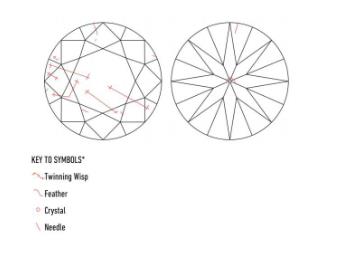
For diamonds over 1 carat, the report includes a detailed clarity plot. On this diagram, large cloud areas are circled with red dash lines. Red marks stand for internal inclusions, and the label next to it will clearly write “Cloud”.

You should pay extra attention to the comments section on the report. This part tells you whether the diamond is likely to turn milky.

If you read notes like Clouds are not shown or Pinpoints are not shown, you need to stay alert. This means there are too many clouds or pinpoints to mark one by one on the plot. In this case, the risk of getting a milky diamond becomes very high.

Practical Tips for Buyers

Do not worry too much about clouds. Most diamonds with cloud inclusions are fine to purchase, especially those graded VS or higher clarity.

Learn to read professional diamond certificates. Always pick diamonds with official reports from GIA, IGI or HRD. When you get the report, check two key parts first.

Look at the clarity plot to see if the cloud covers a large space. Then read the comments line by line. If you find Clouds are not shown or similar words, think twice before you pay.

Choosing a trustworthy seller is also important. Reputable dealers will filter out milky diamonds in advance. You can ask the seller directly whether the stone is free of milky, brown and green tint. It is better to put this promise in writing on your guarantee document.

If possible, check the real diamond in person. Turn the stone under natural light and watch its performance. A good diamond stays clear and sparkly all the time. If it always looks foggy and never shines bright, it definitely has milky issues. For online shopping, ask the seller to send real shooting videos of the diamond.

To sum up, cloud is a clustered inclusion seen in many diamonds. Sparse clouds do no harm, but large and thick clouds are the main cause of milky diamonds, which ruin shine and value. Read GIA clarity plots and comments carefully, and shop with reliable merchants. In this way, you can successfully stay away from problematic milky diamonds.

Categories
Others

Diamond inclusion – twinning wisp

All Blue Nile diamonds are worth buying? 1,Both milky tint and brown hue:Tap to see full diamond info 2,The diamond has milkiness:Click to view detailed diamond information 3,The diamond has medium green fluorescence.:View diamond details 4,The diamond has a cavity:See the diamond details

Twinning Wisp is a standard term used on diamond grading reports, such as GIA certificates. It is a common natural growth feature inside diamonds, and it is also classified as one type of inclusion. Many people regard it as a regular diamond flaw. To help you fully understand twinning wisp, we will explain this feature in simple points below.

First, let’s talk about how twinning wisp form. Diamonds grow deep underground under extreme high temperature and high pressure. Their crystal structure cannot always grow in a perfect and continuous way. Sometimes the growth direction of crystal lattice will change suddenly, and then a twin crystal structure comes into being. Tiny impurities and other crystal defects may get trapped on the surface of this special structure. When these small substances connect together into lines or patches, a twinning wisp is created inside the diamond.

twinning wisp inclusion

Next is the appearance of twinning wisp. When you look at it under a magnifying glass, you will see lines in white, off-white or transparent color. These lines can be straight, curved or even form a net shape. It never looks like a single small dot. Instead, it shows as thin lines or flat areas inside the stone.

Many buyers wonder: how does twinning wisp affect a diamond? We analyze the influences from three different parts.

The first part is the impact on clarity grade. Top grading labs like GIA clearly mark twinning wisp as an internal inclusion. Professional graders will check its size, quantity, visibility and position carefully. All these factors decide how much it affects the diamond’s final clarity grade. A small and faint twinning wisp will not cause big trouble for high clarity grades, such as VVS and VS. But if the lines are very obvious, or many wisps cross each other inside, the clarity grade will drop down to SI or even I level.

The second part is about durability risk, and this is the most important point you need to know. A twinning wisp is actually a weak zone in the diamond’s structure. If the wisp runs all the way to the girdle or the outer surface of the diamond, the stone will be much easier to crack along this weak line. The risk is higher during daily wearing or diamond setting work. Even professional diamond cutters face big trouble with twinning wisp. The stone is easy to split along the weak structure when cutting and polishing.

The third part is visual effect. In most cases, twinning wisp cannot be seen by naked eyes. You can only find them clearly under a 10x magnifier. Only in very rare cases, when twinning wisps are extremely dense inside, the diamond will look a little hazy. Just like milky diamonds, dense twinning wisps will reduce the stone’s transparency and fire.

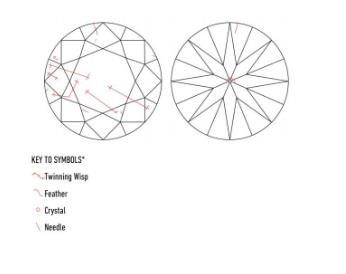
Now let us learn how twinning wisp is shown on a GIA certificate. On the clarity plot diagram of GIA report, twinning wisps are marked with red lines or red areas. Red color stands for internal features on standard grading drawings. The words “Twinning Wisp” will also be written in the notes section beside the diagram.

Here are some useful tips for all diamond customers:

Do not feel too worried about twinning wisp. It is a very common growth feature, and lots of natural diamonds have this inclusion. The key is to check the actual condition of the wisp, not just hear the name.

Learn to read your GIA certificate properly. You can trust the official clarity grade first. If the grade is SI1 or above, including VVS, VS and SI1, normally all inclusions like twinning wisp are invisible to naked eyes. They will not ruin the diamond’s beauty.

Checking the clarity plot is another key step. After you get the certificate, take time to look at the drawing carefully. If the red lines which mark twinning wisp reach the diamond’s edge or girdle, you must pay close attention to the durability risk. You can ask trusted sellers for more details about this stone.

Always choose shops with good reputation. Reliable jewelry sellers will pick out diamonds with serious structural risks in advance. They will also explain all internal features and possible influences to you honestly.

Do not reject a diamond just because it has twinning wisp. You need to judge a stone in all aspects. Cut is the most important factor for diamond sparkle, followed by color, carat weight and overall cost performance. A diamond with tiny twinning wisp but Excellent cut will shine much brighter than a totally clean diamond with poor cut quality.

To make a simple summary. Twinning wisp is a natural growth mark of diamonds. As a kind of inclusion, it will influence clarity grading. The biggest concern is whether the wisp locates near the edge, which may bring crack risks. You can judge the situation easily by reading the clarity plot on GIA certificate. With professional grading reports and trustworthy sellers, you can definitely pick out diamonds that are safe, beautiful and great value for money.

twinning wisp diagram

Categories
Blue Nile

Blue Nile Scottsdale Arizona Fashion Square Showroom

All Blue Nile diamonds are worth buying? 1,Both milky tint and brown hue:Tap to see full diamond info 2,The diamond has milkiness:Click to view detailed diamond information 3,The diamond has medium green fluorescence.:View diamond details 4,The diamond has a cavity:See the diamond details

Scottsdale Fashion Square is one of the largest and most luxurious shopping malls in Arizona. It also stands as the core place for high-end retail business in Scottsdale.

》》》》Blue Nile Showroom Book an Appointment《《《《

This mall gathers a great number of world-famous luxury brands. You can find well-known names here, including Neiman Marcus, Nordstrom, Bloomingdale’s, Gucci, Louis Vuitton and Tiffany & Co. Blue Nile also opens its showroom inside this mall, which clearly shows the high-end market position of this shopping center. The whole mall has a modern style. It is spacious and bright everywhere, bringing customers a top-class shopping experience.

Blue Nile is one of the biggest online diamond and jewelry retailers across the globe. It wins wide popularity for its low prices and rich product choices.

Blue Nile Scottsdale Fashion Square Address:

7014 E Camelback Rd STE 1252

Scottsdale, AZ 85251

It is placed on Level 1, right next to Nordstrom store.

Contact Number

1-877-377-1548

Many people ask if they need to book an appointment before visiting this jewelry store in Arizona. The answer is no, you can walk in directly. Still, we do suggest you make an appointment in advance.

Showroom Opening Hours

Please note that the business hours may change sometimes. It is better for you to check the latest time or call the store before your visit.

Friday: 10:00 AM – 9:00 PM

Saturday: 10:00 AM – 9:00 PM

Sunday: 10:00 AM – 6:00 PM

Monday: 10:00 AM – 9:00 PM

Tuesday: 10:00 AM – 9:00 PM

Wednesday: 10:00 AM – 9:00 PM

Thursday: 10:00 AM – 9:00 PM

How the Showroom Works

This place is totally different from regular jewelry shops. It acts more like a display room instead of a common store. You will not see piles of finished jewelry goods here. Only some classic ring settings and necklace samples are put on display for guests to view.

The biggest strength of Blue Nile lies in its huge online inventory. Professional consultants will sit with you and use computer systems to look through thousands of diamond choices together. They will also help you pick out the items you like.

What You Can Do Here

Trying on jewelry in person is the biggest advantage of this physical showroom. You can put on rings of different styles and sizes, and feel how they look on your hand. This special experience can never be replaced by online shopping.

You can also get face-to-face professional advice from the staff. They will explain the four main standards of diamonds, which are cut, color, clarity and carat weight. All your questions about diamonds will get clear answers here.

If you have favorite diamonds, the consultants can show you high-definition pictures of GIA certificates. They will tell you every detail marked on the certificates too.

Once you decide on your diamond and ring setting, the staff will help you place an order right away. The goods will be shipped safely from the warehouse to your home, or you can choose to pick them up at the showroom.

Important Tips

Do not expect to see full cabinets of ready-made jewelry like what you see in Tiffany stores. This showroom mainly focus on consultation and jewelry trying. Most of the final deals are finished online.

Walk-in visitors are welcome, but booking ahead is highly recommended. When the store is busy, especially on weekends, an appointment can make sure a consultant serve you exclusively.

You can check prices on your phone anytime during your stay. Feel free to compare prices on Blue Nile official site or other online diamond sellers such as James Allen. In this way, you can get the most reasonable price.

Final Suggestions

If you plan to buy diamond rings in Scottsdale, the Blue Nile showroom in Scottsdale Fashion Square is a wonderful choice. You get three great benefits here: trying jewelry by yourself, getting professional guidance, and enjoying the cost-effective price from Blue Nile online. After shopping, you can also wander around the mall or have a nice meal. The whole experience is really pleasant.

Here are some simple preparations before you come. First, book an appointment early to guarantee good service. Second, learn a little about diamond 4C rules, and set a rough budget and personal preference. Third, browse the official website of Blue Nile ahead of time, and save some diamonds you love as options.

The Blue Nile showroom in Scottsdale Fashion Square perfectly combines the low price of online diamond shopping and the sense of security from offline experience. It is really a great spot for diamond lovers.

Blue Nile Arizona Scottsdale Fashion Square Showroom
Categories
Others

What are milky, brown and green tints in diamonds?

All Blue Nile diamonds are worth buying? 1,Both milky tint and brown hue:Tap to see full diamond info 2,The diamond has milkiness:Click to view detailed diamond information 3,The diamond has medium green fluorescence.:View diamond details 4,The diamond has a cavity:See the diamond details

Have you noticed that some diamonds share exactly the same 4C grades, but their prices vary a lot? Today we are going to talk about one key reason behind this gap: milky, brown and green tints. This is a common term in the diamond industry for flawed stones. These unwanted visual issues will make a diamond look dull, lose its fire and transparency, carry odd hues and stop it from sparkling brightly.
Actually, this phrase stands for three different undesirable features. Let’s break them down one by one.
First is milkiness. A milky diamond looks foggy, as if covered by a layer of white mist, and it never looks clear.
What causes a diamond to turn milky?

It is not caused by one big inclusion inside the stone. Instead, there are countless tiny clouds spread all over the diamond. There are so many of these cloud inclusions that lab cannot mark each one out on the clarity plot of the certificate. These tiny clouds scatter the light that enters the diamond. As a result, the stone loses its brightness and fire. Milky appearance greatly ruins a diamond’s clarity and sparkle. It is the most frequent flaw among the three, and you must try your best to avoid it when shopping.

milkiness diamond

Second comes the brown tint. Such diamonds carry obvious brown or coffee-like tones.
Where does the brown color come from?

It is part of the diamond’s natural body color. According to the GIA color grading scale from D to Z, diamonds from grade K down will show visible yellow tones to the naked eye. The brown tint is an extra ugly tone mixed with yellow. It makes the diamond look dark and dirty, weakening fire and transparency. It also ruins the pure white look of the stone, and even makes it seem old and worn.

Third is the green tint. It means a colorless diamond has faint green hues on its surface. Please note this is not the vivid fancy green diamonds which are extremely valuable collectibles. The green we talk about here is an unpleasant greyish-green secondary color. It usually appears together with milky and brown features. This bad tint lowers the overall color quality, makes the diamond look strange and dim, and destroys its pure color tone.

green brown milky tint diamond

Some low-quality diamonds may have one or more of these three flaws at the same time. Professionals divide them into three levels: slight, moderate and heavy. Even if these diamonds have nice certificate ratings, such as G-H color and VS clarity, their real look and market value are much lower than normal diamonds with the same grades.
Now, how can you stay away from diamonds with milky, brown or green tints?
Authoritative certificates are the first step. Always pick diamonds certified by GIA, IGI or AGS. However, these reports will not directly label a diamond as milky or tinted. You need to learn to check the details carefully.
First, read the clarity characteristics section on the certificate. If you see the word Cloud, plus notes like Cloud is not shown or Pinpoints are not shown, or a large number of twinning wisps are recorded, you need to be very careful. These signs often mean massive tiny inclusions inside, which will create a milky effect.
Second, do not choose diamonds with too low color grades. Pick H color or higher, this can largely prevent obvious yellow and brown tones.
Third, buy from trustworthy sellers. Choose stores that provide real photos and videos of each diamond, and clearly promise no milky, brown or green tints. Platforms like Blue Nile and James Allen post detailed videos for every single stone. Watching these videos is the most direct way to avoid problematic diamonds.
To sum up, milky, brown and green tints are big traps for diamond buyers. Nice certificate grades can hide poor actual performance. Always stay alert and check carefully before you pay.
Categories
Others

Does Hearts and Arrows mean the diamond is of superior quality?

All Blue Nile diamonds are worth buying? 1,Both milky tint and brown hue:Tap to see full diamond info 2,The diamond has milkiness:Click to view detailed diamond information 3,The diamond has medium green fluorescence.:View diamond details 4,The diamond has a cavity:See the diamond details

What exactly is Hearts and Arrows? Hearts and Arrows is a special optical effect that appears on round brilliant cut diamonds. You cannot see it with your naked eyes. A professional tool is needed to view this pattern clearly.

When you look from the bottom of the diamond, which is called the pavilion, you can see eight arrow shapes. These arrows line up in perfect symmetry. If you turn the diamond over and look down from the top table, you will see eight neat heart shapes. People use a special magnifier, named hearts and arrows scope, to watch this unique view. Normal glasses or magnifiers cannot show the full pattern well.

Many buyers have a common question. Is a Hearts and Arrows diamond always a high-quality one? The answer is no. This effect alone cannot prove the overall quality of a diamond. It only tells you that the diamond has great symmetry.

The value of a diamond is judged by the world famous 4C standard. They are Carat weight, Color, Clarity and Cut. A diamond can have perfect Hearts and Arrows pattern, but its proportions may be very bad. For example, if the pavilion is too deep or too shallow, light will leak out from the sides or bottom. In this case, the diamond will look dull and dark. Such stones are never top grade.

Hearts and Arrows only connect with Symmetry in diamond cut. To form clear hearts and arrows, the cutting angles, sizes and symmetry must be extremely accurate. For this reason, most diamonds with this effect get high symmetry grades, such as Very Good or Excellent.

Hearts and Arrows

Even so, it cannot stand for other key parts of diamond cutting. The first one is Proportions. It includes table size, crown angle, pavilion depth and more. These details directly affect three important features: Brilliance, Fire and Scintillation. A diamond with perfect symmetry but poor proportions will never shine brightly. The second part is Polish. It means how smooth the diamond surface is.

Here is an important knowlege for all buyers. A diamond with Excellent Cut grade already owns top-level symmetry and polish. Most of them can show clear Hearts and Arrows. But the rule does not work the other way around. A diamond marked with Hearts and Arrows may not get an overall Excellent Cut grade. Having hearts and arrows is a possible result of Excellent cut, not a must.

Now let’s talk about shopping tips. Should you pay extra money just for Hearts and Arrows?

Do not chase this concept blindly. Many jewelry sellers use it as a marketing trick to rise prices. You should focus more on the official report from famous labs like GIA. Always check the full 4C grades on the certificate first.

Put Cut grade on your top list when you choose diamonds. If you have enough budget and want the best shine and fire, pick diamonds with GIA Excellent Cut. Almost all of them present beautiful Hearts and Arrows, and their light performance is the best you can get.

Diamonds with Very Good Cut have better cost performance. They may also show hearts and arrows, but their shine will be a little weaker than Excellent ones.

You can treat Hearts and Arrows as a nice romantic extra. It carries a lovely meaning: wholehearted love and forever romance. It is a wonderful symbol for couples. As long as you do not pay unreasonable extra cost for it, it is a nice plus point.

All in all

Hearts and Arrows is just an optical phenomenon. It only reflects good symmetry of a diamond. It is a bonus, not a necessary standard. You should not make your final choice only based on this feature.

GIA Excellent Cut is the highest rating for overall cutting quality. It covers proportions, symmetry and polish all together. It makes sure the diamond has the best brilliance and fire. Cut is the most important factor that decides how beautiful a diamond looks. You need to take it as your first choice.

Bottom Line

Here is the final suggestion for you. Within your budget, choose diamonds with GIA certificate and Excellent Cut grade first. In this way, you will get a high-quality diamond with amazing shine. It will most likely have perfect Hearts and Arrows as well. This is the smart way to buy a diamond.

You may run into problems when selecting diamonds. Welcome to contact us, and our team will provide you with professional and reliable advice.

Categories
Jewelry

How to Choose Wedding Bands

All Blue Nile diamonds are worth buying? 1,Both milky tint and brown hue:Tap to see full diamond info 2,The diamond has milkiness:Click to view detailed diamond information 3,The diamond has medium green fluorescence.:View diamond details 4,The diamond has a cavity:See the diamond details

Wedding bands, also known as wedding rings, are exchanged by couples during the wedding ceremony and worn every day after marriage. They stand for marital promises, eternal love and the lifelong bond between two people.

Differences Between Wedding Bands and Engagement Rings

An engagement ring usually features a large center diamond or other gemstones. It has an elegant and fancy look, and people use it for proposing marriage.

In comparison, wedding bands adopt simpler and more understated designs. Comfort and durability are the top priorities, since they are meant to be worn all day long throughout married life.

Key Points to Choose Wedding Bands

There are many factors to think about when picking wedding bands. Here are the most important tips for you.

1. Metal Type

The metal you choose decides durability, color and total price.

18K gold comes in rich colors, including yellow gold, white gold and rose gold. It looks brilliant and carries great value. However, this metal is relatively soft, so scratches are easy to appear during daily wear. It suits people who value metal quality and diverse colors, and do not do heavy work regularly.

14K gold has higher hardness and great wear resistance. It is cost-effective and also offers various color choices. Its gold content is 58.3 percent, so its color is a little lighter than 18K gold. This is the first choice for most buyers. It balances beauty and durability perfectly for daily use.

Platinum is the most durable and rarest precious metal. It keeps natural pure white color forever and hardly causes skin allergies. Its downsides are the high price and heavy weight. It is ideal for people who pursue top durability, have sensitive skin, or love the solid feel of platinum.

Palladium looks quite similar to platinum. It is lighter and much cheaper, and also friendly to sensitive skin. But it is not as rare as platinum and not widely available on the market. It is a nice pick if you like platinum’s appearance but have a limited budget.

Titanium and tungsten metal are extremely hard and wear-resistant. They are lightweight and low-priced as well. Yet rings made of these two materials cannot be resized. Their styles are quite limited, and they do not have the collection value of precious metals. They fit people with physical jobs, those who want maximum durability, or shoppers on a tight budget.

Suggestion: 14K gold and platinum are the most classic and practical choices for wedding bands.

2. Style & Design

Plain bands have no diamonds or carvings on the surface. They are super comfortable, timeless and never go out of style. A lot of couples love this classic design.

Half pave bands are set with small diamonds on the front half of the ring, while the inner side stays plain. They shine beautifully and cost less than full pave styles. It is a great balance of sparkle and budget.

Full pave bands are fully covered with tiny diamonds all around the band. They are the most eye-catching and glamorous. But you cannot resize rings of this style. What is more, the small stones may get loose after long-time wear, so regular inspection is necessary.

Engraved bands allow you to carve meaningful dates, words, fingerprints or special patterns on the inside or outside. This makes your wedding bands unique and full of personal memories.

You also need to consider matching effects if you plan to stack your wedding band with an engagement ring. Make sure the two rings look harmonious when worn together.

3. Comfort

Wedding bands are worn for almost the whole day, so comfort is very important.

Choose rings with curved comfort fit inner band. The curved inner edge fits fingers much better than standard flat bands and will not feel tight or uncomfortable.

Band width and thickness also matter. Wide bands over 6mm have a strong presence, which may not suit people with slim fingers. Narrow bands between 4mm and 5mm look delicate and graceful. It is always wise to try on different widths in person.

Try on rings! This point cannot be stressed enough. You and your partner should visit physical stores and test real products. Rings may look totally different in pictures and when you actually wear them.

4. Ring Size

Finger size changes slightly all day, affected by temperature and water intake. It is recommended to measure your size in the afternoon or evening, when fingers are usually a little swollen. In this way, your ring will never feel tight at any time.

5. Budget

The price of wedding bands varies a lot, ranging from a few thousand to over one hundred thousand. Set a proper budget in advance, and it will help you narrow down choices quickly.

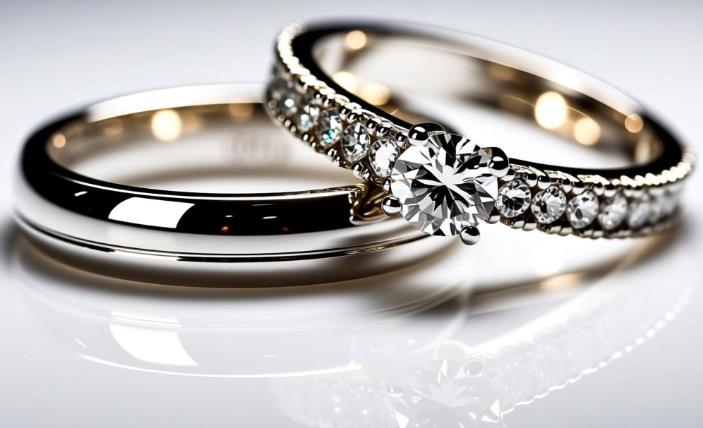
Wedding Band

Recommended Shopping Process

First, communicate with your partner. Talk about your ideas on metal, style and budget.

Second, collect information. Browse official brand websites or local jewelry stores, and save pictures of styles you like.

Third, try on rings in physical stores. This is the most important step. Book an in-store appointment, wear your favorite styles, and feel the comfort, weight and overall look.

Fourth, make the final decision. Take wearing experience, price and after-sales service into consideration. Check standard marks inside the ring, such as metal logo and brand stamp. If you plan to buy from online stores like Blue Nile or James Allen, record your exact ring size clearly.

Finally, learn about after-sales policies. Ask about free cleaning, regular maintenance, diamond setting checks, resizing service and lifelong support terms.

Choosing wedding bands is a warm journey filled with love. There is no such thing as the best ring, only the most suitable one for you and your lover.

These rings carry your unique stories and lifelong promises. Personal preference and daily practical use should be your top concerns. Wedding bands are not only symbols of love, but also daily jewelry you wear every single day. Wish you find the perfect pair to witness your sweet love.

Categories
4C

Laboratory-Grown Diamond IGI Certificate

All Blue Nile diamonds are worth buying? 1,Both milky tint and brown hue:Tap to see full diamond info 2,The diamond has milkiness:Click to view detailed diamond information 3,The diamond has medium green fluorescence.:View diamond details 4,The diamond has a cavity:See the diamond details

The IGI certificate is one of the most important document you will meet when buying diamonds, no matter natural diamond or lab-grown diamond.

IGI stands for International Gemological Institute, also known as International Gem Academy. It was founded in 1975, and it is one of the world’s largest independent gemological laboratories. Just like GIA, short for Gemological Institute of America, it is a highly recognized authoritative appraisal organization in the jewelry industry.

IGI is famous for stable grading, high reliability and continuous innovation. It is a leader and pioneer in the field of lab-grown diamond certification. You can think IGI as a neutral and professional gem quality inspection institute. They do not buy or sell diamonds at all. They only provide professional testing and grading services, then issue official reports. This report is what we call the IGI certificate.

Nowadays, IGI is the mainstream and most trusted certificate for lab-grown diamonds. Its reports are clear, detailed and easy to read. If you buy diamonds from trusted channels and check them in person, a lab-grown diamond with IGI certificate is a safe and smart investment.

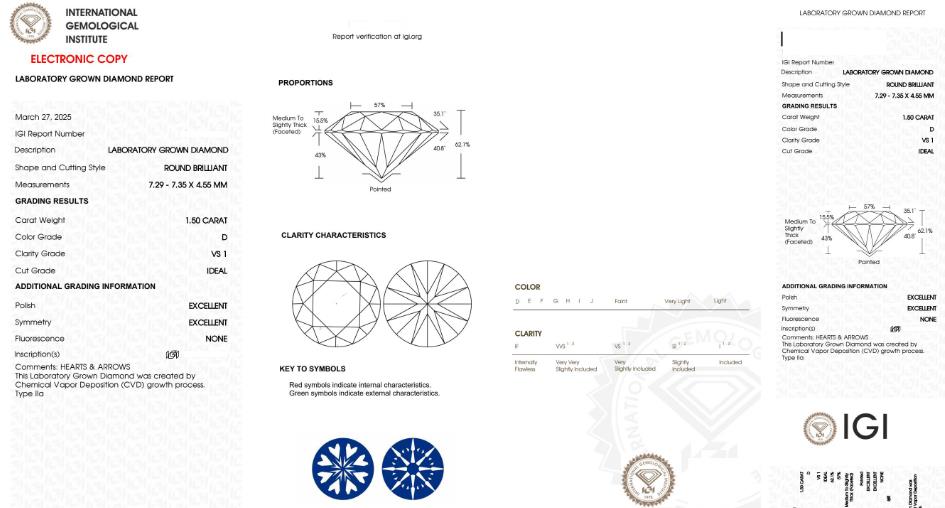
The IGI certificate of lab diamond

Core Functions & Contents of IGI Certificate

This certificate acts like the diamond’s ID card and health check report. It records all features and quality grades of the diamond in detail. The core evaluation rules are the worldwide standard 4Cs.

  • Natural Diamond: The certificate will mark this clearly.
  • Laboratory-Grown Diamond: The top of the certificate will print “LABORATORY GROWN DIAMOND” obviously. It keeps all information fully transparent and avoid confusion. This is a big reason why IGI is so popular in lab-grown diamond market.

Carat Weight: The weight is accurate to two decimal places, which tells you the real size of the diamond.

Color Grade: Graded from D (colorless) to Z (light yellow or brown). The higher the grade, the whiter the diamond.

Clarity Grade: It judges the quantity and visibility of inclusions and surface marks. The grades range from FL (Flawless) to I3 (Imperfect).

Cut Grade: Mainly for round diamonds. It evaluates proportion, symmetry and polish. The grades include Excellent, Very Good, Good, Fair and Poor. A good cut decide how brilliant the diamond is.

Measurements: It shows the diameter for round diamonds, or length, width and height for fancy shaped diamonds, using millimeter as unit.

Proportions Diagram: It lists detailed data such as crown angle, pavilion angle and table percentage, for professional reference.

Clarity Characteristics Plot: It draws the type and exact position of internal and external features, very intuitive to see.

Fluorescence: It notes whether the diamond emits blue or other color light under ultraviolet light, as well as its strength.

Advantages & Discussions about IGI Certificate

Advantages

  1. Wide market acceptanceIGI is the most common and widely accepted certificate for lab-grown diamonds. Most lab-grown diamond brands choose IGI certification.
  2. Clear and transparentIt strictly separate natural diamonds from lab-grown diamonds, so customers will never get mixed up.
  3. Complete quality gradingIt uses the same full 4C grading system as natural diamonds, easy for customers to compare and pick.
  4. Global service networkIGI runs laboratories in major diamond hubs around the world, such as Antwerp, New York and Mumbai. It has great global influence.

Points to note (Common discussions)

Some insiders and buyers say IGI’s standard is a little looser than GIA, especially on color and clarity grading for lab-grown diamonds. For example, a lab-grown diamond graded VS1 by IGI may be equal to VS2 under GIA rules.

This is not dishonest. It is just a slight difference in grading scale. The most important thing is that IGI keep consistent standards within its own system. A diamond graded F color by IGI is definitely whiter than another IGI G color diamond.

GIA also issues lab-grown diamond certificates, but it mostly uses simple number grades instead of traditional letter grades. Such format is less familiar to public. On the contrary, IGI keeps the classic letter grading system, which is easier for ordinary customers to understand.

Shopping Advice for Consumers

A diamond with IGI certificate means its quality has been verified by a third-party authoritative institute. The certificate is trustworthy.

However, do not only look at the data on paper. A certificate cannot fully show the real beauty of a diamond. You must check high-definition photos or 360-degree videos by yourself. Your own eyes are the best judge. Check its sparkle, fire and visible flaws carefully.

For fancy shaped diamonds like oval and pear shape, please check if there is an ugly bow-tie effect.

Learning the small differences between IGI and GIA grading styles will help you make wiser decisions. Anyway, the IGI certificate is still a very valuable reference.

Always buy diamonds from reputable retailers. Make sure they provide complete original certificates and reasonable return policy.

Categories
Others

Bow-Tie Effect of Diamonds

All Blue Nile diamonds are worth buying? 1,Both milky tint and brown hue:Tap to see full diamond info 2,The diamond has milkiness:Click to view detailed diamond information 3,The diamond has medium green fluorescence.:View diamond details 4,The diamond has a cavity:See the diamond details

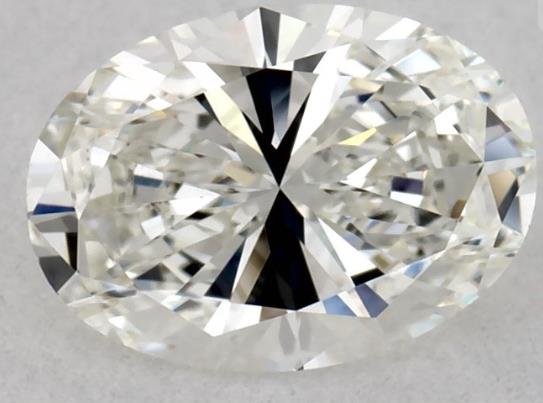
The bowtie effect refers to a dark shadow area that looks like a bow tie on the table of fancy cut diamonds. It can be seen on many irregular shaped diamonds, such as oval diamonds, heart diamonds and pear shape diamonds. This bowtie shadow usually stretches across the middle part of the stone, splitting the diamond into two halves visually.

This is basically an optical phenomenon. It happens because light cannot reflect and refract properly inside the diamond. It is not caused by inclusions or impurities inside the diamond itself. The bowtie effect is quite common and matters a lot when you pick fancy shaped diamonds, so you need to pay extra attention to it during selection.

What causes the bowtie effect?

The main reason for the bowtie effect is improper diamond cutting proportions.

First of all, about light leakage. Under ideal conditions, light enters from the top of a diamond. It bounces several times inside the stone and finally refracts back out from the top. This process creates the brilliant sparkle that diamonds are famous for.

Secondly, poor cutting quality will lead to problems. If a diamond is cut too shallow or too deep, or its pavilion angle is not correct, light cannot reflect effectively inside. When light escapes from the sides or the bottom of the diamond, a dark area with no returning light will form right away.

Thirdly, the shape of the diamond also plays a part. Diamonds like oval, pear and marquise have a large length to width ratio. Their elongated shape makes light loss more likely in the center area, which then forms a clear bowtie shadow.

Bow Tie diamond

Which diamond shapes are most likely to have the bowtie effect?

The bowtie effect appears most frequently on elongated fancy cut diamonds. The most typical ones are oval cut, pear cut and marquise cut diamonds. It also shows up on radiant cut diamonds quite often.

Sometimes you can also find this shadow on cushion cut and emerald cut diamonds, but the bowtie here is usually not obvious. Thanks to its perfect symmetry, round brilliant cut diamonds almost never have the bowtie effect.

Can we completely avoid the bowtie effect?

Nearly all elongated fancy shaped diamonds have the bowtie effect to some degree, and it is almost impossible to get one with no bowtie at all. So our goal is not to hunt for a totally bowtie-free diamond. Instead, we should choose a stone where the bowtie is faint and not noticeable at all.

How to judge and choose diamonds with the bowtie effect

Seeing the diamond in person is the most important step. Pictures and diamond certificates can not fully show the real look of the bowtie effect. You have to watch real videos or check the physical diamond, and view it from different angles under various lighting conditions.

You also need to tell the severity of the bowtie. A slight bowtie only has a very pale grey shadow. It will not ruin the beauty and sparkle of the diamond, and this kind is totally acceptable.

If the bowtie is obvious, you can see a clear dark grey or black shadow right in the center. It looks like a thick black bowtie across the stone, which greatly damages the appearance and value of the diamond. You should stay away from diamonds like this.

A severe bowtie means there is a huge, deep black area on the diamond. The stone looks flawed and dull. Such diamonds must never be chosen.

It is wise to buy diamonds from reliable sellers. Well-known online jewelry retailers can provide 360-degree high-definition videos of each diamond. These videos let you check the bowtie condition clearly, so remember to watch them carefully before you make a purchase.

Professional cutting also helps a lot. Experienced diamond cutters will adjust the proportions, symmetry and facet angles to reduce the bowtie effect as much as they can. Choosing diamonds with Excellent or Very Good cut grades is a good way to avoid strong bowtie shadows.

When you check a diamond, rotate it and observe from different sides. If the dark shadow stays prominent from most views, you’d better keep looking for other options. Keep searching until you find a nice diamond where the bowtie is barely visible.We can also help you pick diamonds with mild bowtie effect on Blue Nile. Feel free to contact us via the form below.