Moussaieff Red Diamond

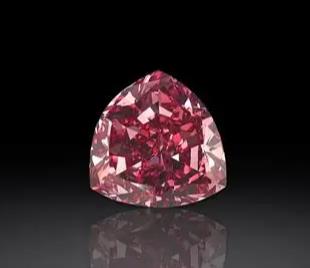
The Moussaieff Red Diamond is a breathtaking Fancy Red gem, widely regarded as one of the world’s largest and finest red diamonds with an iconic legendary standing across gemology and the global jewelry trade.

Blue Nile diamonds are worth buying:1,Both milky tint and brown hue:Tap to see full diamond info 2,The diamond has milkiness:Click to view detailed diamond information 3,The diamond has medium green fluorescence.:View details 4,The diamond has a cavity:See details

Moussaieff Red Diamond

Unearthed as a 13.9-carat rough stone from a Brazilian mine in the 1990s, the raw crystal was meticulously cut and polished by William Goldberg Diamond Corp., refined down to a finished 5.11-carat gem originally named the Red Shield Diamond before being acquired by London-based luxury jeweler Moussaieff Jewellers and renamed after the brand. Certified by GIA, it boasts top-tier specifications: a coveted Fancy Red color grade—the highest ranking for red diamonds on GIA’s color scale, Internally Flawless (IF) clarity which is exceptionally scarce for colored stones, and a unique modified cushion triangular brilliant cut that optimizes fire and light performance. Pure red is the rarest hue among all fancy colored diamonds, with nearly all natural red specimens weighing under one carat; the Moussaieff Red remains the only known Fancy Red diamond above five carats, its unmatched pairing of Fancy Red and IF clarity a geological miracle linked to extreme mantle pressure and lattice plastic deformation deep within the Earth, whose exact color-forming mechanism is still actively researched by gemologists. Never listed for public auction or open market sale and lacking an official fixed price, gem experts value it well above tens of millions of US dollars (valued at roughly $8 million in the early 2000s, with its worth surging alongside the booming colored diamond market in subsequent years), and it has made rare public display appearances at prestigious institutions including the Smithsonian National Museum of Natural History in Washington D.C. and London’s Natural History Museum. More than a precious jewelry piece, this exceptional diamond is an irreplicable masterpiece forged by rare geological forces and masterful human lapidary craftsmanship, standing as an ultimate holy-grail collectible coveted by elite gem collectors worldwide.

Diamond inclusion(Needle)

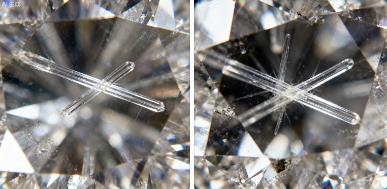
Needle inclusions are common features found inside natural diamonds. They get their name for a simple reason. They are thin, elongated crystal formations that look just like tiny sewing needles. These fine, thread-like inclusions form naturally during a diamond’s growth cycle. Minor stress and subtle distortions in the diamond’s crystal lattice create these slender structures.

Some needles are tiny stretched diamond crystals. Others contain trace minerals like rutile. They may also hold small mineral residues left over from the stone’s formation. You cannot spot them with the naked eye. They only become visible under 10x magnification. Under magnification, they show up as thin straight lines, soft curved streaks, or gentle wispy lines. Most needle inclusions are white or transparent. Dark-colored needles do exist, but they are less common.

Needle

These inclusions do not affect all diamonds the same way. Their impact depends on four key factors: size, color, quantity, and placement. A single, small, faint needle causes almost no trouble. It is subtle and unnoticeable. It impacts clarity grade, appearance, and light performance very little. It is far less distracting than regular crystal inclusions or dark spots. It barely disrupts the diamond’s light transmission, brilliance, and fire.

Blue Nile diamonds are worth buying:1,Both milky tint and brown hue:Tap to see full diamond info 2,The diamond has milkiness:Click to view detailed diamond information 3,The diamond has medium green fluorescence.:View details 4,The diamond has a cavity:See details

The situation changes when needles are large, dark, or grouped together. Dark needles stand out sharply against clear diamond. They create strong visual contrast. Dense clusters of needles can even merge into cloud inclusions or twinning wisps. This noticeably lowers the diamond’s clarity rating. It scatters incoming light unevenly. The stone loses sparkle and visual brightness, which lowers its overall value. Location also matters a lot.

Needles sitting right below the table facet are highly visible. They catch the eye instantly. Needles near the diamond’s girdle stay hidden and unobtrusive.

Overall, needle inclusions are minor natural flaws in most cases. Scattered, tiny needles are harmless to diamond quality. They cannot be seen without tools. Interestingly, these unique internal marks are not always a downside. They give every diamond one-of-a-kind character. They act as natural proof of the stone’s genuine, unlab-grown formation.

Diamond Inclusions and Blemishes

Diamond Inclusions and Blemishes

Diamonds are the hardest natural substance on Earth. Still, they are rarely perfect. Completely flawless diamonds are extremely rare. Nearly all natural diamonds carry some kind of imperfections. These flaws fall into two main groups: internal features called inclusions, and surface marks known as blemishes. Learning about them is essential to understand diamond clarity grading. Collectively, they are referred to as clarity characteristics, which serve as the core standard to judge a diamond’s clarity grade.

Inclusions vs Blemishes

Inclusions are flaws inside a diamond. They formed deep underground under extreme heat and pressure while the diamond was crystallizing. These natural traces act like unique fingerprints, proving a diamond is naturally mined.

Blemishes refer to imperfections on the diamond’s surface. Most of them happen during cutting, polishing or daily wear.

Common Inclusions

Most inclusions can only be seen under 10x magnification. Here are the most typical types.

Crystal

They are tiny mineral crystals trapped inside the diamond. Crystals can be colorless, dark, red or green. Their color, size and position decide their impact. Dark crystals stand out more and hurt clarity and appearance more than pale ones.

Cloud

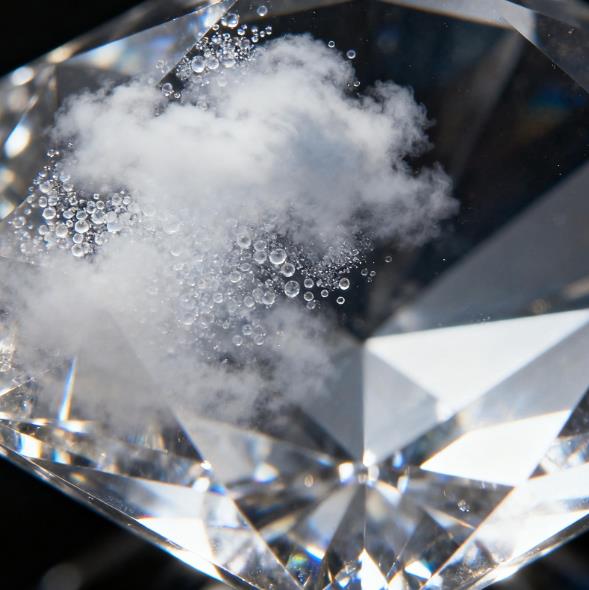
A cloud is made of countless tiny pinpoint inclusions clustered together. It looks hazy and foggy inside the stone. Large or dense clouds will reduce transparency and lower the clarity grade. Severe clouds can make a diamond look milky.

Feather

A feather is an internal crack with a feather-like shape. Small feathers rarely affect durability. But large feathers, those near the girdle or reaching the surface, may cause the diamond to chip or crack if hit.

Pinpoint

Pinpoints are tiny white crystal dots. They are one of the most common inclusions. Single or scattered pinpoints barely affect clarity. A large group of pinpoints will form a cloud.

Needle

Needles are long, thin and transparent crystal inclusions. Most are colorless. They seldom downgrade clarity unless they are big or numerous.

Twinning Wisp

It is a mix of pinpoints, clouds and small crystals, caused by distorted crystal structure during growth. It often appears as wavy or thread-like lines. Noticeable twinning wisps will bring down the clarity grade.

Common Blemishes

Most surface blemishes can be removed by repolishing. Sometimes a light polish is worthwhile to improve clarity. Yet experts may choose to leave them untouched, to avoid cutting down the diamond’s carat weight.

Blue Nile diamonds are worth buying:1,Both milky tint and brown hue:Tap to see full diamond info 2,The diamond has milkiness:Click to view detailed diamond information 3,The diamond has medium green fluorescence.:View details 4,The diamond has a cavity:See details

Extra Facet

It is an extra polished facet, usually made to remove a small inclusion near the edge. It is tiny and does not ruin look or durability.

Polish Lines

These are fine lines left on facets during polishing. On diamonds with excellent or very good polish, they are only visible under magnification. Poor polish lines will weaken a diamond’s luster.

Scratch

Scratches are thin marks on the surface. Minor scratches have little effect on clarity. Deep scratches can be fixed by repolishing.

Natural

A natural is a piece of the original rough diamond skin, mostly kept on or around the girdle. It is seen as proof of natural origin and is not considered a defect.

Chip

A chip is a small nick on the girdle or facet edges. It is caused by impact during cutting or wearing. Big chips will threaten the diamond’s durability.

Cavity

A cavity is an opening on the surface, left after removing a surface inclusion during polishing. Large cavities hurt clarity and easily collect dirt.

Why Clarity Matters

Clarity is one of the 4Cs that define a diamond’s quality, along with color, cut and carat weight. Graders evaluate clarity based on each flaw’s size, quantity, location, type and visibility.

Location matters greatly. Inclusions right below the table are much easier to spot than those near the girdle. The type of flaw tells its nature and potential risk to the diamond structure. Relief means the contrast between an inclusion and the surrounding diamond. Dark inclusions always show more clearly.

Authorities like GIA examine diamonds strictly under 10x magnification. They assign grades ranging from Flawless (FL) to Included (I3).

Inclusions and blemishes record a diamond’s long formation history underground. They are not always drawbacks. They are natural marks of a genuine diamond. It is not practical to chase a totally flawless diamond, for they are extremely rare and costly. A wise choice is to pick an eye-clean diamond — flaws cannot be seen by naked eyes, and will not harm beauty or structure. Always check official certificates such as GIA reports and consult reliable jewelers. In this way, you can fully know a diamond’s clarity features and make a smart purchase.

Not all diamond flaws are created equal. Some inclusions and surface blemishes are completely harmless. They do not affect the diamond’s beauty, brilliance, durability or daily wear. These minor imperfections are totally acceptable and worth buying, allowing you to get a high-quality, eye-clean diamond at a more reasonable price. However, certain critical flaws should never be overlooked. Some inclusions and cracks can impact the diamond’s structural stability, light performance and overall appearance. They may even lower the stone’s long-term value and durability. Many customers feel confused when selecting diamonds. It can be tricky to tell which imperfections are safe and which ones will cause future problems. If you have any doubts or questions during your diamond selection process, do not hesitate to reach out to us. Our professional team is always here to provide you with reliable, expert guidance to help you pick the perfect diamond for your budget and needs.

Rarity Ranking of Natural Fancy Color Diamonds

When people talk about diamonds, most of them will first think of classic colorless diamonds. But nature creates many stunning colored stones too. They are widely know as fancy color diamonds. These colored diamonds are extremely rare and one of a kind. Their value mostly depends on how rare their color is. So which fancy color diamonds are the hardest to find in the world?

First, let’s learn why diamonds get their color. Pure colorless diamonds are made of only carbon. Fancy color diamonds get their hues from small changes during their formation deep underground. There are three main reasons.

First is chemical impurities. For example, nitrogen turns diamonds yellow, and boron creates blue color. Second is structure defects. Twisted crystal lattice can make diamonds pink, red or brown. Third is natural radiation. This special effect forms green diamonds.

The rarest natural fancy color diamond in the world is red diamond. Below is the ranking of top rare colored diamonds, sorted by rarity, with simple explainations.

Extremely Rare:

Red Diamond

Red diamond is the king of all rare diamonds. It is no doubt the rarest one on earth. People still not fully understand how it gets its vivid red color. Most experts believe it is caused by plastic deformation during crystal growth. This tiny defect at atomic level absorbs certain light, and finally shows bright red.

Almost no pure red diamonds exist. Most red stones come with secondary tones, like purple, orange or brown. Only a few pure red diamonds have ever appeared on the open market. The most famous one is the Moussaieff Red, which weights 5.11 carats.

the Moussaieff Red

Blue Diamond

We are talking about vivid fancy blue diamonds here. Its color comes from the trace element boron. Boron hardly combines with carbon deep in the earth’s mantle. That is why natural blue diamonds form under very harsh conditions. Two world-famous examples are the Hope Diamond and the 14.62-carat Oppenheimer Blue.

Pink Diamond

Blue Nile diamonds are worth buying:1,Both milky tint and brown hue:Tap to see full diamond info 2,The diamond has milkiness:Click to view detailed diamond information 3,The diamond has medium green fluorescence.:View details 4,The diamond has a cavity:See details

Pink diamonds are beautiful and incredibly rare. Different from blue diamonds, their color does not come from impurities. Extreme pressure twists the carbon lattice and causes plastic deformation. This changes how light is absorbed and creates soft pink tones. The Argyle Mine in Australia was once the main source of pink diamonds. It closed in 2020, so pink diamonds become even harder to find today. The 59.60-carat CTF Pink Star is the most iconic pink diamond, and it sold for an amazing price at auction.

Moderately Rare:

Green Diamond

Natural green diamonds get their color from long time exposure to natural radiation. Real fancy vivid green diamonds are super rare. Most green color only stays on the stone’s surface. If cutters remove the colored part during polishing, the diamond will lost most of its value. The 41-carat Dresden Green is the most well-known green diamond.

Purple Diamond

Purple diamonds are unusual and rare. Their color is a mix of plastic deformation and hydrogen impurities. Pure purple diamonds are hard to find. Most have pink or grey overtones.

Orange Diamond

Pure bright orange is also called flame color. It is extremely scarce. The color is formed by both nitrogen and crystal structure flaws. Pure orange diamonds are even rarer than pink ones. Most orange diamonds on market carry brown or yellow shades. The 5.54-carat Pumpkin Diamond is its top representative.

Relatively Rare:

Yellow Diamond

Yellow diamonds are the most common fancy color diamonds. Even so, Fancy Vivid Yellow stones are still rare and valuable. Nitrogen is what gives them yellow color. Pale yellow or brownish yellow diamonds are easy to see. But saturated, bright canary yellow diamonds are worth a fortune. The 128.54-carat Tiffany Yellow Diamond is a world-famous treasure.

The world of diamonds is more than just colorless stones. From deep red to bright blue, every fancy color diamond is a unique miracle made by nature. Leibish is a professional supplier of fancy color diamonds. You can visit there official website to view all kinds of fancy colored diamonds, more review about leibish vist here…

雷迪恩形(Radiant)钻石

雷迪恩形切工是由钻石切割师亨利·格罗斯巴德(Henry Grossbard) 在1977年发明的。当时他旨在创造一种既能保留祖母绿形的优雅轮廓,又能拥有圆形明亮式切工那样璀璨火彩的钻石。它的出现是钻石切工史上的一次重要创新。雷迪恩形钻石是一种将圆形明亮式切工的火彩祖母绿形切工的优雅轮廓相结合的混合型切工钻石。它以其强烈的闪光和独特的现代感而备受青睐。

雷迪恩形(Radiant)钻石主要特点

  1. 混合式切工
    • 冠部(Crown):采用类似圆形明亮式切工的多面形切法,通常有70个刻面。这种复杂的刻面设计旨在最大限度地反射光线,产生无与伦比的火彩(七彩光)和亮度(白光)。
    • 亭部(Pavilion):也采用明亮式切工,进一步增强了钻石的折射率和闪光度。
    • 切面形状:通常是斜角切割的冠部切面,这是雷迪恩形的标志性特征。
  2. 轮廓
    • 典型的截角长方形截角正方形。这意味着它的四个角被切掉,形成了平直的切角。这个设计不仅独特美观,还有一个非常实用的好处:能更好地保护钻石的尖角,比祖母绿形或阿斯切形更不易破损
  3. 外观效果
    • 隐藏内含物:与阶梯式切工的祖母绿形(Asscher)不同,雷迪恩形复杂的刻面能很好地隐藏钻石内部的内含物,因此对净度的要求可以相对放宽一些。
    • 显大:由于其切割比例,雷迪恩形钻石的台面(Table)通常看起来比相同克拉数的圆形钻石更大。
    • 修长手指:特别是长方形的雷迪恩钻石,在视觉上能很好地修饰手指线条。
雷迪恩形(Radiant)钻石

如何选择雷迪恩形钻石?

选择雷迪恩形钻石时,需要关注以下几个关键因素:

  1. 长宽比(Length-to-Width Ratio)
    这决定了钻石的整体形状。
    • 方形雷迪恩:理想的长宽比在 1.00 – 1.05 之间。看起来非常对称和现代。
    • 长方形雷迪恩:常见的长宽比在 1.15 – 1.50 之间。看起来更传统,更显修长。
    • 个人偏好:选择哪种完全取决于您的审美喜好。
  2. 切工(Cut)
    这是影响雷迪恩钻石美感的最重要因素。一个好的切工能让钻石光芒四射,而一个差的切工则会让它看起来暗淡无光。
    • 对称性(Symmetry):确保刻面排列整齐对称,切角一致。
    • 抛光(Polish):表面光滑度会影响光线的反射。
    • “蝴蝶结效应”(Bow-Tie Effect):几乎所有雷迪恩、椭圆形、马眼形等钻石都会出现不同程度的暗色蝴蝶结状区域。要选择蝴蝶结效应最小或不明显的钻石。这需要通过肉眼观察实物或视频来判断。
  3. 颜色(Color)
    雷迪恩形切工能很好地隐藏颜色,因此通常可以选择比圆形钻石稍低一级的颜色等级。G-H色及以上是非常常见的选择,性价比很高。
  4. 净度(Clarity)
    同样,由于其复杂的刻面,它能较好地隐藏内含物。VS2/SI1 净度等级通常是安全且性价比高的选择,只要确保内含物不在台面正中央或不影响整体美观即可。
  5. 克拉重量(Carat)
    根据您的预算和喜好选择即可。由于它显大,可能一颗稍小克拉数的雷迪恩钻石看起来和更大克拉数的其他形状钻石差不多。

雷迪恩形钻石是追求个性、闪耀和现代感的完美选择。它成功地将最受欢迎的两个切工优点合二为一。如果您喜欢祖母绿形的轮廓但又渴望更多的火彩,那么雷迪恩形绝对是您的理想之选。

Blue Nile diamonds are worth buying:1,Both milky tint and brown hue:Tap to see full diamond info 2,The diamond has milkiness:Click to view detailed diamond information 3,The diamond has medium green fluorescence.:View details 4,The diamond has a cavity:See details

雷迪恩形钻石优点:

  • 极致的火彩和亮度,非常闪耀。
  • 独特的现代几何造型,时尚又经典。
  • 截角设计防止角落破损,非常耐用。
  • 能很好地隐藏内含物,对净度要求不高。
  • 视觉上更显大。

雷迪恩形钻石缺点:

  • 可能存在“蝴蝶结效应”,需要仔细挑选。
  • 切工质量对美观影响极大,需要专业知识或可靠商家。
  • 不如圆形钻石经典和保值(但比其他花式切工更受欢迎)。

由于切工至关重要且存在“蝴蝶结效应”,强烈建议亲眼观看实物,或者从提供高清360度视频的可靠商家处购买,比如参考多 blue nile 和 james allen 的顾客评测,以确保您看到的钻石符合您的期望。

鑽石的瑕疵–羽狀物feather

羽狀物(Feather) 是GIA等鑑定機構對鑽石內部裂縫或斷裂的專業術語。在顯微鏡下,這些裂隙通常呈現出白色的、羽毛狀的紋路,因此得名。它可以是非常微小的內部特徵,也可以是較大的、甚至觸及鑽石表面的裂縫。這是一個非常常見且需要客觀看待的淨度特徵。它本質上就是鑽石內部的裂隙

羽狀物的潛在風險與分級

羽狀物的影響天差地別,完全取決於其大小、位置和數量

Blue Nile diamonds are worth buying:1,Both milky tint and brown hue:Tap to see full diamond info 2,The diamond has milkiness:Click to view detailed diamond information 3,The diamond has medium green fluorescence.:View details 4,The diamond has a cavity:See details

1. 低風險的羽狀物(通常無需擔心)

  • 特徵:非常微小、位於鑽石內部(未觸及表面)、並且是「封閉」的。
  • 影響:這類羽狀物通常僅在放大鏡下可見,肉眼完全看不到。它們對鑽石的淨度分級有影響,但對耐久性和外觀幾乎沒有影響。在VS級或SI級鑽石中,小的內部羽狀物非常常見。

2. 高風險的羽狀物(需要謹慎對待)

  • 特徵
    • 體積大:肉眼可能可見,影響美觀。
    • 位置關鍵:位於檯面正中央等顯眼位置。
    • 觸及表面:特別是延伸至腰圍(Girdle) 或尖底(Culet) 的羽狀物。
  • 影響
    • 耐久性風險:這是最大的擔憂。觸及腰圍或表面的羽狀物相對脆弱,如果受到強烈撞擊或鑲嵌時壓力不當,有可能會使裂縫擴大,甚至導致鑽石崩裂。然而,需要強調的是,這種情況在正常佩戴下並不多見。
    • 外觀影響:大的羽狀物可能會影響光線在鑽石內的傳播,產生白色的絮狀物,降低鑽石的透明度和亮度。

如何從GIA證書上解讀?

在GIA證書的淨度特徵圖(Plot Diagram) 上,羽狀物通常用紅色的曲線或直線表示(紅色代表到達表面的特徵,綠色代表完全內部的特徵)。

  • 它會被標記為Feather
  • 關鍵:您需要結合特徵圖文字描述來看。特徵圖告訴您羽狀物的位置和大致形狀,而淨度等級(如VVS2, VS1, SI2)則告訴您其明顯程度。

購買建議:遇到有Feather的鑽石該怎麼辦?

  1. 不要恐慌:絕大多數含有羽狀物的鑽石都是安全且適合作為珠寶的。這是鑽石最常見的內含物之一。
  2. 仔細檢查證書
    • 看位置:如果羽狀物遠離腰圍和尖底,且不在檯面正中央,通常風險很低。
    • 看淨度等級:如果淨度等級在SI1以上(即VVS, VS, SI1),通常意味著這些羽狀物肉眼不可見,且對耐久性影響微乎其微。對於SI2或I1級的鑽石,就需要特別留意羽狀物的情況。
  3. 必須進行實物檢查(最重要的一步!)
    • 親眼看:用10倍放大鏡觀察羽狀物的具體情況。它是否明顯?是否觸及表面?
    • 信賴專業商家:從提供360°高清影片的信譽商家購買。在影片中仔細觀察羽狀物,並向商家詢問其具體情況。一個負責任的商家會如實告知風險。
    • 避開高風險特徵:如果羽狀物很大、在腰圍上且看起來很顯眼,為了長久的佩戴安心,建議選擇其他鑽石。
  4. 鑲嵌與保養
    • 對於有羽狀物的鑽石,在交付鑲嵌時,應告知珠寶師傅內含物的位置,以便其在操作時避開脆弱點,避免施加不當壓力。
    • 日常佩戴時避免劇烈撞擊。

羽狀物(Feather) 是鑽石常見的“胎記”。大多數情況下,它是無害的。您的應對策略應該是:

  • 依靠數據:通過GIA證書了解其大致情況。
  • 相信眼睛:通過高清視頻或放大鏡進行實物檢查,避免選擇那些位置不佳、過於明顯的羽狀物。
  • 尋求專業:從信譽良好的渠道購買,並諮詢專家的意見。

只要經過仔細評估,帶有羽狀物的鑽石完全可以成為一個安全且性價比高的選擇。

鑽石的晶結Knot

晶結(Knot) 是指一個延伸並觸及鑽石表面的內含晶體。簡單來說,就是鑽石內部的一個小礦物晶體,在切磨過程中剛好被磨到了表面,從而暴露出來。它原本是鑽石內部的一個內含物(Inclusion),通常是另一個鑽石晶體或其他礦物晶體。因為它突破了鑽石的表面,所以它同時屬於內部特徵和外部特徵。這正是它需要被關注的原因。晶結(Knot) 是鑽石內部淨度特徵中,需要特別注意的一種,因為它會對鑽石的耐久性和外觀產生實際影響。

為什麼晶結(Knot)需要特別注意?

晶結不僅影響淨度分級,更可能帶來以下兩個實際問題:

耐久性風險(Durability Risk)

這是最大的隱憂。由於晶結是突出於鑽石表面的,它相對脆弱

Blue Nile diamonds are worth buying:1,Both milky tint and brown hue:Tap to see full diamond info 2,The diamond has milkiness:Click to view detailed diamond information 3,The diamond has medium green fluorescence.:View details 4,The diamond has a cavity:See details

  • 容易崩缺:在鑲嵌(特別是壓力鑲嵌)或日常佩戴(撞擊、磕碰)時,這個突出的結點比鑽石本身更容易發生崩缺(Chip)
  • 維護困難:甚至在進行珠寶清潔或維修時,如果操作不當,也可能損傷這個脆弱的點。

可見度與外觀影響(Visibility)

  • 白色晶結:如果是鑽石晶體,通常看起來是一個白色或透明的點。由於它就在表面,其反光特性可能與周圍的鑽石體不同,有時會比內部同樣大小的內含物更顯眼
  • 深色晶結:如果是其他礦物(如石榴石、輝石等),則會呈現黑色或深色,通常非常明顯,對外觀影響更大。

如何從GIA證書上識別?

GIA證書淨度特徵圖(Plot Diagram) 上,晶結通常用紅色的符號表示(紅色代表到達表面的特徵)。

  • 它可能被標記為一個小點或一個小圈,並在旁邊註明 Knt (Knot的縮寫)。
  • 重要提示:您必須結合淨度特徵圖文字描述來看。特徵圖告訴您位置,文字描述(如「Crystal, Knot」)告訴您它是什麼。

購買建議:遇到有Knot的鑽石該怎麼辦?

  1. 優先避免:對於大多數消費者,尤其是購買日常佩戴的訂婚戒指,建議直接避開帶有Knot的鑽石。這可以免除未來潛在的損壞風險和美觀上的疑慮。
  2. 評估具體情況:如果這顆鑽石在其他方面(如顏色、大小、價格)極具吸引力,您需要仔細評估:
    • 大小和位置:這個Knot有多大多明顯?它是在亭部(Pavilion) 還是冠部(Crown)
      • 在亭部(底部):風險較低,因為通常有鑲嵌的爪頭或戒托保護,不易被磕碰,也不太容易從正面看見。
      • 在冠部(頂部)或腰圍(Girdle)風險很高!這些位置非常容易受到撞擊。特別是靠近腰圍的Knot,在鑲嵌時極易受損。
    • 淨度等級:如果一顆鑽石的淨度是SI級(輕微內含) 且主要內含物是Knot,您需要極度謹慎,因為這個Knot很可能肉眼可見且觸感明顯。如果淨度是VS級(微內含) 或更高,則Knot可能非常微小,風險相對較低。
  3. 必須實物檢查
    • 親眼看:如果可能,一定要在放大鏡下親眼觀察這個Knot的大小、位置和突出程度。
    • 用手觸摸:嘗試感受它是否突出表面。
    • 信賴專業商家:從提供360°高清影片的信譽商家購買,並仔細觀察影片中Knot的狀態。誠實的商家會願意告知您相關風險。
晶結

總結

晶結(Knot) 不是最常見的淨度特徵,但卻是需要格外警惕的一種。它不僅影響美觀,更帶來了潛在的耐久性問題

除非您非常了解並能接受其風險,或者該特徵非常微小且位於安全位置,否則為了長久的佩戴安心,最好選擇沒有Knot的鑽石。 寧可選擇一個其他類型的內含物(如位於內部的小晶體Cloud或Feather),也比一個在表面的Knot要更安全。

飛碟鑽石是什麼

飛碟鑽石(Flying Saucer Diamond) 這個名字非常形象,它描述的是一顆因為亭部(Pavilion)被切磨得極端過淺,導致從側面看時,鑽石的腰圍(Girdle)異常寬大,而亭部卻非常薄,整體形態看起來像一個飛碟或一個薄薄的鈕扣

這種切工的唯一目的是:在盡可能保留最大克拉重量的同時,讓鑽石的檯面(Table)看起來非常大,從而欺騙消費者,讓其誤以為買到了一顆看起來很大的鑽石。這是鑽石切磨中一個非常具體且負面的術語,屬於一種切工缺陷。它通常被稱為魚眼鑽石的更嚴重版本,或者說是魚眼效應的一個極端表現。

飛碟鑽石這種切工方式嚴重違背了鑽石切磨的初衷——最大化鑽石的亮度和火彩。其帶來的後果非常嚴重:

Blue Nile diamonds are worth buying:1,Both milky tint and brown hue:Tap to see full diamond info 2,The diamond has milkiness:Click to view detailed diamond information 3,The diamond has medium green fluorescence.:View details 4,The diamond has a cavity:See details

  1. 極度缺乏亮光和火彩(完全不閃)
    • 鑽石的光芒來自於光線進入鑽石後,在亭部刻面間發生全內反射,最後再從冠部反射回觀察者眼中。
    • 飛碟鑽石的亭部過淺,光線無法被反射,而是直接從亭部「漏出」。
    • 這會導致鑽石看起來異常黯淡、呆滯,像一塊死氣沉沉的玻璃,幾乎沒有任何閃爍的火彩和明亮的生命力。這是它最致命的缺陷。
  2. 可視的腰圍反射(嚴重的魚眼效應)
    • 從鑽石正面(檯面)看下去,您會看到一個非常明顯、暗淡的灰白色圓環,這就是鑽石腰圍的反射影像。
    • 這個圓環非常之大且清晰,讓鑽石中央看起來像一個空洞,美感盡失。
  3. 結構脆弱易損
    • 由於亭部極薄,腰圍區域變得相對脆弱,在鑲嵌或日常佩戴時更容易出現缺口(Chip) 或破裂,耐久性非常差。

如何從GIA證書上識別飛碟鑽石?

絕對不要只相信整體的切工等級,有些飛碟鑽石甚至可能被評為良好(Good)或一般(Fair)。您必須親自檢查證書上的比例圖(Proportions)

  • 亭深百分比(Pavilion Depth)極低:這是最關鍵的指標。通常亭深百分比低於 40.0% 就有高風險。而真正的「飛碟鑽石」,其亭深百分比可能只有 37% 甚至更低
  • 總深度百分比(Total Depth)過低:總深度是衡量鑽石身高的指標。飛碟鑽石的總深度通常會低於 56%(標準圓鑽的總深度通常在57%-63%之間)。
  • 冠角(Crown Angle)異常:可能會搭配一個非常小的冠角來適應極淺的亭部。
  • 極寬的腰圍(Girdle):證書上會標註腰圍厚度,飛碟鑽石的腰圍會非常厚(例如:Thick to Extremely Thick),因為切磨師為了保重,幾乎沒有對腰圍進行合理的打磨。

另外一個簡單的判斷方法:如果一顆鑽石的亭深百分比(Pavilion Depth)和總深度百分比(Total Depth)都異常地低,那它幾乎可以斷定是一顆「飛碟鑽石」。

魚眼效應

如何避免買到飛碟鑽石?

  1. 學會看GIA證書的比例:這是自我保護的第一道防線。避免選擇亭深百分比 < 40.0% 和總深度過低的鑽石。
  2. 絕不只看證書購買:無論證書數據多好,一定要親眼看到實物或信譽良好的商家提供的360°高清視頻。在視頻圖中轉動鑽石,如果從正面能看到一個巨大的灰白色環(魚眼),並且鑽石絲毫不閃,那就絕對要避開。
  3. 信賴專業商家:選擇有良好口碑的珠寶商或線上平台(如 Blue Nile, James Allen ,Whiteflash等),它們通常會預先篩選掉這類切工極差的鑽石,不會提供給消費者。

什麼是鑽石的魚眼

魚眼效應(Fish Eye Effect) 是指一顆鑽石從正面(檯面)看進去,可以看到亭部刻面(pavilion facets)的反射邊緣,形成一個灰白色、如同魚眼般的圓環。這會讓鑽石看起來呆滯無神,中央出現一個空洞般的暗圈,嚴重缺乏應有的亮度和火彩。

魚眼效應是一種因切工不良導致的光線漏失現象,讓鑽石看起來像死魚眼一樣無神。它完美說明了為什麼不能只依賴GIA的「Excellent」評級來買鑽石

購買鑽石時,務必將證書數據與鑽石的實際觀感相結合,才能確保您得到的不僅是一份漂亮的報告,更是一顆真正閃耀動人的寶石。

魚眼效應。

為什麼會產生魚眼效應?

最主要的元兇是:過淺的總深度(Too Shallow Cut)和錯誤的冠角(Crown Angle)與亭角(Pavilion Angle)搭配。有以下具體大概率的原因:

Blue Nile diamonds are worth buying:1,Both milky tint and brown hue:Tap to see full diamond info 2,The diamond has milkiness:Click to view detailed diamond information 3,The diamond has medium green fluorescence.:View details 4,The diamond has a cavity:See details

  1. 亭部過淺(Shallow Pavilion): 當一顆鑽石的亭部角度太淺或亭深百分比(Pavilion Depth)太低時,光線無法在鑽石內部發生全內反射。
  2. 光線「漏出」: 光線會從鑽石的亭部側面直接「漏掉」,而不是從檯面反射回觀察者的眼睛。
  3. 看到腰圍映像: 正是因為這種光線的漏失,導致你從檯面看下去,可以直接看到鑽石腰圍(Girdle)的反射影像,形成一圈灰白色的環狀帶。

簡單比喻: 就像一個過淺的游泳池,你站在岸邊可以直接看到池底邊緣的瓷磚線,而無法看到池水應有的深邃感。

如何從GIA證書上判斷可能有魚眼?

雖然無法100%確定,但您可以通過檢視GIA證書上的比例圖(Proportions) 來篩選掉高風險的鑽石:

  • 亭深百分比(Pavilion Depth)過低: 這是主要指標。通常亭深百分比低於 40.0% 時,產生魚眼效應的風險就非常高。
  • 冠角(Crown Angle)過小: 冠角與亭角需要良好搭配。一個過小的冠角(例如 < 30.6°)搭配一個過淺的亭部,會加劇魚眼問題。
  • 檯面過大(Table %): 過大的檯面(例如 > 62%)也會增加風險,因為它減少了其他能分散光線的刻面。

請注意: 即使證書上的切工等級是 「Excellent」 ,也可能存在輕微的魚眼現象。因為GIA的切工分級是一個範圍,處於「Excellent」等級下限的鑽石,其光學性能可能遠不如同級別中的頂級鑽石。

如何避免買到有魚眼效應的鑽石?

  1. 絕不只看證書購買 這是黃金法則。證書是基礎,但實物觀察(或高清影片)才是關鍵。
  2. 檢視GIA證書比例: 優先選擇比例在「安全範圍」內的鑽石。一個常見的推薦區間是:
    • 亭深百分比(Pavilion Depth): 42.5% – 43.5%
    • 冠角(Crown Angle): 34° – 35.5°
    • 檯面大小(Table %): 54% – 58%
    • 總深度(Total Depth): 59.0% – 62.5%
      (這些是理想範圍,稍微超出並不一定就有問題,但偏離越多風險越高)
  3. 親眼觀察或要求提供鑽石視頻:
    • 親眼看: 將鑽石放在白紙上,從檯面觀察。如果能看到一個模糊的灰白色圓環,那就是魚眼。
    • 看鑽石視頻: 向信譽良好的線上商家索取鑽石的360°高清影片。在影片中緩慢轉動鑽石,從正面仔細檢查是否有魚眼的跡象。一個信譽好的商家會主動避開並披露這種有缺陷的鑽石。

只看證書够買鑽石的後果

只根據證書購買鑽石是一個極度高風險的行為,很可能導致您買到一顆帳面數據漂亮,但實際外觀令人失望的鑽石。證書(如GIA證書)是鑽石的身份證,它保證了鑽石的基本身份特徵和分級,但絕不保證鑽石的美觀度只憑證書買鑽石,就像只憑履歷聘請一位員工。 履歷(證書)告訴你他的學歷、經歷和技能(4C數據),但你無法知道他實際的工作態度、溝通能力和團隊合作表現(實際外觀與閃爍度)。為了不讓您花大錢卻感到後悔,請務必將證書實物評估相結合,確保您投資的不只是一份漂亮的報告,更是一顆真正美麗閃耀的寶石

AGS

以下是只憑證書購買鑽石可能帶來的後果:

1. 忽略最重要的因素:實際外觀與光學表現

證書上的4C(顏色、淨度、切工、克拉重量)是實驗室分級師在受控環境下評定的。但鑽石是戴來欣賞的,不是放在保險箱裡看證書的。

  • 奶油鑽或咖啡鑽 這是最大的陷阱。有些鑽石內部有大量雲狀物(Cloud)或其他內含物,導致鑽石看起來霧濛濛的(奶油鑽),或帶有褐色調(咖啡鑽)。證書的淨度等級可能不低(如SI1, VS2),但這些雲狀物嚴重影響了亮度和通透感,讓鑽石看起來很呆滯。 證書上通常不會註明這種視覺效果。
  • 極差的閃爍度與火光: 即使切工等級是「Excellent」(理想切工),也存在一個範圍。一顆切工比例在門檻邊緣的Excellent鑽石,與一顆比例完美的頂級Excellent鑽石,其閃爍度、火彩和亮度可能天差地遠。您無法從證書上讀出這些光學性能的差異。
  • 糟糕的對稱性和拋光: 對稱性不佳可能導致鑽石檯面傾斜、腰圍不圓,影響光線的進出與對稱美。這些問題在證書上有記載,但非專業人士很難想像其對外觀的實際影響。

2. 無法判斷鑽石的「氣質」與美感

鑽石就像人一樣,每顆都有獨特的「氣質」。

Blue Nile diamonds are worth buying:1,Both milky tint and brown hue:Tap to see full diamond info 2,The diamond has milkiness:Click to view detailed diamond information 3,The diamond has medium green fluorescence.:View details 4,The diamond has a cavity:See details

  • 內含物的位置與可見度: 兩顆同為VS1淨度的鑽石,一顆的內含物藏在亭部(底部),透過檯面完全看不到;另一顆的內含物卻正好在檯面正中央,像一顆灰塵一樣明顯。證書的淨度圖(Plotting)會標示位置,但您需要親眼看到或透過專業攝影才能判斷其可見度。
  • 螢光反應(Fluorescence)的強弱影響: 證書會註明螢光的強度(無、輕微、中等、強、非常強)。強螢光在日光下可能讓鑽石產生油濛濛的霧感,影響通透度。但有些帶有輕微至中等螢光的鑽石,反而能讓偏黃的(如J、K色)鑽石看起來更白。這是一種需要實際觀察的視覺效果,無法從證書文字判斷好壞。

3. 可能買到「數據鑽石」

一些線上商家或批發商專門販售這種「證書數據完美」,但實際觀感平庸的鑽石。他們利用消費者迷信GIA證書和4C數據的心理,以低價購入這些外觀有缺陷的鑽石,再以「高性價比」的數據賣出。您以為撿到便宜,實際上是買到了一顆不閃的石頭。

正確的購買姿勢:證書 + 實物評估

證書是必要的起點和保障,但絕非終點。 理想的流程應該是:

  1. 設定預算和4C範圍: 先用證書上的4C標準縮小選擇範圍。
  2. 篩選證書細節: 仔細閱讀淨度圖,避開內含物在檯面正中央或註明有大量雲狀物(Cloud)的鑽石。對螢光強度做出選擇。
  3. 至關重要的一步:實際觀察(或透過專業影片)
    • 親臨實體店: 在專業燈光和自然光下,比較不同鑽石的火彩、亮度和通透感。請店家將幾顆候選鑽石放在一起比較。
    • 信譽良好的線上商家: 選擇那些為每一顆鑽石提供高解析度放大影片(如360°影片、ASET/Idealscope圖)的商家,比如James Allen和Blue Nile,都是不錯的線上珠寶提供商,這些工具能直觀地展示鑽石的光學性能,彌補無法親眼看到的缺憾。影片比靜態圖片可靠得多。
  4. 信賴專業的商家: 找一個有良好口碑、願意花時間為您講解和挑選的專業珠寶商或鑽石顧問。他們的經驗能幫您避開許多坑。