Not all diamonds are worth buying!!!
Both milky tint and brown hue:Tap to see full diamond info
This diamond has milky:Click view detailed diamond information
This diamond has green fluorescence.:View diamond details
This diamond has a cavity:See the diamond details
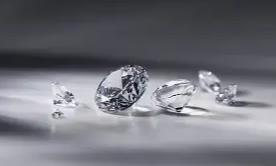
CVD lab-grown diamond is one of the most popular technologies for making lab diamonds right now. It is a kind of gem made by modern advanced technology, and it is exactly the same as natural diamond in all aspects. It gives people a good choice to get bigger and better quality diamonds at a much lower cost. When you plan to buy one, remember to pick reliable sellers and check official certificates carefully.
CVD stands for Chemical Vapor Deposition, its Chinese name is chemical vapor deposition method. This tech can create a natural-like environment inside a lab, and let diamond grow layer by layer. Many people describe it as growing diamonds like planting crops. Workers put a tiny diamond seed into a sealed chamber. Then they fill the space with carbon-rich gas such as methane, and add energy with microwave equipment. The carbon atoms in the gas will fall down on the seed little by little, just like snowflakes. After a period of time, these atoms build up and turn into rough diamond crystals.
The production steps of CVD lab-grown diamonds
First step is preparing the diamond seed. People place a thin slice of natural diamond or existing lab-grown diamond as the base seed, and put it into a sealed vacuum growth chamber.
Next is gas injection. The chamber will be heated up to a high temperature, around 800 degrees Celsius. Then workers pump carbon-containing gas like methane and hydrogen gas into the closed space.
The third step is gas ionization. Microwave energy is used to ionize the mixed gas, turning it into plasma with high chemical activity. In this state, carbon atoms are separated from methane molecules completely.
Then comes carbon atom deposition. Those free carbon atoms float in the chamber and settle on the diamond seed slowly, one layer after another just like fine dust.
After that is crystal growth. All carbon atoms arrange themselves following the standard diamond crystal structure. They keep stacking day after day. This process usually takes several weeks or even longer, until a complete rough diamond crystal is formed.
The last step is cutting and polishing. The rough diamond is sent to professional cutting factories. Experienced craftsmen cut and polish it in the same way they deal with natural diamonds. Finally, the raw stone becomes finished diamond products.
Main features of CVD diamonds
CVD diamonds usually have high clarity. The whole growing process is easy to control, so there are fewer metal catalyst inclusions inside. But they may have special inclusions, such as black carbon or graphite spots.
Most raw CVD diamonds show light brown or grey color tone. Most of them need extra HPHT high pressure and high temperature treatment later. This common industry process can turn them into colorless diamonds graded D to F, or near-colorless ones from G to J. This kind of post-treatment is widely used and well known in the diamond business.
This technology is good for making flat-shaped diamond crystals. It is perfect for producing fancy shapes like princess cut, cushion cut and radiant cut diamonds. However, if people want to make large round brilliant diamonds with CVD method, it will waste more raw materials.
Professional gem labs such as GIA and IGI can fully identify CVD lab-grown diamonds. They will issue formal grading certificates, which clearly mark that the diamond is lab-grown and produced by CVD technology.
CVD VS HPHT, two main lab diamond technologies
CVD and HPHT are the two leading ways to create man-made diamonds in the market. Their working principles are quite different.
For CVD technology, carbon atoms separate from gas and deposit on the seed crystal. It is like growing diamonds from gas. As for HPHT, it simulates the deep underground environment of the earth. Workers melt carbon sources like graphite under extreme high temperature and pressure, then let carbon recrystallize into diamonds.
CVD diamonds mostly form flat plate-shaped crystals. HPHT diamonds often appear in cube or octahedron shapes.
In color performance, original CVD diamonds often carry brown or grey shades. They almost need post treatment to improve color. HPHT diamonds tend to show blue or yellow hints because of boron and nitrogen elements inside, while it is also easy to make colorless HPHT diamonds.
In terms of clarity, CVD diamonds generally have better clarity, and their main inclusions are carbon spots. HPHT diamonds may contain metal catalyst inclusions. Some of them can be slightly attracted by strong magnets.
Nowadays, CVD takes a larger share in the market, especially for medium and large sized diamonds. HPHT is a more traditional method. It is widely used for small diamonds and color enhancement treatment.
It is very important to know that CVD lab-grown diamond is real diamond. It shares the same chemical composition, physical features and optical performance with natural diamonds. Both are pure carbon cubic crystals. Its Mohs hardness reaches level 10. The fire and sparkle of CVD diamonds are no different from natural ones at all.
The price of CVD lab-grown diamond is only one sixth to one fifteenth of natural diamond with the same 4C grade. It has an extremely high cost performance. When shopping, always choose diamonds with official certificates from GIA, IGI and other authoritative organizations. These certificates can prove the true quality of 4C standards, and clearly label the stone as Laboratory-Grown diamond.
Almost all colorless CVD diamonds sold on the market have gone through HPHT post-treatment to remove brown color. This is a normal and acceptable optimization method in the industry. Honest and trustworthy sellers should take the initiative to tell customers about this treatment. On GIA certificates, there will be notes saying Indications of post-growth treatment to record this situation.
As a high-tech product, producing CVD diamonds causes much less damage to the environment compared with traditional diamond mining. It also avoids the problems of conflict diamonds. It fits the eco-friendly and ethical consumption ideas of modern people.