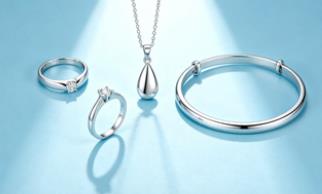
Platinum is a natural white precious metal. It is famous for pure, rare and everlasting features. It is widely seen as the top material for making wedding rings.
Why pick platinum wedding rings? Main advantages
High purity & low allergy risk
Platinum jewelry usual has a purity of 90% to 95%. Common marks are Pt900 or Pt950. The rest parts are mixed with other precious metals to make it harder. Thanks to its high purity, it works great for people with sensitive skin. It hardly cause skin allergies.
Timeless luster
Platinum’s white shine is natural. It will never fade or turn yellow. Over years, the surface may get scratches and wear, which people call patina. But the metal inside stays white all the time. It stand for endless and faithful love.
Strong and durable
Platinum has high density. It is tough and long-lasting. It can hold precious gemstones like diamonds firmly and stop them from falling off. That makes it a perfect choice for engagement rings and wedding bands with diamonds.
Great rarity
Platinum is much rarer than gold. Mining and refining process is also more difficult. So its value is higher than gold. Wearing a platinum ring means you hold a precious promise.
Solid weight
With high density, a platinum ring feel heavier than white gold ring of the same size. You can clearly feel its texture when wearing.
Points you need to know (Disadvantages)
Higher price
Because it is rare and high in purity, platinum rings cost about 1.5 to 2 times more than gold or white gold rings with same weight.
Easy to get scratches
Platinum is relatively soft. It gets tiny scratches more easily during daily wear. But these marks only move the metal surface, not lose material. The weight almost never drop. Many people love these traces left by time.
Soft luster
Compare with shiny white gold, platinum has a mild and elegant matte white glow. If you love super bright shine, you need to polish it more often.
Platinum vs White Gold
Color: Platinum has natural pure white, no discoloration. White gold is originally yellow. It is coated with rhodium to look white. Once the coating wear off, pale yellow will show up and needs re-plating regularly.
Purity: Platinum is high, mostly 95%. White gold is lower, generally 75% gold mixed with other metals.
Wear resistance: Platinum is soft and easy to scratch, no metal loss. White gold is harder and scratch-resistant, but the rhodium layer fades over time.
Weight: Platinum is heavy and solid. White gold is lighter.
Allergy: Platinum causes nearly no allergy. White gold contains nickel, some people will get skin problems.
Price: Platinum is more expensive. White gold costs less.
Maintenance: Platinum just need occasional polishing. White gold needs rhodium re-coating every few years.
Shopping tips
Check stamps carefully. Look for Pt950 or Pt900 inside the ring, they prove real platinum. Choose trusted jewelry brands for good quality and after-sales service. Try the ring on in person, since platinum is heavy. Its strong structure fits complex designs and stone setting well. Simple plain bands also show its gentle luster perfectly. Do make a reasonable budget for platinum rings.
Care & cleaning
Take it off when doing housework or sports. Keep it away from chemicals like bleach, perfume and hair spray. For daily clean, use mild soapy water and a soft brush, then dry it with soft cloth. Send it to jewelry store for professional check, cleaning and polishing every few years. Also check the prongs regularly to keep diamonds safe.
Moissanite is beautiful jewelry. It has high hardness and great cost performance. But it is not a real diamond. It is not lab-grown diamond either. Moissanite is an excellent diamond simulant and alternative. However, its chemical composition and physical property are totally different from diamond.
Natural moissanite can hardly be found on Earth. The reserve is too small to support the jewelry market. For this reason, all moissanite jewelry sold today are made in lab. Its scientific name is synthetic silicon carbide, or SiC.
Moissanite is a mineral that exist in nature but extremely rare. It was first discovered by Dr. Henri Moissan, a Nobel Prize winner. That is how this stone got its name.
Moissanite VS Lab-Grown Diamond
Here is a clear chart showing their key differences.
Chemical Composition
Moissanite: Silicon Carbide (SiC)
Lab-Grown Diamond: Pure Carbon (C)
This is the biggest difference. They are two completely different substances.
Origin
Moissanite: Lab created. Natural moissanite is almost impossible to find.
Lab-Grown Diamond: Cultivated inside laboratory.
Both are man-made stones, but their materials are not the same.
Hardness (Mohs Scale)
Moissanite: 9.25
Lab-Grown Diamond: 10
Diamond is the hardest natural material in the world. Moissanite ranks second. Both are tough enough for daily wearing.
Refractive Index
Moissanite: 2.65 – 2.69
Lab-Grown Diamond: 2.42
Moissanite has higher refractive index. It produce much stronger fire and rainbow sparkle. It looks brighter than diamond, but the strong flash may look unnatural to some people.
Dispersion
Moissanite: 0.104
Lab-Grown Diamond: 0.044
Moissanite’s dispersion is 2.5 times higher than diamond. This is why it shows such outstanding colorful fire.
Luster
Moissanite: Sub-adamantine luster
Lab-Grown Diamond: Adamantine luster
Professional jeweler can tell them apart by luster. Diamond has sharper and more brilliant shine.
Thermal & Electrical Conductivity
Moissanite: Conduct heat and electricity
Lab-Grown Diamond: Conduct heat
Common diamond tester works by checking heat conductivity. So moissanite will also show “diamond” on basic testers. But professional electric tester can tell the two apart easily.
Price
Moissanite: Much cheaper
Lab-Grown Diamond: Lower than natural diamond, but more expensive than moissanite
A high-quality 1 carat moissanite only cost tens to hundreds of currency units. A 1 carat lab-grown diamond will cost several thousand instead.
To sum up, moissanite is never a type of lab-grown diamond. It is just a high-quality diamond simulant. Lab-grown diamond is real diamond in nature. Both are lab made, but their chemicals and physical traits are fully different.
When you make a purchas, think about your budget, personal needs and how much you value authenticity. Choose the right stone that suit you best.
Fancy color diamonds refer to diamonds with obvious natural body color. Their color must be deep and saturated enough. They go beyond the D-Z color range for colorless diamonds. Their color comes from trace elements or lattice distortion during geological formation. Fancy color diamonds are miracles of nature. Their value mostly lies in their one-of-a-kind hues.
How Fancy Color Diamonds Get Their Color
Here are the main color causes and notes for each type.
Yellow
Cause: Nitrogen atoms.
Note: It is the most common fancy color diamond. People often call it canary yellow.
Blue
Cause: Boron atoms.
Note: Extremely rare. The famous Hope Diamond is a blue diamond.
Pink
Cause: Lattice distortion.
Note: Huge pressure changes the atomic structure. Pink diamonds are rare and high price.
Green
Cause: Natural radiation.
Note: Formed after long time natural radiation. It is very hard to find.
Red
Cause: Lattice distortion plus nitrogen elements.
Note: The rarest color of all. You can barely see red diamonds on the market.
Orange
Cause: Nitrogen elements and lattice distortion.
Note: Pure vivid orange diamonds are extremely scarce.
Purple
Cause: Hydrogen elements and lattice distortion.
Note: Very rare. Most purple diamonds have pink or grey secondary tones.
Brown / Cognac
Cause: Lattice defects or nitrogen elements.
Note: They were mainly used for industrial use in the past. Now they are very popular as fashion jewelry.
Black
Cause: Large amounts of graphite or mineral inclusions.
Note: Opaque stone with a special mysterious look.
Buying Guide for Fancy Color Diamonds
Set your budget first
The price range of fancy color diamonds is extremely wide. You need to know your budget clearly before shopping.
Choose diamonds with official certificates
Only pick fancy color diamonds with certificates from well-known institutes like GIA. A reliable certificate is the base for investment and collection.
Color is the top priority
Spend most of your budget on better color. It is better to choose a diamond with high color grade, such as Fancy Intense or Fancy Vivid. It is okay if it has slightly smaller carat weight or lower clarity.
See the stone in person
Color is a very personal feeling. Two diamonds with the same certificate grade may look different to your eyes. Always check the diamond face to face. If you cannot visit the store, ask for high-definition videos.
Think about the setting metal
The color of ring metal can greatly change how a fancy diamond looks. For example, yellow diamonds show warmer tone when set with rose gold. White gold can better bring out the soft beauty of pink diamonds.
How to Grade Fancy Color Diamonds – The New 4C Standard
Grading rules for fancy color diamonds are different from colorless diamonds. Color takes the leading role. It accounts for about 70 to 80 percent of the total value. People usually call this system “4C + 1C”.
Color – The most important factor
Hue
It means the main color of the diamond, such as pink, blue or yellow. Sometimes a diamond has more than one tone. We call these extra shades secondary colors. For example, pink with purple overtones.
Saturation
This stands for how strong the color is.
Tone
It refers to how light or dark the color appears.
Color Grading Scale
From light to deep, the grades are listed below:
Faint → Very Light → Light → Fancy Light → Fancy → Fancy Dark → Fancy Intense → Fancy Deep → Fancy Vivid
Value Reference
Normally, Fancy Vivid is the highest grade and has the highest value. Next are Fancy Intense and Fancy Deep. You also need to consider how rare the hue is when judging value.
Carat Weight
Just like colorless diamonds, bigger carat size means higher rarity. But for fancy color diamonds, color effect is far more important than carat weight. A small Fancy Vivid diamond can cost much more than a large Fancy Light diamond.
Cut
For fancy diamonds, cutters do not focus only on brilliance anymore. The main goal is to maximize color intensity and beauty. Cutters choose the best shape and proportion according to color distribution on rough stones. Radiant, cushion and emerald cuts are very common choices.
Clarity
Clarity become much less important here. The strong color can easily cover inclusions inside the stone. It is acceptable as long as inclusions do not hurt durability and are not too obvious when viewed from the table. Fancy color diamonds with SI or even I clarity grade are very common on market.
Certificate – The extra 5th C
This part is extremely important. The fancy color diamond market is complicated. Authorized certificate is the only proof to tell natural color apart from color treated stones.
GIA, the Gemological Institute of America, issues the most trusted fancy color diamond reports in the industry. The report writes down full details, including color grade, hue and natural color origin.
Famous Fancy Color Diamonds and Their Value
Red Diamonds
They are the rarest type. The price can reach millions US dollars per carat.
Blue Diamonds & Pink Diamonds
They rank second. They are super stars at diamond auctions and set many record high prices. Famous examples are the Oppenheimer Blue and CTF Pink Star.
Green Diamonds & Orange Diamonds
Extremely rare and carry an ultra-high value.
Yellow Diamonds
They are the most affordable among all fancy color diamonds. Even so, Fancy Vivid Yellow diamonds still cost a lot of money.
Lab-Grown Fancy Color Diamonds
Lab-grown fancy color diamonds are created in laboratories. Scientists use high-tech methods to copy the high temperature and high pressure environment deep in the earth mantle. Another common way is CVD, chemical vapor deposition. These lab made stones have bright natural-looking color. Their physical, chemical and optical properties are exactly the same as natural diamonds.
Their color is not simple dyeing. During the growing process, workers add specific elements or create lattice defects on purpose. The forming principle is basically the same as natural fancy color diamonds.
How Lab-Grown Diamonds Get Their Color (Comparison with Natural Formation)
Yellow
Lab method: Add nitrogen (N) elements during growth.
Natural cause: Also formed by nitrogen elements. Two ways are identical.
Blue
Lab method: Add boron (B) elements during growth.
Natural cause: Blue diamonds form because of boron. The principle matches fully.
Pink, Red, Purple
Lab method: Use electron irradiation and annealing after growth to create lattice distortion, also called plastic deformation. This is a widely accepted treatment.
Natural cause: Lattice distortion under pressure, same core principle.
Green
Lab method: Process with electron irradiation.
Natural cause: Long term natural radiation.
Orange
Lab method: Adjust nitrogen structure or combine with irradiation treatment.
Natural cause: Mix of nitrogen and lattice distortion.
Black
Lab method: Add large amount of graphite or other mineral inclusions.
Natural cause: Natural black diamonds also form with rich inclusions.
Lab-Grown Fancy Color Diamonds VS Natural Fancy Color Diamonds
Price
Lab-grown: Big price advantage. The cost is only a fraction or one tenth of natural ones. More people can afford bright fancy colored diamonds.
Natural: Extremely expensive. Top fancy stones cost hundreds of thousands to millions US dollars per carat.
Rarity
Lab-grown: Mass production is possible. People can make any color and size in theory. Rarity is man-controlled.
Natural: Ultra rare. Especially red, blue and pink diamonds. They are real gifts from nature.
Color Performance
Lab-grown: Rich color choices with high saturation. Labs can produce diamonds with even and deep color which you hardly find in nature.
Natural: Color depends fully on natural conditions. Every stone is unique. High saturation fancy colors are very hard to find.
Environment & Ethics
Lab-grown: Most sellers mark them as eco-friendly and conflict-free. But you need to notice the high energy use during production, especially for HPHT method.
Natural: Mining brings environmental impact. There are also ethical concerns. Though the Kimberley Process is running, arguments still exist.
Resale & Preservation Value
Lab-grown: Almost no value retention. The price will drop as technology develop. People buy them mainly for decoration and low cost.
Natural: Great collection and preservation value. Top fancy color diamonds act like hard currency. Their price keep rising in the long run.
Certificate
Lab-grown: Graded by GIA, IGI and other institutes. Certificates clearly mark “Laboratory-Grown”. It also notes if the color is post-growth treated.
Natural: Certificates mark “Natural” and record natural color origin.
The Importance of Authorized Certificates
For lab-grown fancy color diamonds, certificates are even more necessary than natural ones. Color treatment technology is very common now.
GIA (Gemological Institute of America)
It issues detailed grading reports for lab-grown fancy diamonds. The report clearly states three key points:
This is a laboratory-grown diamond.
If the color is made by post-growth treatment (applies to pink, green and similar stones).
Full color grading, such as Fancy Vivid Pink.
IGI (International Gemological Institute)
It is also a mainstream certificate in the market. Its content is similar to GIA reports.
Always buy lab-grown fancy color diamonds with official certificates. These documents can make sure you get the correct product and clear information.
AGS, short for American Gem Society Laboratories, is a highly authoritative diamond grading lab. It is famous all over the industry. When it comes to cut evaluation, AGS runs one of the strictest and most precise systems in the world. AGS is just as well-known as GIA, the Gemological Institute of America. Both are top trusted organizations for issuing diamond certificates. Still, they have different grading focuses and rules.
Core Features: AGS vs GIA
Cut Grade
AGS take cut as its biggest strength. It uses number grades from 0 to 9, and created the well-known “Ideal” cut standard. Its assessment goes far beyond basic proportions. It also includes detailed light performance tests, such as brightness and light leakage. GIA uses descriptive grades: Excellent, Very Good and Good. Its grading system is mature and widely accepted across the market.
Color & Clarity
AGS adopts the same D-Z color scale and FL to I3 clarity scale as GIA. Its strict level is equal to GIA. GIA sets the industry standard for color and clarity, also using D-Z color and FL-I3 clarity grades.
Cut Rating Scale
AGS use a 0-to-10 numeric scale. 0 stands for the highest Ideal grade, while 10 is the lowest. GIA only use word grades like Excellent and Very Good.
Market Popularity
AGS is highly respected among professional jewelers and high-end buyers, especially in North America. But overall, its certificates are less common than GIA. GIA is the most universal certificate worldwide. It is like hard currency in the diamond trade.
Main Focus
AGS put extreme emphasis on cut quality. It aims to pick out diamonds with perfect optical performance. GIA gives balanced grading to all four Cs. It acts as a comprehensive benchmark for the whole industry.
How to Understand AGS Cut Grades
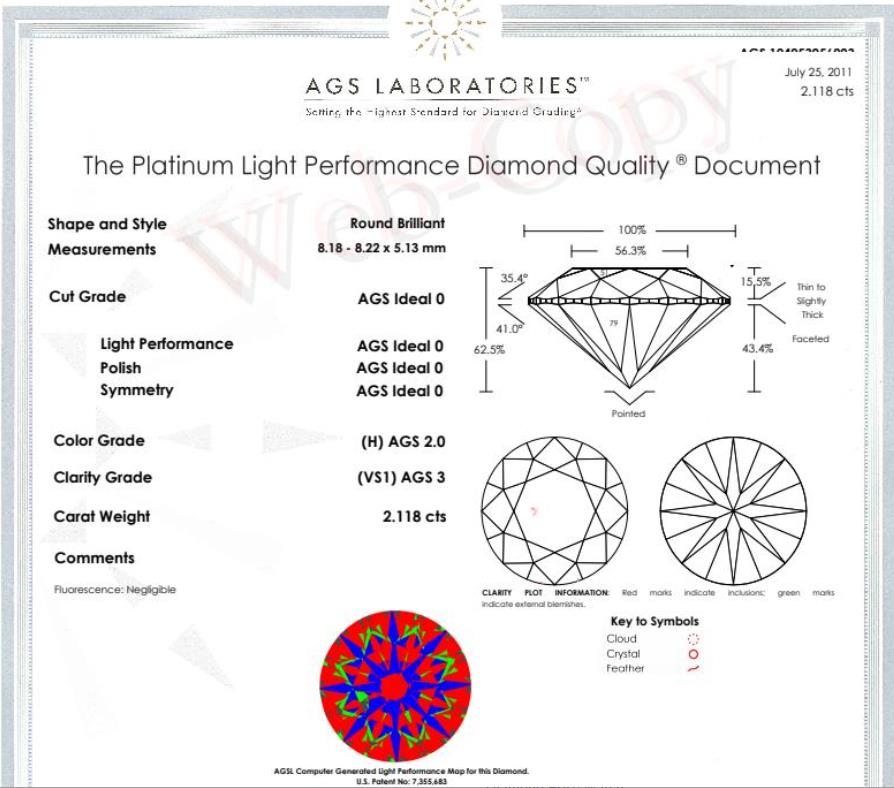
Cut grading is the most valuable part of an AGS certificate. It does not only check diamond proportions. It focuses more on real visual and light effects. AGS has ten cut grades from 0 (Ideal) to 9 (Fair).
0 (Ideal): This is the top rank. The diamond has perfect proportions, symmetry and polish. Its light performance is outstanding. People always say AGS 0 standard is much harder to reach than GIA Excellent, especially for round brilliant diamonds. Buyers chasing top-tier cut always look for AGS 0.
1 (Excellent): It is still a great cut. Only tiny differences separate it from Grade 0.
2 & 3 (Very Good): Nice cut quality. The stone can reflect most incoming light well.
4 – 7 (Good to Fair): Average cut. You can see obvious light loss on the diamond.
8 – 9 (Poor): Bad cut. Light leaks out from the bottom or sides easily. The diamond looks dull and dim.
AGS Ideal 0 vs GIA Excellent
A diamond can get GIA Excellent and AGS 0 at the same time, but it is not always the case. AGS test more light performance factors, including brightness, fire and scintillation. Some diamonds with GIA Excellent cannot pass AGS 0 rules. AGS Ideal 0 is a higher level, like the best among top students.
Advantages and Disadvantages of AGS Certificates
Advantages
AGS has unbeatable cut evaluation. It is the best reference for people who pursue perfect light performance. Its color and clarity standards are as strict as GIA, so you can fully trust the result. As a reputable professional group, AGS certificates gain great recognition in the trade.
Disadvantages
AGS certificates are not as popular as GIA. If you plan to resell or upgrade your diamond later, it will be less easy to deal with. Diamonds with AGS 0 cut usually cost more. The top cut label makes them have a price premium compared with same 4C diamonds with GIA cert. Besides, its complex cut system mainly works for round brilliant diamonds. For fancy shapes like oval and cushion, AGS cannot show its strong points.
Buying Suggestions
If you care most about sparkle and light performance and have enough budget, AGS Ideal 0 diamond is your best pick. It means the highest guarantee for diamond cut.
For regular customers, GIA Excellent cut is already wonderful. These diamonds shine brightly and balance quality and cost well. You do not need to blindly chase AGS 0, unless you have deep knowledge and strict demands on cut.
No matter which certificate you choose, always check the laser inscription on the diamond. Make sure the number match the code on the certificate to avoid fake goods.
AGS is a professional certificate specially focused on cut. It sets a higher standard for diamond cutting. Diamonds with AGS Ideal 0 are truly top class in optical performance. For most buyers, GIA Excellent is perfect enough and much easier to circulate. Your final choice depends on what you value more: ultimate cut performance, or wide market acceptance and better value for money.
A diamond certificate is like a diamond’s ID card. Blue Nile and James Allen were once two of the world’s top online diamond retailers. Here is a new update: James Allen is now part of Blue Nile. Their diamond inventories have fully combined together. When it comes to diamond documents, the most well-known and reliable ones are from GIA, IGI and AGS. AGS have much stricter rules for diamond cut grading.
GIA Certificate (The Most Important One)
Both Blue Nile and James Allen highly recommend natural diamonds with GIA certificates, especially for stones over 0.5 carats. GIA is the most strict and trusted lab in the jewelry industry. The famous 4C standard for diamonds was created by GIA. Diamonds with GIA papers use unified grading rules. They are easy to compare, and also hold their value better over time.
My shopping advice: No matter where you buy diamonds, always pick those with GIA certificates first. It is the best way to aviod confusion and guarantee real quality.
What is AGS Certificate?
AGS stands for American Gem Society. It is an organization that protect consumers and share professional jewelry knowledge. AGS Laboratories issues official diamond grading reports, known as AGS certificates. This lab earn great fame for its advanced cut grading system. AGS is highly authoritative. Its cut evaluation is widely seen as one of the most precise in the trade. AGS enjoys the same good reputation as GIA, and both are top trusted diamond certificate providers.
IGI Certificate
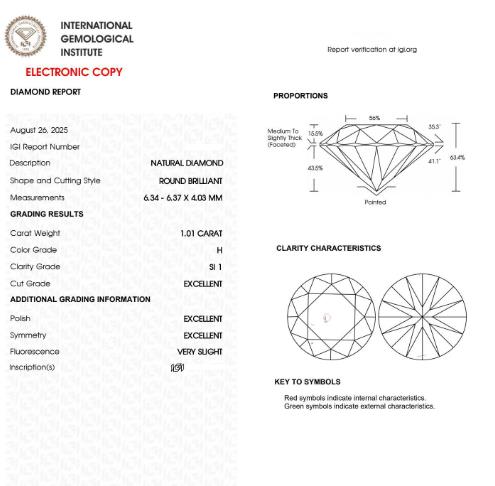
Both retailers also carry diamonds with IGI certificates. IGI is extremly popular in the lab-grown diamond market, and its standards are widely accepted around the world.
Blue Nile keeps a large stock of natural diamonds with IGI certificates. Customers need to check the certificate type carefully when making choices.
In-house or Other Commercial Certificates
For tiny diamonds below 0.5 carats, or finished set jewelry, both brands may use their own in-house certificates or other commercial papers.
Important warning: You need to be very careful with these diamonds. In-house grading standard are not as strict as GIA or IGI. Grade inflation often happen here. For example, a diamond graded SI2 may be marked as VS. Ordinary buyers can hardly tell the real difference.
Shopping tip: Try your best to stay away from diamonds with only in-house certificates. Only choose them if you fully trust the brand or you have a very tight budget. Stick to GIA or IGI certificates to keep yourself safe.
Visual Technology (Great Helper for Online Shopping)
Both platforms own excellent online video tools. Blue Nile provides 360° high-definition videos for every single diamond. With the free real-time inspection function, you can zoom in, rotate and check every facet closely. You can clearly see the exact position of inclusions and how serious the bow-tie effect is. This experience is almost the same as viewing the diamond in person.
Final Reminder
Always stay alert. Do not buy diamonds that only come with seller’s own certificates, without GIA or IGI reports. New buyers should skip these items, unless the price is really attractive and you are willing to take the risks.
If you’re planning to buy a diamond ring, should you go for Blue Nile or Cartier? These two brands stand for totally different ideas of luxury consumption and business models. One is a giant online retailer, while the other is a classic top-tier luxury jewelry house. Your final pick all depends on your budget, the purpose of purchase and your personal values.
Choosing Blue Nile means you are a smart shopper and investor. You are paying for a high-quality product itself.
If you pick Cartier instead, you are more of a person who appreciates fine taste. What you take home is not just jewelry, but a dream, a long history and a special social status.
There is no right or wrong answer between the two brands. It is just a matter of what fits you best. Make your decision based on what you care about the most.
Blue Nile is widely known as a professional diamond seller and pure retailer. Its core goal is to offer customers great value, countless options and full transparency during shopping. The price is mainly made up of material cost plus a small extra charge, almost close to wholesale price. Its biggest strengths are affordable price, massive selections, clear pricing rules and flexible custom designs. When you shop here, you do all the research and pick items by yourself online, which brings you great cost performance. It works best for people who want good value for money, love to study diamond specs, or have a limited budget but hope to get a bigger carat diamond.
Cartier is a world-famous top luxury jewelry brand. The brand carries deep heritage, acts as a symbol of social status and creates one-of-a-kind designs. Its price includes material cost plus a huge brand premium, covering its long history, exclusive designs and large marketing fees. The brand enjoys an excellent reputation, and its products keep a good resale value over time. It is famous for fine craftsmanship and supreme in-store experience. Walking into its boutiques, you can enjoy thoughtful personal service, feel the rich brand culture and receive elegant gift wrapping. This brand is perfect for those who chase brand status, social recognition, iconic designs and worry-free after-sales service.
Now let’s talk more about Blue Nile. It is the largest online diamond retailer across the globe. The company does not keep a huge amount of physical stock. Instead, it connects inventory from diamond suppliers all over the world and runs a huge database filled with GIA certified diamonds. It also has close cooperation with James Allen, building a huge online platform for diamond shopping. This is why the overall cost to buy diamonds here is much lower.
This brand has plenty of strong points. First, the choices are almost endless. There are hundreds of thousands of diamonds available on its website. You can set filters for all details, including the 4C standards, stone proportions, fluorescence and many other professional parameters. You can find exactly what you want easily.
Second is the obvious price advantage. Since it runs purely online and faces fierce market competition, with the same amount of money, you can get a diamond with better specs or a larger carat size on Blue Nile. The extra brand markup here is extremely low.
Third, custom service is very flexible. You can select a loose diamond first, then match it with your favorite ring setting. You can also make custom necklaces, bracelets and earrings according to your own preference.
Of course, Blue Nile also has its downsides. The biggest problem is the lack of real shopping experience. The whole process is self-service, with no fancy offline store atmosphere. Even though every diamond comes with a 360-degree viewing video, you still cannot see and touch the real stone in person before buying.
It also has no strong brand aura. What it sells are diamonds and jewelry pieces, not a famous luxury name. People trust it for good quality and fair price, not for showing off luxury identity.
When it comes to after-sales service and resale, the situation is not ideal. If you want to resell the jewelry later, buyers only calculate the value based on the loose diamond and metal material. The item will lose most of its added value quickly.
Next, let’s take a closer look at Cartier. This is a historic French brand famous for high-end jewelry and watches. The name itself has become a symbol of luxury. When people buy Cartier, they are paying for a wonderful dream, profound history and distinguished identity.
Cartier’s advantages are clear to see. Its powerful brand value brings wide social recognition. Simply owning a piece of Cartier jewelry, together with its classic red box, is already a sign of good taste and status.
The brand also created many timeless and legendary designs. Classic collections such as the Love bracelet, Juste un Clou, Trinity and Solitaire 1895 engagement ring are well-known all around the world. These styles have super high recognition and never go out of fashion.
Shopping in Cartier boutiques is an unforgettable noble experience. The staff will take good care of every customer. You can learn about the brand’s long history, enjoy delicate packaging and feel the elegant store vibe. The whole shopping journey is enjoyable in its own way.
The brand sticks to top-level craftsmanship and provides global unified premium maintenance and after-sales support. In terms of value retention, Cartier jewelry performs really well in the second-hand market and vintage trade. Like all consumer goods, its price will drop a little after purchase, but a large part of the brand premium can be kept. It is far better than ordinary jewelry with no famous brand background.
Meanwhile, Cartier has its own weak points. The most obvious one is the high price. You have to pay a very high brand premium just for the Cartier name. For diamonds with the exact same parameters, Cartier’s price can be two to three times higher than Blue Nile, or even more. Besides, your choices are limited. You can only pick from the brand’s ready-made designs, and you are not allowed to adjust every single parameter of a diamond freely.
Still confused about choosing between Blue Nile and Cartier? Ask yourself these simple questions to make up your mind.
First, do you have a fixed and tight budget?
If your answer is yes, Blue Nile is the better choice. With limited funds, you can get a larger diamond or better overall quality.
If your budget is flexible, both brands are worth considering.
Second, what do you value more: the diamond itself, or the Cartier brand name?
If you focus on the real quality of the stone, you probably like to study all the technical details. You want every penny to be spent on the diamond itself, so Blue Nile suits you more.
If you believe the joy, social recognition and wonderful shopping experience brought by a famous brand matter more than diamond parameters, then Cartier is your ideal option.
Third, what is the jewelry for?
If it is an engagement ring, this is a very personal decision.
If your partner cares about cost performance or hopes for a bigger diamond, Blue Nile is a fantastic option.
But if your partner has long dreamed of owning a piece from Cartier, or her social circle pays a lot of attention to luxury brands, do not hesitate to choose Cartier. The happiness of making someone’s dream come true can never be measured by diamond data.
If you buy it as a gift or a reward for yourself, Cartier classic styles like the Love series are absolutely perfect. The meaning behind this famous brand goes far beyond the cost of raw materials.
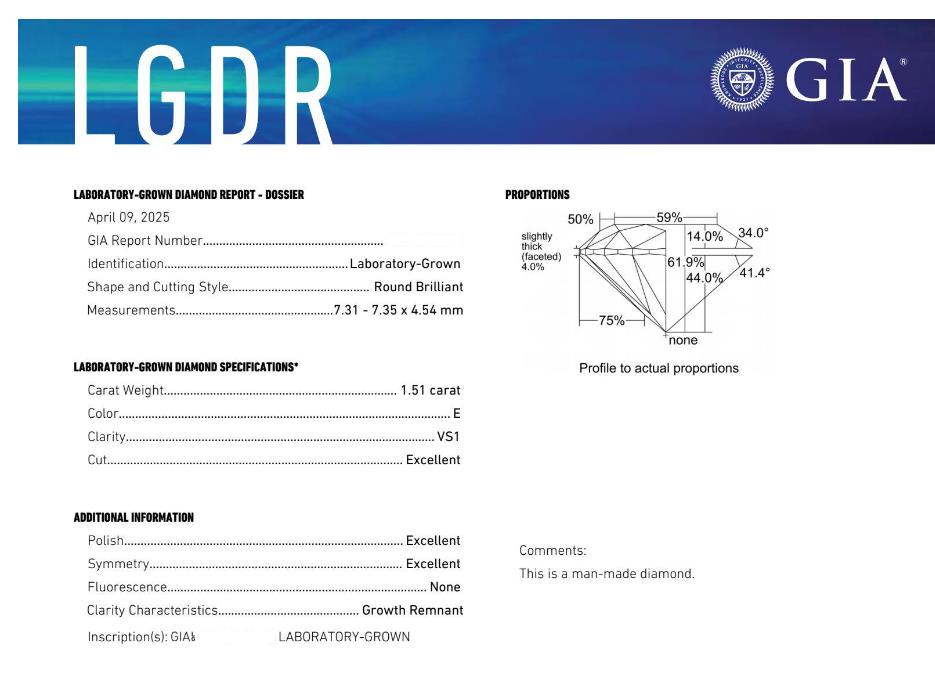
GIA, the Gemological Institute of America, do issue official certificates for laboratory-grown diamonds. However, these documents are quite different from the certificates for natural diamonds in names, contents and main purposes. It is very important for every buyer to tell them apart clearly. Here is the full and detailed explanation.
GIA Lab-Grown Diamond Report vs GIA Natural Diamond Grading Report
We list the key differences between the two types of certificates below.
Document Name
GIA Laboratory-Grown Diamond Report for man-made diamonds.
GIA Diamond Grading Report for natural diamonds.
Main Purpose
The lab-grown report focus on identification and grading. It confirm the stone is made in lab, and grade its four key factors: color, clarity, cut and carat weight.
The natural diamond report do identification, grading and also act as a guarantee. Besides 4C grades, it proves the diamond is natural and supports its market value.
Key Contents
For GIA lab-grown diamond report:
It clearly mark the words “Laboratory-Grown”. It state the production method, either CVD or HPHT. The report includes standard 4C grades, clarity plot, proportion diagram and a QR code. You can scan the code to check the electronic report online.
For GIA natural diamond grading report:
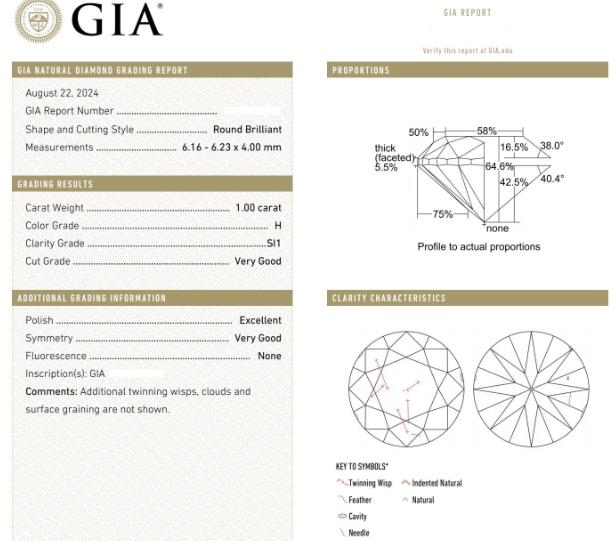
It is marked “Natural Diamond”. It has complete 4C grades, clarity plot and proportion diagram. It also record fluorescence details. Some diamonds have laser engraved GIA code on the girdle, which is optional. A QR code is also printed for online inquiry.
Grading Standards for Color & Clarity
Lab-grown diamonds use the same standard as natural ones. It follow D-Z color scale and FL to I3 clarity scale. Natural diamonds use exactly the same D-Z color grades and FL-I3 clarity grades too.
Most Obvious Differences
The lab-grown certificate has a light blue background. Large “LABORATORY-GROWN” watermarks cover the grading areas. This design stop people from altering the paper or mixing up two kinds of diamonds.
The natural diamond certificate is classic white, with no lab-grown watermark at all.
Girdle Engraving
Lab-grown diamonds are laser engraved with “LABORATORY-GROWN” and the report number on the girdle.
Natural diamonds are engraved with GIA report number, and sometimes with the GIA diamond symbol.
GIA carry out very strict checks on lab-grown diamonds. All information is fully open and transparent. This make sure customers know exactly what they buy, and avoid confusion between lab-grown and natural diamonds.
How to Read a GIA Lab-Grown Diamond Certificate
You can check sample reports on GIA official page: GIA Report Check – Laboratory-Grown Diamond. Here is how you understand the key parts.
Report Type: It will show Laboratory-Grown Diamond Report directly.
Grade Scale: It notes that color and clarity grades use the same rules as natural diamonds.
Comments: This area writes clearly: This is a man-made diamond grown by CVD or HPHT method.
Background & Watermark: The light blue color and big “LABORATORY-GROWN” watermarks are the easiest features to recognize.
Why Get a GIA Certificate for Lab-Grown Diamonds?
First, quality guarantee. GIA is one of the most famous and trusted gem institutes around the world. Its 4C standard is widely accepted by the whole jewelry industry. A GIA certificate means the diamond’s quality is checked by a fair third party.
Second, build trust. With clear information on production method and quality grade, customers will not be misled by dishonest sellers. Shopping will become much safer.
Third, price reference. Lab-grown diamonds do not rely on rarity for value, but their price still closely link to 4C grades. GIA certificates provide official quality standards for pricing and comparison.
Fourth, prevent disputes. The clear “Laboratory-Grown” label stop illegal sales behavior. No one can sell lab-grown diamonds as natural ones. It protect the rights of both buyers and sellers.
Certificates from Other Well-Known Institutes
Apart from GIA, many professional organizations also issue certificates for lab-grown diamonds.
IGI, the International Gemological Institute, is very popular. It holds a large market share in lab-grown diamond business. Its certificates are mostly blue and clearly marked “Laboratory Grown”.
HRD, the Antwerp Diamond High Council, is another top institute. It also provide professional identification reports for lab-grown diamonds.
NGTC, the National Gemstone Testing Center, is the most authoritative testing body in China. It also offer full inspection service for lab-grown diamonds.
All certificates from above institutes are reliable. When you shop for diamonds, always choose reports from these professional organizations. Remember these useful tips: Always ask for official certificates. Check if the number on certificate match the laser engraving on diamond girdle.
You need to know that lab-grown diamonds win people over for its beauty, eco-friendly production and great cost performance. They are not good choices for investment and value preservation. Hope all these information can help you a lot.
New Policy Update from GIA
GIA announced a big new rule in early June. Starting from late 2025, GIA will no longer use the traditional 4C grading system on laboratory-grown diamonds. The institute will apply a brand new descriptive rating system instead. In the future, lab-grown diamonds will only be divided into two ranks: Premium and Standard. Diamonds with poor quality will not get any grade at all. This new rule will further separate lab-grown diamonds from natural diamonds in the market.
Blue Nile is one of the world’s largest and most famous online diamond and jewelry retailers. It is not a regular luxury brand like many others. Instead, it is a revolutionary e-commerce platform. Its special business model has totally changed the whole diamond industry. Latest news: Blue Nile and James Allen have merged recently. This make Blue Nile much more competitive in the diamond market.
Blue Nile was founded by Mark Vadon. The story started back in 1998. At that time, Mark Vadon planned to buy a diamond engagement ring for his proposal. But he knew almost nothing about diamonds. He also felt upset with traditional jewelry stores. The prices were too high, product information was not clear, and pushy sales made him feel uncomfortable.
He turned to the internet to learn more about diamonds. Soon he found a small online diamond shop called Internet Diamonds. It was run by Doug Williams, a diamond dealer from New York. The website looked simple, but its prices were far lower than offline stores. Mark Vadon realized this new sales model had great potential. Selling loose diamonds online with official certificates could fix many problems in the old jewelry business.
Core Business Model and Features
Online Warehouse Style (Not a Traditional Brand)
Blue Nile does not run fancy physical boutiques like Tiffany & Co. or Cartier. It saves a huge amount of money on rent, store decoration and large in-store stock.
All the saved costs are passed on to customers directly. That is why its prices are very competitive. For diamonds with the same quality, the price is usual 20% to 40% lower than local jewelry shops.
The company does not keep tons of diamonds in stock. It works with diamond suppliers all over the world. It displays hundreds of thousands of diamonds online, so buyers have a very wide range of choices.
Main Product: Diamonds
Loose diamonds are its top product. Customers can filter and compare thousands of loose diamonds by the 4Cs standard, including cut, color, clarity and carat weight. Every diamond comes with trusted certificates from GIA or AGS.
Of course, Blue Nile not only sells white diamonds, fancy colored diamonds and lab-grown diamonds, it also offer colored gemstones such as rubies, sapphires and emeralds, as well as other jewelry and precious metal products.
After picking a favorite loose diamond, you can choose different ring settings to make custom jewelry. This way brings great flexibility and personal choices for every buyer.
Product Range
Besides loose diamonds, Blue Nile also sells finished jewelry. It has engagement rings, wedding bands, necklaces, earrings and more. The jewelry uses different gemstones such as sapphires and emeralds. Lab-grown diamonds are also available for selection.
Blue Nile Physical Showrooms
Since customers cannot see real diamonds online, Blue Nile opens several showrooms in some US cities, such as New York, Seattle and Scottsdale.
Important note: These showrooms are not regular shops. They only put ring settings and fake diamond models on display for trying on and consultation. The staff will help you check and pick diamonds from online stock on computers. All deals are finished online in the end. Remember you need to book an appointment before visiting.
Advantages and Disadvantages
Advantages:
First of all, it has strong price advantages. You can get really good prices here. Second, the choices are endless. No matter what your budget and needs are, you can find a suitable diamond. Third, all information is open and clear. Every diamond has complete certificates and detailed parameters for easy comparison. Fourth, shopping is easy and time-saving. You can browse all products at home.
Disadvantages:
The biggest shortcoming is you cannot check the real diamond in person before buying. Pictures and 360° videos can not fully take the place of real items.
It has no brand premium. It cannot offer the luxury feeling, status symbol or classic stories of famous high-end brands.
The after-sales service is not so convenient. Return, exchange and repair all need to be done by shipping, which is less easy than local physical stores.
To sum up, Blue Nile is a game-changer in online diamond sales. It is more like a diamond supermarket or trading platform. Its greatest value lies in clear information, rich choices and affordable prices. It helps people buy high cost-performance diamonds.
If you chase good value for money, you like to study and compare diamonds by yourself, and you care more about diamond quality and certificates rather than famous brands or designs, Blue Nile will be one of your best picks. It lets you get a bigger and better diamond within your budget.
Natural diamond production is highly concentrated. Only a handful of countries have rich diamond mines. The whole industry is controlled by several large mining corporations around the world. Let’s take a look at the top natural diamond producing countries first.
Russia
It is the world’s biggest natural diamond producer. It leads the globe in both total carat output and total value of rough diamonds. Alrosa is its leading company, and it is also one of the largest diamond mining firms across the world. Most famous mines locate in the Sakha Republic, also known as Yakutia, in Siberia. Udachny and Mir are two world-class diamond pits here. They supply huge amounts of rough diamonds every year.
Botswana
Botswana ranks among the most important diamond nations by value. Diamond business is the main pillar of its national economy. The major operator here is Debswana, a joint venture work with De Beers. Jwaneng and Orapa are its core mining areas. People call Jwaneng the richest diamond mine on Earth. It keeps bringing high-value rough diamonds year after year.
Canada
Canada is well-known for high-end natural diamonds. Its diamonds are widely recognized as ethical sourced. Two big names run the local mines: Rio Tinto and De Beers. Major mines including Diavik, Ekati and Gahcho Kué sit in the Northwest Territories and Nunavut. Canadian diamonds always win good reputation in global luxury jewelry market.
Democratic Republic of the Congo
This country produces a large volume of diamonds by carat weight. But most of its output are small stones. Many are low-grade gem diamonds or just for industrial use. You need to pay extra attention here. Some diamonds from this area may still link to conflict diamonds. The Kimberley Process is made to stop this bad situation, but buyers should still be careful when choosing diamonds from this region.
Australia
Australia was once one of the top diamond producers. It was famous for stunning pink diamonds. The Argyle Mine was its most iconic site. Unluckily, Argyle closed down in 2020. No new pink diamonds from this mine will come out again. For this reason, Argyle pink diamonds become extremely rare, and their price jump sharply. Today, Australia’s total diamond output has dropped a lot.
Other notable natural diamond producing countries include Angola, South Africa and Namibia. They also play a part in global rough diamond supply.
Different from natural diamonds, lab-grown diamonds rely on modern technology and manufacturing. Production is spread among major tech and manufacturing hubs worldwide. Below are the key regions for lab-grown diamonds.
China
China is the world’s largest maker of lab-grown diamonds, especially HPHT diamonds. It owns the largest number of HPHT presses globally. With advanced equipment, factories here can produce small and medium carat diamonds efficiently at low cost. Henan province is the absolute industrial center. Cities like Zhengzhou and Shangqiu take up a huge share of global HPHT diamond production.
India
India has long been the top center for diamond cutting and trading. Now it also grows fast in CVD diamond production. Cities such as Surat have massive processing bases and skilled workers. They can easily move their traditional diamond processing knowladge to lab-grown diamonds, like cutting and polishing. Many local companies keep building more CVD reactors to expand production scale.
United States
The US is a leader in technology research and development. It is also an important player in the high-end lab-grown diamond market. There are many famous lab diamond brands here, such as Diamond Foundry and WD Lab Grown Diamonds. These companies mainly use CVD method. They focus on making large carat, top-quality lab diamonds, and put lots of effort on brand building and marketing.
Singapore, Europe and Russia also have companies developing and making lab-grown diamonds. However, their production scale is much smaller compared with China and India.
Now let’s compare natural diamonds and lab-grown diamonds clearly.
In terms of industry nature, natural diamond belongs to resource mining industry. Lab-grown diamond is high-tech manufacturing.
The core elements are totally different. Natural diamonds need mine resources and mining rights. Lab-grown diamonds depend on technology, capital, energy and complete supply chains.
Main producing areas also vary. Natural diamonds mainly come from Russia, Botswana, Canada and other mining countries. Lab-grown diamonds are concentrated in manufacturing hubs: China for HPHT, India and the US for CVD production and tech brands.
Both kinds of diamonds can get standard grading certificates. Common labs include GIA, IGI, AGS and more. There is no big difference on mainstream certification choices.
When it comes to operating companies, natural diamond industry is ruled by giant mining groups like De Beers and Alrosa. Lab-grown diamonds are produced and sold by tech firms and manufacturing enterprises.
All in all, natural diamonds and lab-grown diamonds come from two totally different industrial systems. They have different production models, cost structures and market positioning. Understanding these differences will help you make better choices when buying diamonds.
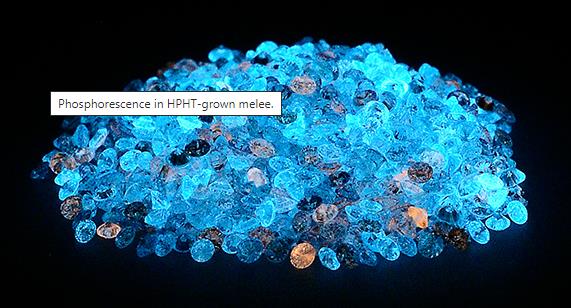
Phosphorescence is a special glow effect seen on some lab-grown diamonds. When you take away the ultraviolet light source, these diamonds can still keep shining for a while. This is a common and interesting feature of many lab-grown stones, especially those made with the HPHT growth method. For daily wear, this trait almost does not change how the diamond looks. However, it is a key clue for gem identification. As a buyer, you just need to learn about this feature and pick diamonds according to your own likes.
What is Phosphorescence?
First, we need to tell apart fluorescence and phosphorescence, because many people mix them up.
Fluorescence means a diamond gives out visible light when exposed to ultraviolet rays, such as UV check lights or strong sunlight. The light will disappear right away once the UV source is removed. You can find fluorescence on both natural diamonds and lab-grown diamonds, so it is really normal.
Phosphorescence works differently. The diamond continues to emit light long after the ultraviolet light is gone. The glowing time can be just a few seconds, or even last for several hours. This phenomenon is extremely rare in natural diamonds, but it is quite typical for certain lab-grown diamonds.
Here is a easy example to help you understand. It is just like the hands on a glow-in-the-dark watch. After absorbing light, the watch hands will glow softly in the dark for some time. That is exactly how phosphorescence acts
Why do lab-grown diamonds have phosphorescence?
The appearance of phosphorescence mainly connects with the diamond’s growing technology and tiny defects inside its crystal structure.
The most common cause comes from the HPHT production method. During the HPHT diamond growing process, workers often use catalysts that contain boron. These boron elements help the diamond form faster and also adjust its color.
After boron atoms enter the diamond crystal lattice, they will combine with other defects inside the stone, like nitrogen atoms. The most well-known combination is called B-N pairs, short for boron-nitrogen pairs.
When these B-N defects get excited by ultraviolet light, the electrons inside will jump to a higher energy state. These electrons take a very long time to return to their normal state. While they slowly settle down, they release energy in the form of visible light, and this creates the phosphorescence we see.
Things are a little different for CVD lab-grown diamonds. Most CVD diamonds do not contain boron, so strong phosphorescence hardly show up on them.
Even so, some other small lattice defects may still form during CVD production, such as empty atomic spaces or silicon impurities. These flaws can lead to weak phosphorescence too. Still, the glow usually fades very quickly and comes in different colors.
What does phosphorescence look like?
When a diamond shows phosphorescence, its glow has clear features.
In terms of color, blue-green and yellow-green are the most common types. The exact color depends on what kind of crystal defects exist inside the diamond.
As for lasting time, most phosphorescence only stays for several seconds to a few minutes. Only a very small number of diamonds can glow for hours, but their brightness drops fast from the very start.
How does phosphorescence affect a diamond’s look and value?
We can look at this question from two different sides.
For daily wearing, phosphorescence has no bad effects at all. Under normal natural light or indoor lights, you cannot see the glow. It will not change the diamond’s original color, brightness or sparkle. You will never see your diamond glow on its own when you stand under sunshine or restaurant lights. There is no need to worry about it ruining your wearing experience.
In some special situations, phosphorescence can become a unique highlight or a point that people care about.
Many people think this hidden glowing feature is really cool. For example, when you stay in a nightclub or turn off the lights at home, your diamond will send out soft mysterious light. It makes your jewelry one of a kind.
For professional gemologists, obvious and long-lasting blue-green phosphorescence is an important identification sign. It strongly suggests the diamond is made by HPHT technology. Since natural diamonds with such trait are almost impossible to find, this is a useful testing hint.
In rare cases, super strong and long-lasting phosphorescence may bring strange feelings. If you walk from bright sunlight into a dark place like a movie theater, the glowing diamond may catch other people’s eyes. A small number of customers do not like this unnatural glow and feel uncomfortable with it.
It is important to know that phosphorescence is just a normal physical effect formed during crystal growth. It is not a quality flaw. It will not make the diamond easier to damage, nor ruin its beauty for daily use.
If you do not like glowing diamonds, you can talk to the sellers and ask for stones without phosphorescence. Reliable jewelry stores have professional tools to test and tell you this feature clearly.
Top grading labs like GIA and IGI will check phosphorescence when grading lab grown diamonds. They will write down the result in the Comments section on the official certificate. You may read sentences like “Phosphorescence is present” or “No phosphorescence detected” there.
On the other hand, if you find this glowing effect fun and special, you can also choose such diamonds on purpose. Let this unique feature make your jewelry stand out from others.