Not all diamonds are worth buying!!!
Both milky tint and brown hue:Tap to see full diamond info
This diamond has milky:Click view detailed diamond information
This diamond has green fluorescence.:View diamond details
This diamond has a cavity:See the diamond details
Fancy color diamonds refer to diamonds with obvious natural body color. Their color must be deep and saturated enough. They go beyond the D-Z color range for colorless diamonds. Their color comes from trace elements or lattice distortion during geological formation. Fancy color diamonds are miracles of nature. Their value mostly lies in their one-of-a-kind hues.
How Fancy Color Diamonds Get Their Color
Here are the main color causes and notes for each type.
Yellow
Cause: Nitrogen atoms.
Note: It is the most common fancy color diamond. People often call it canary yellow.
Blue
Cause: Boron atoms.
Note: Extremely rare. The famous Hope Diamond is a blue diamond.
Pink
Cause: Lattice distortion.
Note: Huge pressure changes the atomic structure. Pink diamonds are rare and high price.
Green
Cause: Natural radiation.
Note: Formed after long time natural radiation. It is very hard to find.
Red
Cause: Lattice distortion plus nitrogen elements.
Note: The rarest color of all. You can barely see red diamonds on the market.
Orange
Cause: Nitrogen elements and lattice distortion.
Note: Pure vivid orange diamonds are extremely scarce.
Purple
Cause: Hydrogen elements and lattice distortion.
Note: Very rare. Most purple diamonds have pink or grey secondary tones.
Brown / Cognac
Cause: Lattice defects or nitrogen elements.
Note: They were mainly used for industrial use in the past. Now they are very popular as fashion jewelry.
Black
Cause: Large amounts of graphite or mineral inclusions.
Note: Opaque stone with a special mysterious look.
Buying Guide for Fancy Color Diamonds
Set your budget first
The price range of fancy color diamonds is extremely wide. You need to know your budget clearly before shopping.
Choose diamonds with official certificates
Only pick fancy color diamonds with certificates from well-known institutes like GIA. A reliable certificate is the base for investment and collection.
Color is the top priority
Spend most of your budget on better color. It is better to choose a diamond with high color grade, such as Fancy Intense or Fancy Vivid. It is okay if it has slightly smaller carat weight or lower clarity.
See the stone in person
Color is a very personal feeling. Two diamonds with the same certificate grade may look different to your eyes. Always check the diamond face to face. If you cannot visit the store, ask for high-definition videos.
Think about the setting metal
The color of ring metal can greatly change how a fancy diamond looks. For example, yellow diamonds show warmer tone when set with rose gold. White gold can better bring out the soft beauty of pink diamonds.
How to Grade Fancy Color Diamonds – The New 4C Standard
Grading rules for fancy color diamonds are different from colorless diamonds. Color takes the leading role. It accounts for about 70 to 80 percent of the total value. People usually call this system “4C + 1C”.
Color – The most important factor
Hue
It means the main color of the diamond, such as pink, blue or yellow. Sometimes a diamond has more than one tone. We call these extra shades secondary colors. For example, pink with purple overtones.
Saturation
This stands for how strong the color is.
Tone
It refers to how light or dark the color appears.
Color Grading Scale
From light to deep, the grades are listed below:
Faint → Very Light → Light → Fancy Light → Fancy → Fancy Dark → Fancy Intense → Fancy Deep → Fancy Vivid
Value Reference
Normally, Fancy Vivid is the highest grade and has the highest value. Next are Fancy Intense and Fancy Deep. You also need to consider how rare the hue is when judging value.
Carat Weight
Just like colorless diamonds, bigger carat size means higher rarity. But for fancy color diamonds, color effect is far more important than carat weight. A small Fancy Vivid diamond can cost much more than a large Fancy Light diamond.
Cut
For fancy diamonds, cutters do not focus only on brilliance anymore. The main goal is to maximize color intensity and beauty. Cutters choose the best shape and proportion according to color distribution on rough stones. Radiant, cushion and emerald cuts are very common choices.
Clarity
Clarity become much less important here. The strong color can easily cover inclusions inside the stone. It is acceptable as long as inclusions do not hurt durability and are not too obvious when viewed from the table. Fancy color diamonds with SI or even I clarity grade are very common on market.
Certificate – The extra 5th C
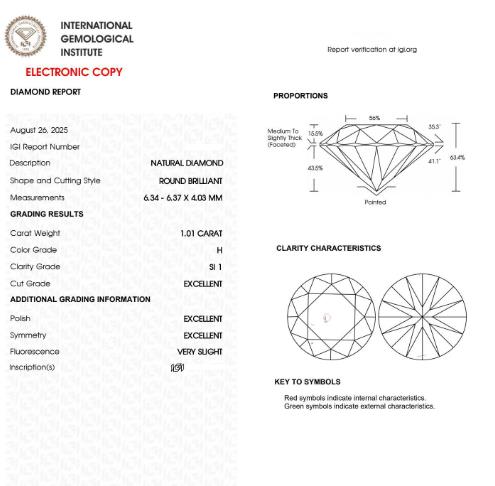
This part is extremely important. The fancy color diamond market is complicated. Authorized certificate is the only proof to tell natural color apart from color treated stones.
GIA, the Gemological Institute of America, issues the most trusted fancy color diamond reports in the industry. The report writes down full details, including color grade, hue and natural color origin.
Famous Fancy Color Diamonds and Their Value
Red Diamonds
They are the rarest type. The price can reach millions US dollars per carat.
Blue Diamonds & Pink Diamonds
They rank second. They are super stars at diamond auctions and set many record high prices. Famous examples are the Oppenheimer Blue and CTF Pink Star.
Green Diamonds & Orange Diamonds
Extremely rare and carry an ultra-high value.
Yellow Diamonds
They are the most affordable among all fancy color diamonds. Even so, Fancy Vivid Yellow diamonds still cost a lot of money.
Lab-Grown Fancy Color Diamonds
Lab-grown fancy color diamonds are created in laboratories. Scientists use high-tech methods to copy the high temperature and high pressure environment deep in the earth mantle. Another common way is CVD, chemical vapor deposition. These lab made stones have bright natural-looking color. Their physical, chemical and optical properties are exactly the same as natural diamonds.
Their color is not simple dyeing. During the growing process, workers add specific elements or create lattice defects on purpose. The forming principle is basically the same as natural fancy color diamonds.
How Lab-Grown Diamonds Get Their Color (Comparison with Natural Formation)
Yellow
Lab method: Add nitrogen (N) elements during growth.
Natural cause: Also formed by nitrogen elements. Two ways are identical.
Blue
Lab method: Add boron (B) elements during growth.
Natural cause: Blue diamonds form because of boron. The principle matches fully.
Pink, Red, Purple
Lab method: Use electron irradiation and annealing after growth to create lattice distortion, also called plastic deformation. This is a widely accepted treatment.
Natural cause: Lattice distortion under pressure, same core principle.
Green
Lab method: Process with electron irradiation.
Natural cause: Long term natural radiation.
Orange
Lab method: Adjust nitrogen structure or combine with irradiation treatment.
Natural cause: Mix of nitrogen and lattice distortion.
Black
Lab method: Add large amount of graphite or other mineral inclusions.
Natural cause: Natural black diamonds also form with rich inclusions.
Lab-Grown Fancy Color Diamonds VS Natural Fancy Color Diamonds
Price
Lab-grown: Big price advantage. The cost is only a fraction or one tenth of natural ones. More people can afford bright fancy colored diamonds.
Natural: Extremely expensive. Top fancy stones cost hundreds of thousands to millions US dollars per carat.
Rarity
Lab-grown: Mass production is possible. People can make any color and size in theory. Rarity is man-controlled.
Natural: Ultra rare. Especially red, blue and pink diamonds. They are real gifts from nature.
Color Performance
Lab-grown: Rich color choices with high saturation. Labs can produce diamonds with even and deep color which you hardly find in nature.
Natural: Color depends fully on natural conditions. Every stone is unique. High saturation fancy colors are very hard to find.
Environment & Ethics
Lab-grown: Most sellers mark them as eco-friendly and conflict-free. But you need to notice the high energy use during production, especially for HPHT method.
Natural: Mining brings environmental impact. There are also ethical concerns. Though the Kimberley Process is running, arguments still exist.
Resale & Preservation Value
Lab-grown: Almost no value retention. The price will drop as technology develop. People buy them mainly for decoration and low cost.
Natural: Great collection and preservation value. Top fancy color diamonds act like hard currency. Their price keep rising in the long run.
Certificate
Lab-grown: Graded by GIA, IGI and other institutes. Certificates clearly mark “Laboratory-Grown”. It also notes if the color is post-growth treated.
Natural: Certificates mark “Natural” and record natural color origin.
The Importance of Authorized Certificates
For lab-grown fancy color diamonds, certificates are even more necessary than natural ones. Color treatment technology is very common now.
GIA (Gemological Institute of America)
It issues detailed grading reports for lab-grown fancy diamonds. The report clearly states three key points:
- This is a laboratory-grown diamond.
- If the color is made by post-growth treatment (applies to pink, green and similar stones).
- Full color grading, such as Fancy Vivid Pink.
IGI (International Gemological Institute)
It is also a mainstream certificate in the market. Its content is similar to GIA reports.
Always buy lab-grown fancy color diamonds with official certificates. These documents can make sure you get the correct product and clear information.