Newest big update! In 2026, Blue Nile and James Allen have merge into one single company. James Allen now acts as an independent goods collection that display right on Blue Nile official website.
Blue Nile and James Allen once was the top two largest online diamond retailers in United States. Right now these two strong brand combine their power together. Blue Nile own the world’s biggest real-time loose diamond inventory. Its suppliers spread all over every corner of the globe. Every single minute, lots of diamonds get sold out and brand new loose stones add into their stock library nonstop. James Allen hold the world’s largest physical 360-degree video diamond database. It can zoom any loose diamond up to 40 times magnification. You can clearly see every flaw and inclusion distribution on the stone without missing any tiny detail.
》》》》Click here to learn how to pick your perfect diamond from Bluenile/ James Allen <<《《
》》》All payment methods James Allen/bluenile accept, tips to buy diamonds with better discount <《《《《
For James Allen and Blue Nile, they got a proud feature called 360 real diamond video. This function help customer easily pick out and compare every single diamond. It get rid of boring cold data and parameters on paper. I think every people trust what their own eyes can see, right? If you want know more about the diamond quality of James Allen, you can read this article to get deeper understand.
How to choose diamonds with high cost performance
Most people buy diamonds for daily wear. In daily life, the first impression others get from your diamond is its size and sparking shine. For clarity grade, you can pick SI1 or SI2 stones that look clean under naked eye. For color, H color is the best choice with great value. If you plan to buy big diamonds above 1.5 carat, VS2 clarity and F, G color will be more suitable. But cut grade must be 3EX without any exception, only this grade can make your diamond shiny enough. Because even within Excellent cut grade, there still have good and bad cutting craft. Bad cut will heavily damage diamond fire and sparkle. You can leave message in the question column on right side to contact us for more professional selection advice. The diamond introduce below have really good cost performance, friends who like it don’t hesitate to place order quickly.
One important rule you must keep in mind: High cost performance do not equal cheap price. It means you spend the most reasonable budget to buy the most beautiful looking diamond. When you wear a diamond ring on your hand, almost no one will check its certification report. People only notice how shiny, white, bright and big your diamond look. You need to make the smartest choice within your planned budget.
Four core shopping strategies for cost-effective diamonds
1. Cut is the most important factor, never save money here
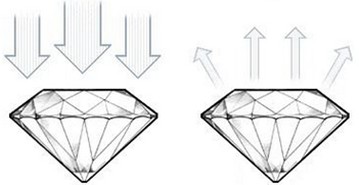
Cut directly decide whether your diamond sparkle or dim. Even if a stone have perfect color and clarity, bad cut will make it look dark and lifeless.
How to select suitable cut?
Shape: Round brilliant cut have the best shine, but it also cost the most. If you want higher value for money, fancy shapes like Cushion, Oval, Princess Cut and Radiant cut worth your consideration. These fancy diamonds usually carry lower price per carat.
Grade standard: Only pick Excellent for round diamonds, Very Good is acceptable for fancy shapes. This is the last standard you should compromise. For round stones, GIA certificate is your top priority choice.
Proportion: Refer to proportion data on your GIA report and pick stones fit standard range, for example table percentage 54%-58%, crown angle 34-35 degree. These numbers guarantee outstanding light performance.
2. Color: Make proper compromise, human eye hard to tell small color gap
Diamond color grade range from D to Z, yellow tone grow heavier as grade drop. But after certain level, naked eye can hardly tell color difference, while the price gap between grades is huge.
G, H, I color are great options. When set on ring band, these three grades look pure white to most people, and their price much more affordable than D, E, F top white color.
Inlay trick: If you choose I or J color diamond, match it with rose gold or yellow gold setting. The warm tone of precious metal can neutralize slight yellow tint on stone, make diamond look whiter visually.
3. Clarity: Stone clean to naked eye is perfect enough
Why we can relax on clarity? All clarity grades judge under 10x magnifying glass. Many tiny inclusions can not be seen by bare eyes at all, and choosing such stone can cut down lots of your budget.
VS1, VS2 and SI1 are recommend grades. Inclusions inside these stones are invisible to most people, price far cheaper than VVS series.
You need extra caution when select SI1 diamonds. You must watch real stone or 360 video to check two key points: first, inclusions should not sit right at center of diamond table; second, avoid stones with big black crystal or obvious feather crack.
Better stay away SI grade diamonds with heavy cloud inclusion, these stones may turn out to be milky diamond with low transparency.
4. Carat weight: Take full advantage of weight threshold price gap
Diamond price jump sharply at whole carat marks like 0.5ct and 1.0ct, this is called carat premium.
How to save cost on carat?
Choose stones just below whole carat line: pick 0.9 carat instead of full 1.0 carat, choose 0.45 carat rather than 0.5 carat. The visual size difference is tiny, but you can save a large amount of money.
Pay attention to diamond diameter mm number on certificate. A well-cut 0.9ct diamond may look same big or even larger than a poorly cut 1.0ct stone.
Standard parameter list for a ideal cost-effective diamond
Shape: Round brilliant or fancy cut (Cushion / Oval)
Cut grade: EX / VG (certified by GIA)
Color grade: G / H / I
Clarity grade: VS2 / SI1 (must pass naked eye clean test)
Carat weight: 0.9ct, 1.2ct, 1.8ct (skip full whole carat number)
Fluorescence: None or Faint. Strong fluorescence will lead to big price discount. If you do not mind cloudy look under UV light, sometimes you can buy high grade diamond at extremely low price.
Certification lab: Only trust authoritative labs like GIA, IGI or AGS. Other unknown small labs have loose grading standard, it is not wise to pick their report just for lower cost.
First figure out your top priority: Do you chase bigger size? Whiter color? Or maximum sparkle? Then use the above cost-performance rules to filter stones on online diamond search platforms, including James Allen, Blue Nile, Brian Gavin Signature Diamond and Whiteflash. For all candidate stones you filtered out, watch their high-definition 360 real stone videos carefully, compare sparkle level, inclusion position and actual color tone one by one. A high cost performance diamond means excellent cut, properly compromised color & clarity (clean to naked eye), weight skillfully avoid whole carat threshold. Diamond certificate exist to guarantee authenticity and accurate grading, but your own eyes are the final judge for visual beauty.
Massive diamond inventory online bring customer abundant choices, but all online stores also have obvious drawbacks. The core problem is uncontrollable stone condition. All loose diamonds they sell source from diamond suppliers all over world, store staff never see the real stone before put it online for sale. This problem become worse for low clarity diamonds. Suppliers want to sell these stones as fast as possible, so they always give vague, evasive answers when customer ask for naked eye inspection details. This is the direct reason why many buyer get disappointed after receiving cheap low-clarity diamonds they bought online.
But every online store have both high-quality and bad quality diamonds, thousands of customer still buy satisfying stones through internet shopping. Our team have professional experience to pick premium diamonds, we will skip milky stones and diamonds with obvious visible flaws. Feel free to leave comment below if you have any questions.