Categories
Others

Diamond knot – What should you know

Not all diamonds are worth buying!!!
Both milky tint and brown hue:Tap to see full diamond info
This diamond has milky:Click view detailed diamond information
This diamond has green fluorescence.:View diamond details
This diamond has a cavity:See the diamond details

A knot is an inclusion crystal that stretches all the way to a diamond’s surface. To put it simply, it is a tiny mineral crystal inside the diamond. During cutting and polishing, the stone is ground down until this inner crystal gets exposed. It starts as a regular inclusion, most often another diamond crystal or other mineral crystals. Since it breaks through the diamond surface, it counts as both an internal feature and an external blemish. That is why we need to pay extra attention to knots when picking diamonds. A knot is one of the most noteworthy clarity characteristics. It can bring real troubles to a diamond’s durability and overall look.

Why do we need to watch out for diamond knots?

A knot will lower the diamond’s clarity grade. More importantly, it leads to two major problems.

Durability Risk

This is the biggest concern. A knot sticks out on the diamond surface, so it is much weaker than the surrounding stone.

It chips easily. When being set into jewelry, especially under pressure setting, or hit and bumped during daily wear, the raised knot will chip far more easily than the rest part of the diamond.

It also makes maintenance hard. Even during regular jewelry cleaning or repair works, wrong operation may damage this fragile spot.

knot

Visibility & Appearance Issues

White knots usually are small white or transparent dots if they are made of diamond crystals. As they sit right on the surface, their reflection is different from the main diamond. Sometimes they stand out more than other inclusions of the same size deep inside the stone.

If the knot consists of other minerals like garnet or pyroxene, it will turn dark or black. Dark knots are highly visible and do far more harm to the diamond’s appearance.

How to identify a knot on a GIA report

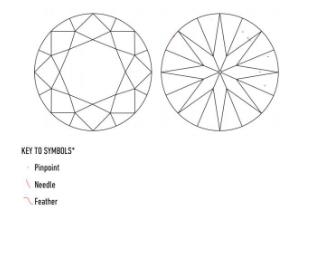
On the GIA clarity plot diagram, knots are marked with red symbols. Red marks always stand for features that reach the stone’s surface.

A knot may be labeled as a small dot or circle on the diagram, with the short form “Knt” next to it.

Here is an important tip. You have to check both the plot diagram and the written description. The diagram show you the exact location, while words like “Crystal, Knot” tell you what the inclusion is.

Buying advice: What to do when a diamond has a knot?

Try to avoid it first

For most buyers, especially those shopping for engagement rings worn every day, it is wise to stay away from diamonds with knots. This can save you from potential damage and appearance issues in the future.

Evaluate the situation carefully

If a diamond catches your eye for its great color, carat weight and good price, you need to make a full assessment.

Check its size and position. How big and noticeable is this knot? Does it locate on the pavilion or the crown?

Knots on the pavilion have lower risk. They are usually protected by prongs and the ring shank. They are hard to hit and barely visible from the front view.

Knots on the crown or girdle carry very high risk. These areas get hit all the time in daily life. Knots near the girdle are extremely easy to break during stone setting.

Check the clarity grade. If a diamond is graded SI clarity and its main inclusion is a knot, you need to be extra careful. Such knots are likely to be seen by naked eyes and even felt by touch. If the diamond is VS grade or higher, the knot is usually tiny, so the risk is much smaller.

Always check the real stone in person

Look closely. Use a magnifying glass to check the knot’s size, position and how much it sticks out.

Touch the surface gently. Feel if the knot is raised above the diamond.

Choose reliable sellers. Buy from trusted merchants who provide 360-degree high-definition videos. Watch the videos carefully to study the knot’s condition. Honest sellers will always tell you about the hidden risks clearly.

Conclusion

Knots are not the most common clarity characteristics, but they are definitely ones we cannot ignore. They ruin the diamond’s look and also create hidden durability risks.

Unless you fully understand and accept all the risks, or the knot is extremely small and placed in a safe spot, you had better choose a diamond without any knot for long-term wearing. A diamond with other inner inclusions, such as small internal crystals, clouds or feathers, is much safer than a diamond with a surface knot.
Categories
Others

What Is a Flying Saucer Diamond?

Not all diamonds are worth buying!!!
Both milky tint and brown hue:Tap to see full diamond info
This diamond has milky:Click view detailed diamond information
This diamond has green fluorescence.:View diamond details
This diamond has a cavity:See the diamond details

fish eye effect of diamond

The name Flying Saucer Diamond is really vivid. It describes a diamond with an extremely shallow pavilion. When you look at it from the side, the girdle looks extra wide, while the pavilion part is extremely thin. The whole stone looks just like a flying saucer or a flat button.

This kind of cut has only one bad purpose. Cutters keep as much carat weight as they can, and make the table look much larger than it really is. It tricks buyers into thinking they get a big diamond. In diamond cutting industry, this is a clear negative term and a serious cut defect. It is also know as a worse version of fish eye diamond, or the extreme form of fish eye effect.

A flying saucer cut go against the core idea of diamond cutting. The goal of proper cutting is to maximize a diamond’s brilliance and fire. This bad cut brings many serious problems.

First, the diamond loss all brilliance and fire. It looks totally dull. A diamond shines because light enters the stone. The light reflect fully between pavilion facets, and finally bounce back through the crown to our eyes.

For flying saucer diamonds, the pavilion is too shallow. Light cannot reflect inside. It leaks straight out from the bottom. The stone turns dim and lifeless. It looks just like a plain piece of glass, with no sparkle at all. This is its biggest and worst flaw.

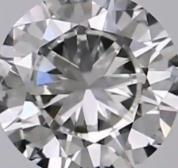
Second, it has obvious girdle reflection, also called severe fish eye effect. When you look down from the table, you will see a big, pale grey ring. This is the reflection of the thick girdle. The ring is large and clear. It makes the center of the diamond look empty and ugly. The whole stone lose its beauty completely.

Third, the structure is weak and easy to damage. The pavilion is super thin, so the girdle area become fragile. It is easy to get chips or cracks during setting or daily wear. This type of diamond has very poor durability.

How to spot a flying saucer diamond from a GIA certificate?

Do not only trust the overall cut grade. Some flying saucer diamonds can even get Good or Fair grade. You have to check the Proportions chart on the certificate carefully.

Pavilion Depth percentage is the most important index. If the number is below 40.0%, the risk is very high. A typical flying saucer diamond may have pavilion depth of 37% or even lower.

Total Depth percentage will also be too low. Total depth shows the full height of a diamond. Normal round diamonds have total depth between 57% and 63%. Flying saucer diamonds usually have total depth under 56%.

The Crown Angle is abnormal too. Cutters often use a very small crown angle to match the ultra-shallow pavilion.

The Girdle is extremely wide. The certificate marks girdle thickness. Most of these diamonds are marked Thick to Extremely Thick. Cutters barely polish the girdle, just to save weight.

Here is another easy way to judge. If both Pavilion Depth and Total Depth are unusually low, it is almost certainly a flying saucer diamond.

How to avoid buying this kind of diamond?

Learn to read the proportions on GIA reports. This is your first line of defense. Stay away from diamonds with pavilion depth below 40.0% and too low total depth.

Never buy a diamond only by its certificate. No matter how good the data is, check the real stone or watch 360° high-def videos from trusted sellers. Turn the diamond around. If you see a big grey ring on the table and no sparkle, do not buy it at all.

Choose reliable sellers. Pick well-known jewelry stores or online platforms, such as Blue Nile, James Allen( now belongs to Blue nile) and Whiteflash. They will filter out poorly cut diamonds in advance. They will not sell these bad stones to customers.

Categories
Others

Diamond fish eye effect

Not all diamonds are worth buying!!!
Both milky tint and brown hue:Tap to see full diamond info
This diamond has milky:Click view detailed diamond information
This diamond has green fluorescence.:View diamond details
This diamond has a cavity:See the diamond details

The fish eye effect is a common optical issue in diamonds. When you look straight down from the table, you can see the reflected edges of the pavilion facets. It forms a pale grey or white ring, just like the eye of a fish. A diamond with fish eye effect looks dull and lifeless. There is a dark empty circle right in the center. It lose its normal brightness and fire completely.

This problem is caused by poor cutting, which leads to serious light leakage inside the stone. The diamond looks dim and unattractive, just like a dead fish’s eye. This also tell us an important truth. We cannot choose a diamond only by the GIA Excellent cut grade. A high grade on paper does not always mean the diamond perform well in real view.

When you buy a diamond, you must check both the certificate data and the actual appearance of the stone. In this way, you will not only get a nice report, but also a real brilliant and beautiful gem.

What causes the fish eye effect?

The main reasons come from improper cutting. It mostly happens when the total depth is too shallow, and the crown angle and pavilion angle do not match well. Here are the key causes in detail.

fish eye

First of all, a shallow pavilion. If the pavilion angle is too small, or the pavilion depth percentage is too low, light cannot create total internal reflection inside the diamond.

Then light leakage occurs. Instead of reflecting back to your eyes through the table, light escape directly from the sides of the pavilion. This is the core of the problem.

Because of such light loss, you can clearly see the reflection of the diamond’s girdle when looking from the top. A white grey ring will appear around the center. That is exactly the fish eye we talk about.

Here is a simple example to help you understand. Imagine a swimming pool that is too shallow. Standing on the bank, you can easily see the tile lines along the pool bottom. You cannot feel the deep sense of water at all. It is the same logic with diamonds.

How to spot potential fish eye effect from a GIA certificate?

We cannot confirm the problem 100% only by papers. But you can check the proportions section on GIA reports to rule out high-risk diamonds.

Low pavilion depth percentage is the biggest warning sign. Generally speaking, if the pavilion depth is below 40.0%, the risk of fish eye effect is very high.

A too small crown angle will make the situation worse. When crown angle is less than 30.6°, matching with a shallow pavilion, the fish eye issue become much more obvious.

Besides, an overly large table also raise the risk. When table percentage is over 62%, there are fewer facets to spread light evenly inside the diamond.

You need to keep one thing in mind. Even if the diamond is graded Excellent in cut, it may still have slight fish eye effect. GIA cut grading covers a range of proportions. Diamonds at the lower limit of Excellent grade often have much worse optical performance than top-level stones in the same grade.

How to avoid buying diamonds with fish eye effect?

Never buy a diamond just based on its certificate. This is the most important rule. Certificate is just a basic reference. Real inspection or high-definition videos are the key.

Study the proportions on GIA certificates carefully. Try to pick diamonds within the safe range. These are the ideal proportion ranges recommended in the industry:

Pavilion Depth: 42.5% to 43.5%

Crown Angle: 34° to 35.5°

Table Percentage: 54% to 58%

Total Depth: 59.0% to 62.5%

These are standard ideal ranges. A little out of the range does not definitely cause problems. But the further it deviates, the higher the risk will be.

Always check the diamond in person, or ask the seller for real videos.

If you can see the stone face to face, place it on a white paper. Look down from the table. If you notice a vague white or grey ring in the center, it has the fish eye effect.

If you shop online, ask reliable sellers for 360° high-definition videos of the diamond. Watch the video slowly. Turn the stone and check the front view again and again for any sign of fish eye. Trustworthy merchants will not sell such defective diamonds secretly. They will take initiative to tell customers about all existing flaws.

Categories
Others

Do Not Judge Diamonds by Certificates Alone

Not all diamonds are worth buying!!!
Both milky tint and brown hue:Tap to see full diamond info
This diamond has milky:Click view detailed diamond information
This diamond has green fluorescence.:View diamond details
This diamond has a cavity:See the diamond details

Buying diamonds just based on certificates is a very risky move. You may end up with a stone that has perfect data on paper, but looks disappointing in real life. Certificates like GIA reports work like ID cards for diamonds. They prove the basic features and official grades, but they can never guarantee how beautiful a diamond looks. Buying a diamond only with a certificate is just like hiring an employee only by their resume. A resume, which is similar to a diamond certificate, shows education, work experience and skills, just like the 4C standards on a report. But you cannot tell their real work attitude, communication skills and team work spirit. These equal to a diamond’s actual look and sparkle. If you do not want to spend a lot of money and feel regret later, you must check both the certificate and the real diamond. Do not just pay for a nice report. Choose a diamond that is truly bright and stunning.

AGS

Here are the main problems you may face if you only trust the certificate. First, you will miss the most important part: real appearance and optical performance. The 4Cs including color, clarity, cut and carat weight are graded by lab experts under controlled environment. However, people wear diamonds to admire their beauty, not to lock the certificate in a safe. Many people fall into the trap of milky diamonds or coffee diamonds. Some diamonds have massive cloud inclusions inside. They look foggy and hazy, which we call milky diamonds. Some carry obvious brown tones, known as coffee diamonds. Even if their clarity grade is not low, such as SI1 or VS2, those clouds will badly hurt brightness and transparency. The diamond looks dull and lifeless. Sadly, this kind of visual problem are not noted on most certificates.

A top Excellent cut does not always mean great sparkle and fire. There is a big range within the Excellent grade. Two diamonds both marked Excellent cut can be totally different. One with cut proportions just meeting the standard, and another with perfect proportions. Their sparkle, fire and brightness can have huge gaps. You can never know these differences only from a piece of paper.

Poor symmetry and polish are also common issues. Bad symmetry makes the table tilt and girdle uneven. It blocks light reflection and ruins the overall beauty. These details are written on certificates, but ordinary people can not imagine how bad they look in real view.

Second, you cannot judge a diamond’s unique charm and beauty. Every diamond is just like a person, it has its own style.

The position and visibility of inclusions matter a lot. Take two VS1 diamonds for example. One has inclusions hidden at the pavilion, so you can not see them from the top table. The other has marks right in the center of the table, just like obvious dust. The plotting diagram on the certificate marks the position, but you need to see the stone in person or watch professional photos to tell how noticeable it is.

Diamond fluorescence also creates different visual effects. Certificates mark fluorescence levels: none, faint, medium, strong and very strong. Strong fluorescence may make diamonds look foggy under sunlight and reduce clarity. On the other side, faint to medium fluorescence can make slightly yellow diamonds such as color J and K look whiter. This is a visual feeling you have to see yourself, you cannot tell good or bad just from words.

Third, you may buy so-called “data diamonds”. Many online sellers and wholesalers sell this kind of stones. They have perfect certificate data, but plain and ugly appearance. They know many buyers trust GIA reports and 4C numbers too much. They buy these flawed diamonds at low cost, then sell them with the slogan of high cost performance. You think you get a good deal, but actually you get a dull diamond with no shine.

Now let’s talk about the right way to buy diamonds: combine certificate check and real product evaluation.

A certificate is necessary for reference and quality guarantee, but it is not everything. Follow these steps.

Set your budget and 4C range first. Use the 4C rules to narrow down your choices. Read the plotting diagram carefully. Stay away from diamonds with inclusions on the table center or large cloud inclusions. Also make your choice on fluorescence level.

The most important step is to view the real diamond or watch professional videos.

If you visit physical stores, check diamonds under professional lights and natural daylight. Compare fire, brightness and transparency between different stones. Ask the shop staff to put several options together for comparison.

If you shop online, pick reliable sellers. Choose stores that provide high-definition magnified videos, 360° views, ASET and Idealscope images. James Allen ( note in 2026, james allen has joined bluenile) and Blue Nile are trustable online jewelry stores. These materials clearly show a diamond’s optical performance, making up for the lack of in-person viewing. Videos are much more reliable than static pictures.

Last, work with reputable jewelers or diamond consultants. They have rich experience and can guide you to avoid common traps.

Categories
Jewelry Others

GIA Lab Grown Diamond Certificate

Not all diamonds are worth buying!!!
Both milky tint and brown hue:Tap to see full diamond info
This diamond has milky:Click view detailed diamond information
This diamond has green fluorescence.:View diamond details
This diamond has a cavity:See the diamond details

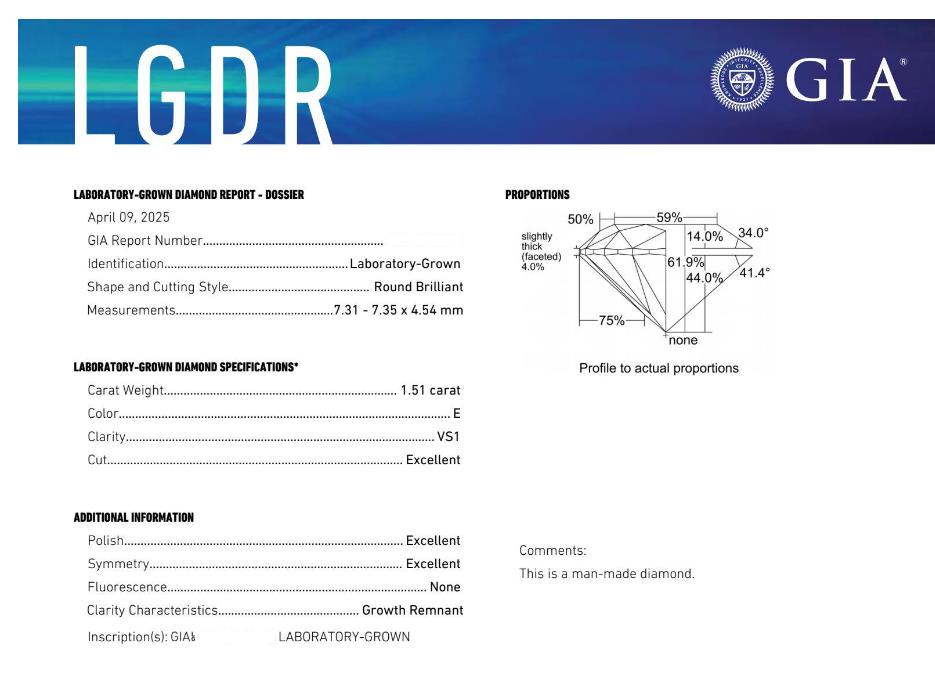
GIA, the Gemological Institute of America, do issue official certificates for laboratory-grown diamonds. However, these documents are quite different from the certificates for natural diamonds in names, contents and main purposes. It is very important for every buyer to tell them apart clearly. Here is the full and detailed explanation.

GIA Lab-Grown Diamond Report vs GIA Natural Diamond Grading Report

We list the key differences between the two types of certificates below.

Document Name

GIA Laboratory-Grown Diamond Report for man-made diamonds.

GIA Diamond Grading Report for natural diamonds.

Main Purpose

The lab-grown report focus on identification and grading. It confirm the stone is made in lab, and grade its four key factors: color, clarity, cut and carat weight.

The natural diamond report do identification, grading and also act as a guarantee. Besides 4C grades, it proves the diamond is natural and supports its market value.

Key Contents

For GIA lab-grown diamond report:

It clearly mark the words “Laboratory-Grown”. It state the production method, either CVD or HPHT. The report includes standard 4C grades, clarity plot, proportion diagram and a QR code. You can scan the code to check the electronic report online.

For GIA natural diamond grading report:

It is marked “Natural Diamond”. It has complete 4C grades, clarity plot and proportion diagram. It also record fluorescence details. Some diamonds have laser engraved GIA code on the girdle, which is optional. A QR code is also printed for online inquiry.

GIA Lab-Grown Diamond Report

Grading Standards for Color & Clarity

Lab-grown diamonds use the same standard as natural ones. It follow D-Z color scale and FL to I3 clarity scale. Natural diamonds use exactly the same D-Z color grades and FL-I3 clarity grades too.

Most Obvious Differences

The lab-grown certificate has a light blue background. Large “LABORATORY-GROWN” watermarks cover the grading areas. This design stop people from altering the paper or mixing up two kinds of diamonds.

The natural diamond certificate is classic white, with no lab-grown watermark at all.

Girdle Engraving

Lab-grown diamonds are laser engraved with “LABORATORY-GROWN” and the report number on the girdle.

Natural diamonds are engraved with GIA report number, and sometimes with the GIA diamond symbol.

GIA carry out very strict checks on lab-grown diamonds. All information is fully open and transparent. This make sure customers know exactly what they buy, and avoid confusion between lab-grown and natural diamonds.

How to Read a GIA Lab-Grown Diamond Certificate

You can check sample reports on GIA official page: GIA Report Check – Laboratory-Grown Diamond. Here is how you understand the key parts.

Report Type: It will show Laboratory-Grown Diamond Report directly.

Grade Scale: It notes that color and clarity grades use the same rules as natural diamonds.

Comments: This area writes clearly: This is a man-made diamond grown by CVD or HPHT method.

Background & Watermark: The light blue color and big “LABORATORY-GROWN” watermarks are the easiest features to recognize.

Why Get a GIA Certificate for Lab-Grown Diamonds?

First, quality guarantee. GIA is one of the most famous and trusted gem institutes around the world. Its 4C standard is widely accepted by the whole jewelry industry. A GIA certificate means the diamond’s quality is checked by a fair third party.

Second, build trust. With clear information on production method and quality grade, customers will not be misled by dishonest sellers. Shopping will become much safer.

Third, price reference. Lab-grown diamonds do not rely on rarity for value, but their price still closely link to 4C grades. GIA certificates provide official quality standards for pricing and comparison.

Fourth, prevent disputes. The clear “Laboratory-Grown” label stop illegal sales behavior. No one can sell lab-grown diamonds as natural ones. It protect the rights of both buyers and sellers.

Certificates from Other Well-Known Institutes

Apart from GIA, many professional organizations also issue certificates for lab-grown diamonds.

IGI, the International Gemological Institute, is very popular. It holds a large market share in lab-grown diamond business. Its certificates are mostly blue and clearly marked “Laboratory Grown”.

HRD, the Antwerp Diamond High Council, is another top institute. It also provide professional identification reports for lab-grown diamonds.

NGTC, the National Gemstone Testing Center, is the most authoritative testing body in China. It also offer full inspection service for lab-grown diamonds.

All certificates from above institutes are reliable. When you shop for diamonds, always choose reports from these professional organizations. Remember these useful tips: Always ask for official certificates. Check if the number on certificate match the laser engraving on diamond girdle.

You need to know that lab-grown diamonds win people over for its beauty, eco-friendly production and great cost performance. They are not good choices for investment and value preservation. Hope all these information can help you a lot.

New Policy Update from GIA

GIA announced a big new rule in early June. Starting from late 2025, GIA will no longer use the traditional 4C grading system on laboratory-grown diamonds. The institute will apply a brand new descriptive rating system instead. In the future, lab-grown diamonds will only be divided into two ranks: Premium and Standard. Diamonds with poor quality will not get any grade at all. This new rule will further separate lab-grown diamonds from natural diamonds in the market.

Categories
Others

Types of Diamond Clarity Blemishes & Inclusions

Not all diamonds are worth buying!!!
Both milky tint and brown hue:Tap to see full diamond info
This diamond has milky:Click view detailed diamond information
This diamond has green fluorescence.:View diamond details
This diamond has a cavity:See the diamond details

Diamond Clarity shows the inside inclusions and outside surface marks of a stone. Every diamond has its own unique features formed during growth. If you often read diamond certificates, you will notice different internal and external flaws. Based on the GIA grading system, we explain all clarity features clearly. We divide them into two main parts: internal characteristics and external characteristics.

Internal Characteristics, also called Inclusions

These are flaws inside the diamond.

  • Crystal: Tiny mineral crystals inside the stone. They look like dots or thin lines, black or white. Black crystals are more easy to see, and hurt clarity grade more.
  • Feather: Internal cracks that look like feathers. Do not ignore its position. If the feather reach the surface, especially the girdle, hit may make crack bigger or even break the diamond. Small inner feathers are less risky.
  • Cloud: Made of countless tiny dots. It looks like fog inside the diamond. Thick and large cloud will turn the stone hazy, people call it milk diamond. It greatly cut down shine and value.
  • Pinpoint: Super small white dots. It is the mildest inclusion. Single pinpoint can not be seen by naked eyes. Many pinpoints together will form a cloud.
  • Needle: Long and thin white crystal inside. It rarely affect clarity, unless it is too long or too many.
  • Twinning Wisp: Lines or nets mixed with dots, clouds and crystals. It often appear in lab-grown diamonds. It is a weak structure. GIA report use red lines to mark it.
  • Internal Graining: Irregular lines from crystal growth. Experts need magnifier to see it. Serious graining will reduce transparency.
  • Cavity: Holes on the surface. It easily collect dirt and make the diamond less durable.
  • Indented Natural: Slight dents of original diamond surface near the girdle. It is natural feature, not damage. It hardly affect looks.
  • Knot: Crystal stretch to the surface. It is both internal and external flaw, and may weaken the stone.
  • Bearding: Tiny feather cracks around the girdle. Light bearding can be fixed by re-polishing. Heavy ones ruin look and durability.
  • Laser Drill Hole: Small holes made by laser to remove dark inclusions. This is a treatment. The hole is tiny and invisible to naked eyes. GIA will mark it on report.
  • Chip: Shallow breaks on edges. It is damage, easy to catch dust and reduce sturdiness.

External Characteristics, also called Blemishes

These are surface flaws. Most of them can be removed by re-polishing.

  • Natural: Original diamond surface near girdle. It is not a flaw, just natural mark.
  • Abrasion: Small wear marks on edges from friction. Easy to fix with polish.
  • Polish Lines: Fine parallel lines left during polishing. Good polish lines only show under 10x magnifier.
  • Scratch: Thin lines on surface. Can be polished away.
  • Pit: Tiny small holes on surface. It has little influence on clarity.
  • Nick: Mini gaps on facet edges. Simple polish can fix it.
  • Extra Facet: Extra cutting surface near girdle. It will not affect shine, only symmetry grade.

Clarity grade judge features under 10x magnifier, not the number of flaws. Our goal is to pick eye-clean diamonds.

First of all, stay away from milk diamonds and big cracks. Watch out for thick Cloud. Check if Feather run to the surface. Always trust official certificates like GIA or IGI. Their clarity diagrams tell you every flaw’s type and place.

For good value, VS1 and VS2 are great choose. Most inclusions can not be seen by eyes. Many SI1 diamonds are also eye-clean, you need to check carefully.

Seeing the real diamond is always best. Turn the stone under light. If it looks bright, clear and no dark spots or foggy look, it is a good diamond for you.

Categories
Blue Nile

Blue Nile Diamond Review: Is It a Trap?

Not all diamonds are worth buying!!!
Both milky tint and brown hue:Tap to see full diamond info
This diamond has milky:Click view detailed diamond information
This diamond has green fluorescence.:View diamond details
This diamond has a cavity:See the diamond details

Blue Nile is the world’s largest online diamond e-commerce platform. It has now merged with James Allen, so the total diamond inventory has become much larger. However, the diamonds sold here are mixed in quality. Many people wonder if customers may get tricked or suffer losses when shopping here, and this is indeed a very practical question. As the biggest online diamond retailer across the globe, Blue Nile has obvious strengths as well as hidden traps or risks. For shoppers who have done enough homework, Blue Nile is a real treasure. But for people who know nothing about diamonds before buying, this platform may bring unexpected troubles.

Why Choose Blue Nile? Its Main Advantages

Unbeatable cost performance

This is Blue Nile’s biggest strength. Since it does not run physical stores and save a huge amount of rent and operating costs, its diamond prices are generally 20% to 40% lower than traditional jewelry shops. With the same budget, you can pick a bigger diamond or one with better quality on this platform.

Extremely wide selection of goods

It holds hundreds of thousands of diamonds in stock. You can filter items by all key standards, including the 4C (cut, color, clarity and carat), official certificates and diamond proportions. It is easy for you to compare different diamonds and find the one that fits your needs perfectly. No offline store can offer such a rich choice.

blue nile  trap or not ?

Fully transparent product information

Every diamond is attached with certification documents issued by well-known authoritative gem labs such as GIA, IGI and AGS. You can check all detailed specifications clearly, and you will not be misled by fancy sales talks from shop assistants in physical stores.

Rich learning resources for buyers

The official website provides detailed buying guides and professional knowledge about diamonds. These contents help new learners quickly get basic knowledges, so you can make wise choices with confidence.

Free lifetime maintenance service

Blue Nile offers free lifetime warranty for all its jewelry pieces.

Potential Risks & Practical Solutions

The problems people may meet do not come because Blue Nile is an untrustworthy seller. In fact, most troubles are the natural drawbacks of buying high-value items like diamond rings online. Below are the common risks and useful ways to avoid them.

1. The real product fails to match your expectation

This is the most serious risk. The certificates, pictures and 360-degree videos showed on the screen can never totally replace seeing the diamond in person. You may face two common problems. Some diamonds pass the cut standard on paper, but they do not shine brightly and lack fire in real view. Besides, some hidden flaws will not be marked on official certificates. A diamond may look cloudy, carry brown tint or have green hue. These flaws will greatly ruin its appearance.

Solutions:

First, give priority to round diamonds with ideal cut, or choose reputable signature collections like Astor by Blue Nile to guarantee good cutting quality. Second, ask customer service to send real shooting videos of the diamond, and check its sparkle and transparency from different angles. Third, talk to the staff clearly and ask them to confirm the diamond has no milky, brown or green tint. Remember to keep the chat record.

2. Unable to check the inlay craftsmanship online

You cannot carefully examine the details of the ring setting online, such as the smoothness of prongs and the polishing of metal surface. Sometimes the craftsmanship may not be fine enough.

Solutions:

It is better to pick classic and simple styles, which are less likely to have craft problems. Check the ring carefully right after you receive the package. Blue Nile supports a 30-day return and exchange policy, so contact customer service at once if you find any defects.

3. Inconvenient after-sales service

Services like cleaning, maintenance, repair and ring resizing all need to be done by mail. It is not as convenient as taking the jewelry to a local offline store nearby anytime.

Solutions:

Learn all the after-sales rules in advance. You can also take your jewelry to reliable local jewelry stores for daily maintenance later.

4. Lack of brand emotional value

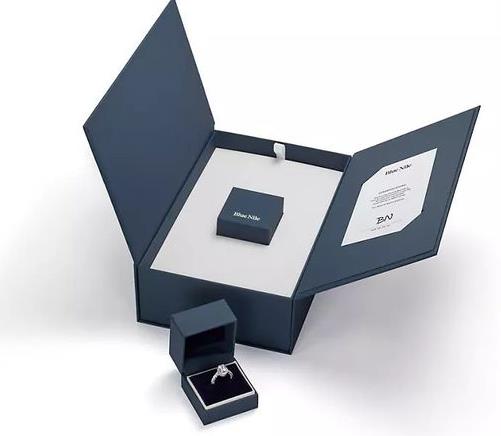
Blue Nile mainly sells products themselves, instead of luxury brand stories or special shopping experience. It does not have the famous fancy packaging and extra brand value like some top luxury brands, so you will not get that special excitement when unboxing.

Solutions:

Figure out your real demand first. Do you just want a high-quality diamond, or are you chasing the feeling and reputation of a luxury brand? Blue Nile is absolutely the best choice for the first group of buyers.

To sum up, Blue Nile itself is not a tricky platform. It is a formal listed company with good public reputation and clear pricing. All the possible troubles are brought by the online shopping model for diamonds.

If you make full preparations, you can stay away from all these risks and buy your ideal diamond at a great price. Learn about the diamond 4Cs first, especially the importance of cut, and make sure you understand what milky, brown and green tint mean. Set your budget and filter standards on the website, for example, choose diamonds with GIA Excellent cut, color above H grade and clarity above VS2 grade. Never forget to ask customer service to confirm no milky, brown or green tint and ask for real videos. After receiving the goods, check the diamond’s sparkle and inlay work under bright light. If you are not satisfied with anything, use the 30-day return policy without hesitation.

Categories
Others

Diamond inclusion – pinpoint

Not all diamonds are worth buying!!!
Both milky tint and brown hue:Tap to see full diamond info
This diamond has milky:Click view detailed diamond information
This diamond has green fluorescence.:View diamond details
This diamond has a cavity:See the diamond details

Pinpoints are tiny white crystal inclusions inside diamonds. They form when the diamond traps small mineral crystals or tiny empty spaces during its growth. Common trapped minerals include other diamond crystals and garnets. When viewed under a 10x magnifying lens, these features look like tiny white dots, just like the tip of a needle. As the name suggests, they are dot-like inclusions.

Pinpoint is one of the most common inclusions found in diamonds. Diamonds of nearly all clarity grades may contain pinpoints. They are also among the mildest inclusions you can find. A single pinpoint barely affects a diamond’s look or value. Buyers do not need to worry too much about this feature. When shopping for diamonds, you should pay more attention to the overall clarity grade and whether the stone is transparent and brilliant.

How Do Pinpoints Affect Diamonds?

The impact of pinpoints depends entirely on their quantity, size and position inside the diamond.

Single small pinpoint

It has almost no negative effects. A lone tiny pinpoint is hard to spot even with a 10x magnifier.

In terms of clarity grade, a single pinpoint may drop a diamond from IF (Internally Flawless) to VVS1 or VVS2 (Very Very Slightly Included). These are still top-tier clarity levels.

To the naked eye, this kind of pinpoint is completely invisible. It will never ruin the diamond’s beauty or sparkle.

diamond pinpoint

Clustered pinpoints

When three or more pinpoints gather closely together, they form another type of inclusion called a cloud. The area looks hazy and foggy.

If a cloud covers a large area and is very dense, the diamond will turn cloudy. People call this kind of stone a milky diamond. It will greatly reduce the diamond’s brightness and market value, so you need to watch out for this problem.

In most cases though, small clouds do not change the diamond’s appearance at all.

On the clarity plot of a GIA diamond report, pinpoints are marked with small red dots. Red marks stand for internal characteristics. If there are too many pinpoints to draw one by one, the report will add a note that says “Pinpoints are not shown”. This note means the diamond has a large number of tiny pinpoints. Gemologists will make a full evaluation of their total influence on clarity.

For most diamonds, pinpoints are harmless inclusions. One or several small pinpoints will not damage the diamond’s durability, nor will they affect its beauty during daily wear.

Even though pinpoints themselves are safe, you still need to check if they cluster into big clouds from the clarity diagram. If the report notes “Clouds are not shown”, you should ask the seller to check and make sure the diamond has no milky haze.

pinpoint in GIA certificate

GIA clarity grading has already taken the influence of pinpoints into consideration. If a diamond is graded SI1 or higher, including FL, IF, VVS1, VVS2, VS1, VS2 and SI1, its pinpoints are almost impossible to see with naked eyes. If you can, it is always better to check the diamond in person.

Turn the diamond under light. If it looks clear, bright and free of foggy texture, you have no reason to worry about existing pinpoints.

Categories
Jewelry Others

Lab grown diamond Phosphorescence

Not all diamonds are worth buying!!!
Both milky tint and brown hue:Tap to see full diamond info
This diamond has milky:Click view detailed diamond information
This diamond has green fluorescence.:View diamond details
This diamond has a cavity:See the diamond details

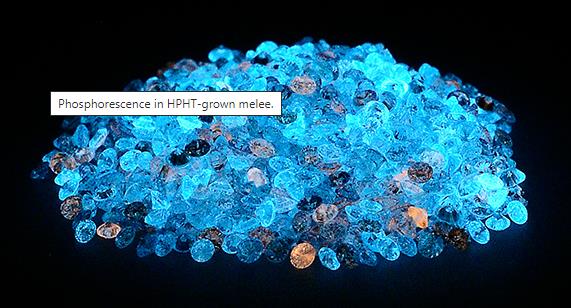
Phosphorescence is a special glow effect seen on some lab-grown diamonds. When you take away the ultraviolet light source, these diamonds can still keep shining for a while. This is a common and interesting feature of many lab-grown stones, especially those made with the HPHT growth method. For daily wear, this trait almost does not change how the diamond looks. However, it is a key clue for gem identification. As a buyer, you just need to learn about this feature and pick diamonds according to your own likes.

What is Phosphorescence?

First, we need to tell apart fluorescence and phosphorescence, because many people mix them up.

Fluorescence means a diamond gives out visible light when exposed to ultraviolet rays, such as UV check lights or strong sunlight. The light will disappear right away once the UV source is removed. You can find fluorescence on both natural diamonds and lab-grown diamonds, so it is really normal.

Phosphorescence works differently. The diamond continues to emit light long after the ultraviolet light is gone. The glowing time can be just a few seconds, or even last for several hours. This phenomenon is extremely rare in natural diamonds, but it is quite typical for certain lab-grown diamonds.

Here is a easy example to help you understand. It is just like the hands on a glow-in-the-dark watch. After absorbing light, the watch hands will glow softly in the dark for some time. That is exactly how phosphorescence acts

Phosphorescence

Why do lab-grown diamonds have phosphorescence?

The appearance of phosphorescence mainly connects with the diamond’s growing technology and tiny defects inside its crystal structure.

The most common cause comes from the HPHT production method. During the HPHT diamond growing process, workers often use catalysts that contain boron. These boron elements help the diamond form faster and also adjust its color.

After boron atoms enter the diamond crystal lattice, they will combine with other defects inside the stone, like nitrogen atoms. The most well-known combination is called B-N pairs, short for boron-nitrogen pairs.

When these B-N defects get excited by ultraviolet light, the electrons inside will jump to a higher energy state. These electrons take a very long time to return to their normal state. While they slowly settle down, they release energy in the form of visible light, and this creates the phosphorescence we see.

Things are a little different for CVD lab-grown diamonds. Most CVD diamonds do not contain boron, so strong phosphorescence hardly show up on them.

Even so, some other small lattice defects may still form during CVD production, such as empty atomic spaces or silicon impurities. These flaws can lead to weak phosphorescence too. Still, the glow usually fades very quickly and comes in different colors.

What does phosphorescence look like?

When a diamond shows phosphorescence, its glow has clear features.

In terms of color, blue-green and yellow-green are the most common types. The exact color depends on what kind of crystal defects exist inside the diamond.

As for lasting time, most phosphorescence only stays for several seconds to a few minutes. Only a very small number of diamonds can glow for hours, but their brightness drops fast from the very start.

How does phosphorescence affect a diamond’s look and value?

We can look at this question from two different sides.

For daily wearing, phosphorescence has no bad effects at all. Under normal natural light or indoor lights, you cannot see the glow. It will not change the diamond’s original color, brightness or sparkle. You will never see your diamond glow on its own when you stand under sunshine or restaurant lights. There is no need to worry about it ruining your wearing experience.

In some special situations, phosphorescence can become a unique highlight or a point that people care about.

Many people think this hidden glowing feature is really cool. For example, when you stay in a nightclub or turn off the lights at home, your diamond will send out soft mysterious light. It makes your jewelry one of a kind.

For professional gemologists, obvious and long-lasting blue-green phosphorescence is an important identification sign. It strongly suggests the diamond is made by HPHT technology. Since natural diamonds with such trait are almost impossible to find, this is a useful testing hint.

In rare cases, super strong and long-lasting phosphorescence may bring strange feelings. If you walk from bright sunlight into a dark place like a movie theater, the glowing diamond may catch other people’s eyes. A small number of customers do not like this unnatural glow and feel uncomfortable with it.

It is important to know that phosphorescence is just a normal physical effect formed during crystal growth. It is not a quality flaw. It will not make the diamond easier to damage, nor ruin its beauty for daily use.

If you do not like glowing diamonds, you can talk to the sellers and ask for stones without phosphorescence. Reliable jewelry stores have professional tools to test and tell you this feature clearly.

Top grading labs like GIA and IGI will check phosphorescence when grading lab grown diamonds. They will write down the result in the Comments section on the official certificate. You may read sentences like “Phosphorescence is present” or “No phosphorescence detected” there.

On the other hand, if you find this glowing effect fun and special, you can also choose such diamonds on purpose. Let this unique feature make your jewelry stand out from others.

Categories
Jewelry Others

HPHT Lab Grown Diamonds

Not all diamonds are worth buying!!!
Both milky tint and brown hue:Tap to see full diamond info
This diamond has milky:Click view detailed diamond information
This diamond has green fluorescence.:View diamond details
This diamond has a cavity:See the diamond details

HPHT is one of the earliest invented ways to make lab-grown diamonds, and this technology is already very mature. HPHT stands for High Pressure High Temperature, which we call high temperature and high pressure method for making cultivated diamonds. This tech copies the natural environment where real diamonds form deep inside the earth’s mantle. The machine used to make synthetic diamonds looks just like a huge pressure cooker. Inside a tiny sealed chamber, workers put carbon materials under extreme pressure, around 5 to 6 GPa, and high temperature from 1400 to 1600 degrees Celsius. Under such conditions, carbon atoms will rearrange and turn into brand new diamonds.

The production steps of HPHT diamonds

First of all, we need to get all raw materials ready. Inside a carefully built press chamber, we place high purity carbon sources, most of them are graphite, and a very small diamond seed crystal.

Next step is adding catalyst. People put metal catalyst into the chamber. It is usually alloy mixed with iron, nickel and cobalt. These metal materials can lower the energy needed for diamond to form under high heat and pressure. It helps graphite change into diamonds much easier.

Then we create the extreme growing environment. Turn on the big press machine. The chamber will get pressure as strong as the place more than 150 kilometers under the ground. The pressure keeps at 5-6 GPa, and temperature stays between 1400℃ and 1600℃ all the time.

After that comes melting and crystal growing. In this tough environment, the metal catalyst melts first, and then it dissolves the graphite carbon. The dissolved carbon atoms move through the hot liquid metal, and stick on the small diamond seed which has a little lower temperature. Little by little, the crystal grows bigger and bigger.

When the growth is done, we start to cool down and release pressure. The whole growing process can take several days or even weeks. After temperature and pressure back to normal, we take out the rough diamond crystal. At this moment, the raw diamond is always covered with metal catalyst on its surface.

The last work is cutting and polishing. Workers clean off all the metal stuff on rough diamonds. Then professional craftsmen cut and polish the crystals carefully. Finally, we get finished diamonds ready to sell.

Features of HPHT diamonds

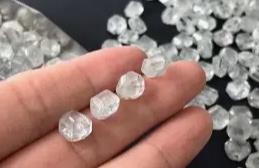
The rough crystals of HPHT diamonds usually have a special shape, mixed with cube and octahedron form. It is totally different from natural diamonds which are mostly octahedron, and CVD diamonds that look like flat plates.

HPHT tech is really good at making colorless diamonds in D-E-F color grade, and blue diamonds too. The blue color comes from boron element inside the crystal. It can also produce many other fancy colored diamonds, such as yellow and yellow-green ones.

Because metal catalyst is used during production, tiny metal inclusions can be found inside some HPHT diamonds. If you look under a microscope, these inclusions are small dark dots with metal shine. What’s more, most of these diamonds have magnetism. You can use a strong magnet to test it, the stone will be attracted.

Famous gem labs like GIA and IGI can do full identification for finished HPHT diamonds. Every official certificate will clearly mark it as Laboratory-Grown diamond, and note HPHT as its growing method. The metal inclusions and unique fluorescence pattern are the main clues for experts to tell HPHT diamonds apart.

HPHT Lab-Grown Diamonds

HPHT and CVD technology comparison

There are two main technologies to make lab diamonds in the market, HPHT and CVD. They work in different ways.

HPHT imitates the underground nature environment. It melts graphite carbon with high pressure and heat, then makes it recrystallize into diamonds. CVD uses gas as raw material. Carbon atoms separate from gas and slowly build up on diamond seeds.

Their crystal shapes are not the same. HPHT diamonds are cube or octahedron shape. CVD diamonds are flat and board-like.

In color performance, HPHT works best for colorless diamonds, blue diamonds and fancy yellow diamonds. Most original CVD diamonds have brown or grey tint. People often use HPHT treatment later to remove the bad color and turn them colorless.

For inclusions inside stones, HPHT has metal inclusions with magnetism. CVD diamonds contain graphite or other non-metal impurities, and they do not have magnetism at all.

When it comes to usage, HPHT is widely used for small diamonds, colorless stones and colored diamonds. It also acts as a color improvement process for CVD diamonds. CVD is more popular for big size diamonds and fancy shaped diamonds in the market.

HPHT is a steady and well-developed lab diamond technology. It gains great reputation for nice colorless and colored diamonds. When you plan to buy one, please check the official certificate first. Learn about its possible magnet feature, and choose honest and reliable sellers. In this way, you can get a satisfying HPHT diamond.

HPHT lab-grown diamonds are real diamonds. They share the same chemical composition, physical property, hardness and optical effect with natural diamonds. They are not diamond simulants like moissanite or cubic zirconia.

The price of HPHT diamonds is much lower. It is only one sixth to one thirteenth of natural diamonds in same grade. Even people with limited budget can afford big and high quality diamonds now. Always ask sellers for certificates from GIA or IGI. The papers can prove the diamond’s real 4C standard and confirm it is lab-grown.

Some HPHT diamonds have weak magnetism because of inner metal inclusions. You can test it with a strong neodymium magnet. This is a normal feature of HPHT diamonds, not a quality defect. But sellers should tell buyers this point clearly before deal. CVD diamonds never have magnetic property.

HPHT has great advantages on cost and efficiency when producing small melee diamonds and colored diamonds, especially blue and yellow ones. A large number of colorless CVD diamonds on sale today are processed by HPHT heat treatment to get rid of unwanted color tone.