Not all diamonds are worth buying!!!
Both milky tint and brown hue:Tap to see full diamond info
This diamond has milky:Click view detailed diamond information
This diamond has green fluorescence.:View diamond details
This diamond has a cavity:See the diamond details
A customer sent over details of a diamond listed on Blue Nile and asked whether it was a worthwhile purchase. Let’s break down all its pros and cons step by step.
First, let’s go through its basic clarity grade. This stone is graded SI1. At first glance, SI1 can be a budget-friendly choice if the inclusions are tiny, few, and hidden out of sight. Its only listed inclusion type is feather, which sounds better than diamonds packed with dark mineral spots. Black crystals easily make a stone look dirty to the naked eye, while feathers only create faint white lines under light. This single inclusion type is its only small advantage, yet every other feature pulls its value down sharply.
The biggest safety flaw comes from the distribution of feathers. Many short feathers cluster all around the girdle. The girdle is the thinnest part of a diamond and bears constant pressure in daily wear. Prongs squeeze the girdle during setting, and small knocks against tables, walls or jewelry boxes hit this area often. Multiple feathers along the edge create dozens of weak stress points. Even light impact can stretch these cracks wider over time. If any of these girdle feathers reach the surface, the risk of chipping or splitting rises drastically. Repairs for cracked diamonds cost a lot, and severe splits ruin the stone permanently.
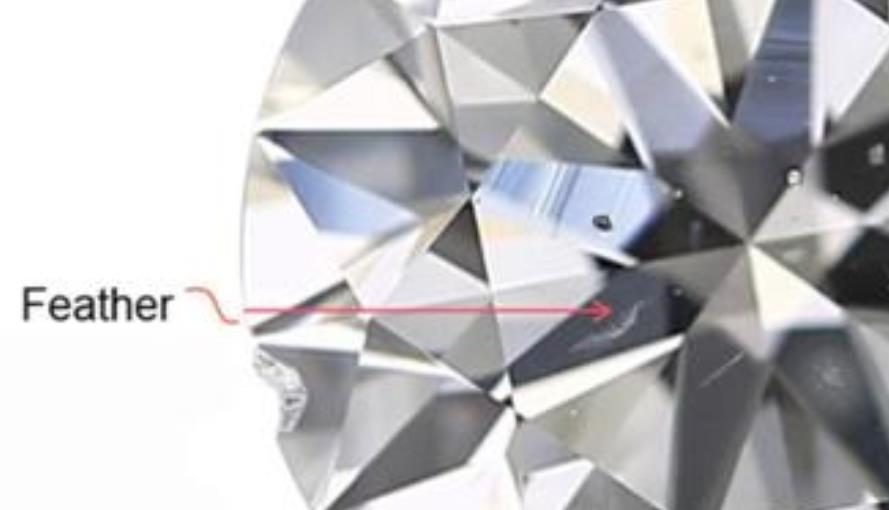
Second, there is one long feather in the pavilion that crosses two separate pavilion facets. The pavilion controls most of a diamond’s sparkle and light reflection. A long feather running across two facets forms a visible pale white streak when exposed to natural or indoor light. It blocks light travel inside the gem, cutting down brilliance and fire. Unlike tiny isolated feathers hidden at the culet, this extended crack covers a large reflective zone. Structurally, long cross-facet cracks transfer internal stress easily. A single hard bump may make the fracture spread deeper into the stone.
Another hidden problem sits in the certificate comment: clouds are not shown. This line means countless tiny cloud inclusions fill the diamond, and there are too many to mark on the clarity plot diagram. Clouds create a foggy, milky appearance inside diamonds. Instead of clear, crisp flashes of light, a stone with heavy clouds looks dull and hazy. This cloud mass is one key reason the diamond only reaches SI1 clarity; without these dense clouds, it would likely qualify for VS clarity. The white glow from feathers mixes with the milky haze from clouds, making the diamond look far less transparent than cleaner SI1 alternatives at the same price.
Now we weigh practical use and resale value. For daily-worn engagement rings or everyday jewelry, this stone is not reliable. Most buyers wear their rings nonstop while cooking, cleaning or moving around, which raises the chance of bumps and pressure. The combination of girdle feathers and a long pavilion crack makes it fragile. When it comes to resale, dealers strongly avoid stones with multiple feathers and heavy cloud coverage. Such diamonds lose far more value during trade-in than stones with minor, hidden inclusions.
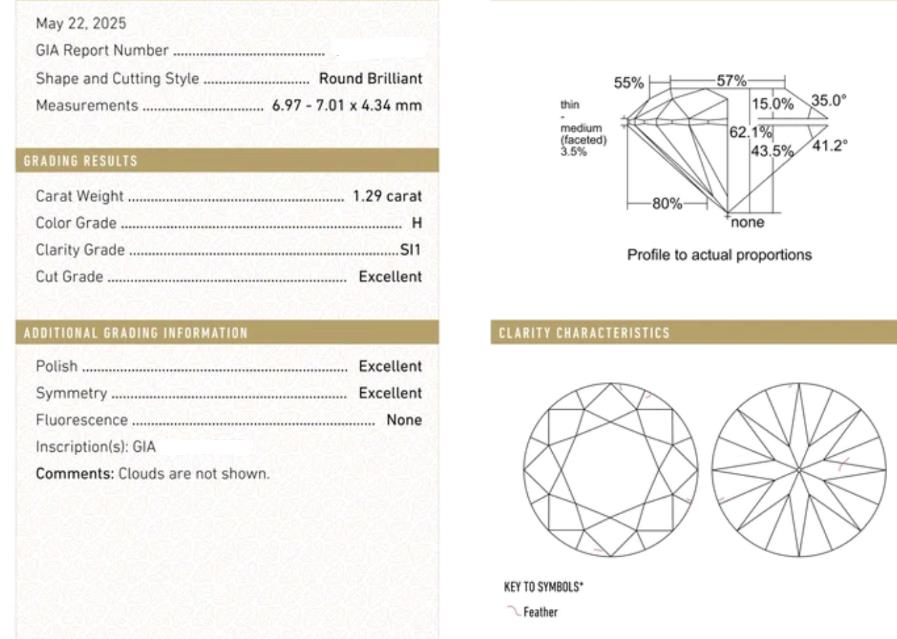
This diamond only barely works under two strict conditions. First, its price has to be at least 20 percent lower than comparable SI1 diamonds with clean inclusions. Second, the buyer plans to lock it in full bezel setting and wear it rarely, mainly for collection rather than daily use. For anyone looking for a durable, bright ring for regular wear, this option is not worth the investment.
A better standard for a good SI1 diamond on Blue Nile is clear. It should have one short internal feather away from the girdle, no cross-facet fractures, minimal tiny pinpoint inclusions, and no notes about unplotted clouds on the certificate. The clarity plot should show few marks, none touching the diamond’s outer edge. All in all, the layered flaws of clustered girdle feathers, a long pavilion cross-facet feather, and hidden dense clouds make this diamond a risky, low-sparkle pick that we do not recommend purchasing for daily wear.