Inquirer: Hi there. My maximum budget is around 9,000 Macau Patacas. I live in Macau right now. Me and my wife do not know much about diamonds at all. I really hope you can help me pick a good diamond ring, thank you so much. I have one big question that confuse me a lot. Is it more cost-effective to buy a ring setting from Bluenile directly? Or is it cheaper if I only buy a loose diamond first and send it to local stores to get it mounted later? I heard different opinions online, so I want to get a professional suggestion from you.
Ijadiamond: Well, both choices got their own good points and bad points, there is no absolute better one for everyone. Let me break it down for you in easy words. If you buy a complete ring with setting from Bluenile, the whole process is super convenient for buyers. Their workers will finish all the diamond mounting work in advance, then ship the finished ring straight to your address. Once you receive the package, you can put the ring on your finger immediately without any extra steps or waiting time. But there are obvious downsides you need to notice. The ring styles Bluenile provides are really old-fashioned and lack variety, you can barely find unique and modern designs there. Besides, their setting price is quite high compared with local mounting service in Macau.
If you only purchase a loose diamond and do the mounting locally in Macau, you will have much more freedom on ring designs. You can customize every tiny detail of the setting exactly how you and your wife like it, from band thickness to side stone decorations. The total cost of custom mounting here is also much more affordable in general. However, this choice will cost you extra time and energy. You need to spend time searching reliable local jewelers, compare their service fees, and wait for several days while they finish making your custom ring. It takes a little patience, but many customers think it worth the trouble for a personalized ring. By the way, do you have specific standards for your diamond’s carat size, color grade and clarity grade?
Inquirer: We do not have strict special standards for those parameters. Our main wish is the diamond look as big as possible within our budget. It has to be bright and sparkly under all lights. Most importantly, there should not be any obvious flaws or spots that people can see with naked eyes.
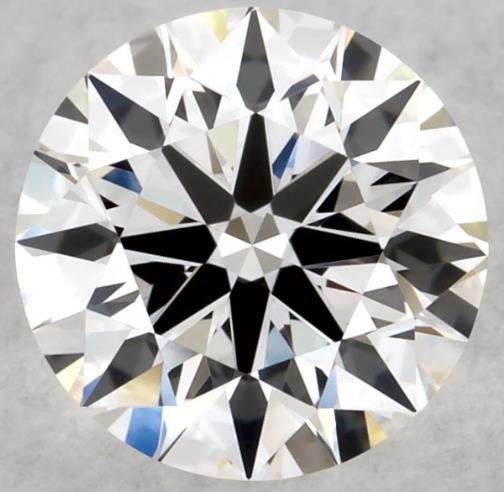
Ijadiamond: Got it, I totally understand your demands now. Your 9,000 Macau Patacas budget convert to roughly 1,000 US dollars. I can show you a really nice loose diamond that fits your budget perfectly. This stone weights 0.6 carats, and its clarity grade reaches VVS standard. G color. It looks extremely transparent and clear without cloudiness inside. The stone owns excellent cut proportions, which brings strong light reflection so it shine brightly all the time. There is no milky tint or brown tint on this diamond, it is a clean stone overall. You can click the link to check full details of this 0.6 carats VVS diamond.
Inquirer: Alright, that sound really great. Thank you very much for your thoughtful recommendation!
Client: Hi there, your article is really helpful, can you do me a favor please? I’m looking for a loose diamond around 1.04 carats. I need F color grade, clarity VS1 or higher, and my budget is under 5,000 US dollars. Could you give me some proper recommendations? Also, I spotted one or two diamonds marked with very strong or deep blue fluorescence on the product page. I wanna know what these terms actually mean, I’m totally confused about them.
IJAdiamond: Let me break this down for you. Strong blue fluorescence makes high-color grade diamonds look hazy under ultraviolet light. They don’t have that clear, transparent glow you get from non-fluorescent stones. Diamonds with fluorescence are way more common on the market. As the old saying goes, rare things cost more, so fluorescent diamonds carry a much lower price tag compared to stones with zero fluorescence.
You should never buy stones with strong yellow fluorescence though. That yellow tint visually drags down the diamond’s natural color grade, making it look dull and yellowish all the time. If you want your diamond to sparkle bright and vivid every single day, I highly suggest picking stones with 3EX cut grade. F color is already a pretty high color tier, so non-fluorescent diamonds are the best match for this grade.
But here’s a bad news for your budget. Sites like Blue Nile and James Allen (James Allen has merged with Blue Nile now) don’t have any bare diamonds that hit all your requirements cheaply. The cheapest matching loose stone—3EX cut, no fluorescence, F color, VS1+ clarity—costs at least $5,400. You’ll need to raise your budget a little bit to find a diamond that checks all your boxes.
Client: I see, that makes sense now. So which type of fluorescence is considered good if I have to pick a fluorescent stone? And if I insist on my target specs, how much extra money do I need to add to my original budget?
IJAdiamond: When two diamonds hold identical carat, color, clarity and cut specs, non-fluorescent ones are always the top choice, and they also hold the highest market price.
If you’re open to dropping your color grade to H or I, weak blue fluorescence or medium blue fluorescence stones are decent picks. The cool blue hue from the fluorescence cancels out the faint yellow tint natural to I color diamonds. This trick makes the diamond appear whiter to the naked eye, and these stones come with a really great cost performance. H color diamonds offer amazing value too; you can barely notice the subtle yellow undertones under regular natural sunlight.
But if you refuse to change your requirements—around 1.04 carats, F color, 3EX perfect cut, VS1 clarity or above—your budget needs to go up to under $6,000 total.
Client: Alright then, I’ll adjust my budget upwards. Could you help me handpick some suitable diamonds and share your recommendations with me?
IJAdiamond: Sure thing. Would you accept diamonds ranging from 1.02 carats to 1.06 carats as an alternative to exactly 1.04 carats?
Client: The ring setting I picked was labeled to fit a 1.04 carat stone. I’m not sure if the jeweler can resize it to match different carat weights. Is a 0.02 carat difference going to create any noticeable fitting issues?
IJAdiamond: There’s no need to worry about that at all. Two stones both marked 1.04 carats can have totally different physical proportions—some are deeper and narrow, others are shallow and wide. Carat weight doesn’t lock in a fixed diameter. A 1.02 carat diamond might measure wider across the table than a 1.04 carat one, and a 1.04 carat stone could look smaller than a 1.06 carat diamond depending on cutting ratios.
On top of that, the metal of ring bands has natural malleability. Jewelers can tweak the setting’s inner frame within a small range to fit whatever diamond width you end up buying.
I lean more toward the 1.04 carat option. Its cutting proportions are engineered to reflect more light, so theoretically it has stronger fire dispersion. Both stones appear eye-clean without any visible flaws to bare eyes. The only tiny downside of the 1.04ct stone is a small black crystal inclusion on its table facet, but it’s invisible when you look at it normally, so it won’t ruin the appearance at all.
The 1.03 carat diamond is also a solid choice. It features a wider table surface which boosts overall white brightness, but it carries a higher price point compared to the 1.04ct pick.
Client: Okay, thank you so much for your detailed explanation. I’ll go through the two diamond links and study them carefully. If everything looks good after my research, I will settle on the 1.04 carat diamond you recommended.
Diamond custom sellers change super fast every single day. The industry updates all the time. For example, bluenile and jamesallen have merged into one company now. No matter how the sellers shift, basic diamond knowledge never change. These rules stay the same forever.
One net friend messaged me online today. He sent me details of a diamond sold on James allen. He asked me to check if this stone worth buying. He also wanted to know whether the diamond quality is good or bad. The full information of this diamond’s GIA certificate is shown in the picture below. I took a close look at its cut proportions and physical measurements first. At first glance, this diamond looks like an ideal one. It gets three excellent cut grades totally. Diamonds with triple excellent cut always own strong fire sparkle. Its color grade is H, clarity grade VS2. Both ranks bring pretty good cost performance for regular buyers.
However, I spotted one bad mark on the flaw diagram of the certificate. The flaw type marked is cavity. This single defect cut down the diamond’s overall score a lot. Many normal inclusions are crystal, feather and needle. They appear much more frequently in loose diamonds. Compare to those common flaws, cavity brings far worse long-term influences to diamond quality. Let me explain its meaning clearly. The word cavity translates to hole mark in Chinese. It forms in two main ways. Sometimes crystals on the diamond surface fall off naturally. Other times, cutters leave angular gaps and pits during later cutting and polishing works.
Diamonds have a natural feature: they attract oil but repel water. As the customer wears the ring longer and longer, more grease stick to the diamond surface. Those cavity holes easily trap dirt and oil inside. People can hardly clean the hidden grime completely. Over time, the trapped dirt will make the diamond fire look much duller to naked eyes.
Besides that, diamonds with cavity inclusions have worse stability than standard flawless stones. Diamond material own high brittleness. They cannot stand hard hits or accidental drops at all. A cavity acts like a primary wound on the gem. Once the diamond receive a strong impact, cracks may spread along the crystal cleavage lines quickly. It might even cause big breaks in serious cases.
So my advice to this net friend is straightforward. If he can find other alternative diamonds, he’d better skip this piece completely. There are tons of high-quality loose diamonds available on James allen, baluenile and whiteflash platforms. He can pick another stone without cavity flaws to avoid all the hidden troubles in daily wearing.
Blue Nile ranks among the world’s largest loose diamond suppliers. After its full merger with James Allen in 2026, the platform has expanded its diamond inventory and lifted overall stone quality standards. It stocks countless polished diamonds sourced from global cutting workshops. If you browse patiently, you can easily find plenty of cost-effective loose stones with reliable quality. Today I will share three premium curated diamonds ideal for buyers ready to place orders.
0.70ct D VVS2 3EX Non-Fluorescent Curated Loose Diamond
The Curated Diamond series lets buyers view multi-angle real photos of every single stone. This diamond boasts top-tier color and clarity grades paired with flawless cutting performance. It comes with a formal GIA certificate, issued by the most authoritative gemstone grading lab worldwide, which fully guarantees its authenticity and quality.
0.74ct E VVS2 3EX Non-Fluorescent Curated Loose Diamond
This 0.74-carat diamond features outstanding overall parameters, comparable to the discontinued Astor diamonds from Blue Nile’s old premium line. For reference, Astor diamonds with identical grading standards used to cost twice as much as this option. It is a perfect pick for shoppers with strict standards for diamond color and clarity.
0.72ct E VVS1 3EX Non-Fluorescent Curated Loose Diamond
This 0.72-carat stone has even superior clarity at VVS1 grade, higher than the two diamonds mentioned above. Its official video footage shows crisp, flawless hearts and arrows pattern, alongside brilliant fire and light sparkle. It stands out for customers chasing ultra-clean clarity and exceptional light performance.
All three curated diamonds adopt perfect 3EX cut and carry zero fluorescence, avoiding the dull, hazy glow caused by strong fluorescence. Thanks to Blue Nile’s integrated supply chain after merging with James Allen, these premium stones are priced far more reasonably than comparable high-end diamonds sold separately elsewhere. If you plan to customize an engagement ring with a high-grade loose diamond, these three options are well worth your consideration.
Customer with diamond shopping questions: Hi there. I plan to buy an engagement diamond ring from online diamond retailers including James Allen (merged with Blue Nile in 2026), Blue Nile, Zoara (shut down permanently), Whiteflash and BGD. My total budget for a loose diamond plus ring setting is around 7,000 US dollars. I’m looking for a 1-carat stone with color grade G or higher, clarity VS2 or above. Could you help me pick a 3EX cut diamond with zero fluorescence? Also, I hope you can recommend a 4-prong ring setting with a tall profile to visually enlarge the diamond. Thanks a lot in advance!
iJadiamond: Hello! Take a look at this 1-carat diamond with G color, VVS2 clarity, perfect 3EX cut and no fluorescence. Its cut proportions and all performance metrics are flawless, and it fits right within your budget. Here’s the link for details:
Customer with diamond shopping questions: When it comes to wedding ring metal, which one works better, 18K gold or platinum?
iJadiamond: Platinum is rarer and carries a higher price tag with greater density. Settings made of 18K gold hold diamonds more securely. Most physical jewelry stores sell ring mounts crafted from 18K gold and Pt950 platinum, while 14K gold settings are far more common across the United States.
Customer with diamond shopping questions: I’ve noticed huge price gaps between diamonds of the same carat weight, color, clarity and cut grades. What leads to such obvious price differences?
iJadiamond: Two major factors cause this price discrepancy. First, subtle quality gaps exist even among stones sharing identical 4C grades. Variables like superior cutting performance, well-placed minor inclusions, and whether the diamond suffers from milky, brown or green tint all affect value. Second, diamonds sourced from separate global suppliers come with different wholesale cost bases, which directly changes final retail pricing.
Customer with diamond shopping questions: Between clarity and color, which factor matters more for a diamond’s value?
iJadiamond: Clarity usually exerts a bigger impact on diamond pricing. For your needs, a G color grade is already a fantastic choice without noticeable yellow tint to the naked eye.
Customer with diamond shopping questions: I’d like to set this diamond on an 18K gold ring. Please find a thin 4-prong design for me. My partner has a slim finger with ring size 6.
iJadiamond: Blue Nile carries a limited range of 18K gold ring settings. How about this cathedral solitaire style accented with small sapphires? It matches your requirements pretty well. The product page link is:
If you plan to purchase diamonds from Blue Nile but run into trouble with regular payment methods, you may try wire transfer via Alipay. It is surprisingly straightforward to operate. Let’s walk through the detailed steps together.
To begin with, launch the Alipay mobile application on your smartphone.
Open the page and tap the “More” option. Under the Funds Transfer tab, you can locate the Bank of Shanghai Remittance service and tap to enter it.
Update: Following Alipay’s recent app upgrade, the Bank of Shanghai Remittance function has been moved to the Transfer page. Simply enter the Transfer section to access this service. As an alternative, you may directly type “Bank of Shanghai Remittance” into the search bar on Alipay’s homepage to pull up the entry quickly.
You can then proceed with the money transfer to Blue Nile. Simply copy all the transfer details sent to your email by Blue Nile and paste them into your payment page to complete the transaction. The whole process is straightforward and hassle-free, isn’t it?
PS: Shanghai Bank has recently adjusted its single remittance limit from RMB 30,000 to RMB 18,000 per transaction. Each transfer incurs a flat handling fee of RMB 50, roughly equivalent to HK$60. Funds generally take 1 to 3 working days to arrive at the recipient’s account.
The Shanghai Bank remittance channel on Alipay only supports US dollar transfers at present. Therefore, you must select USD as the settlement currency when placing your order on Blue Nile’s official website.
If the system alerts you that the recipient address cannot contain special symbols other than slashes, question marks and spaces, replace any line breaks after “Suite 202” with regular spaces to fix the error.
When filling in the remittance purpose, choose the category labeled “Private Travel & Vacation” for individual personal transfers. If you select options for corporate or institutional payments, your bank transfer will likely get rejected.
If your total order value exceeds the single transaction cap, split the payment into multiple separate transfers. Note that daily transfer frequencies and total daily quotas are capped, so you should plan your payments well in advance.
UPS Self-Pickup Locations in Hong Kong for Blue Nile Shipments
Many customers purchase Blue Nile diamond rings but cannot sign for UPS deliveries at home due to business trips or absence. You may store your parcels temporarily at UPS self-service pick-up points for later collection. As an international logistics provider, UPS holds packages at Hong Kong pick-up locations for up to 5 working days.
To collect your parcel, you need to present valid government-issued photo ID. Mainland Chinese buyers must bring their Mainland Travel Permit for Hong Kong and Macau, and the name on your ID must match the recipient name on the shipping label. When entering your delivery address during checkout, write “UPS Hold for Pick Up” in the company name field. Below are three designated UPS pick-up locations available for Blue Nile diamond orders in Hong Kong:
UPS Parcel Pro Office
Unit 1105-1106, 11/F, Tower A, Hung Hom Commercial Centre, 39 Ma Tau Wai Road, Hung Hom, Kowloon, Hong Kong
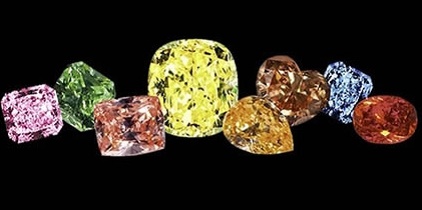
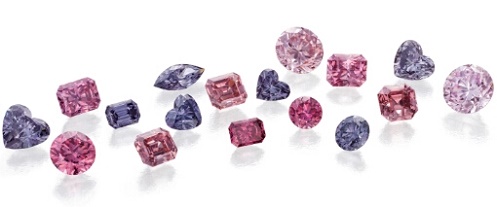
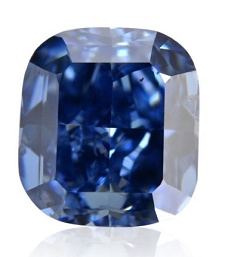
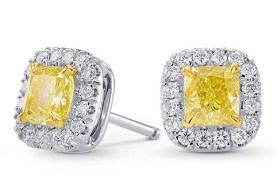
Leibish company was founded in 1979 by Leibish Polnauer, the head office of Leibish & Co. is locate in Israel diamond exchange 21 Tuval St. Yahalom Bldg., Suites 674-677 Ramat Gan, Leibish is also has branch offices in Belgium, Los Angeles, Hong Kong, New York, Taiwan, Shanghai, Mumbai, Beijing and Shenzhen, etc. As the leading company of fancy color diamonds in the world, Leibish can customize color diamond jewelry as customer’s requirement, which can also design and manufacture classic and luxury series (sunflower, canary, lilies toujours, cocoa, etc.) depend on the natural color of the diamonds for customers, with excellent workmanship and good quality, the super one to one customer service and consulting, make the company became more and more perfect as time goes by, keep high quality and authenticity of each natural color diamond is Leibish company’s business card. Leibish & Co. is a manufacturer integrating research, development, design, manufacturing and sales, all the diamond jewelry from Leibish & Co. is made of natural colored diamonds, which offers a wide range of colorful series including pink, red, green, yellow, blue, orange, gray, purple, black, violet, argyle, chameleon and champagne. Leibish & Co. not only sells loose colored diamonds, but also in the field of rare gemstones and color diamond jewelry, such as ruby, emerald and sapphires high-end jewelry.
Leibish & Co Diamond Advantages
Unconditionally refund in thirty days
All conflict free diamonds and gemstone
International free shipping
We purchase logistics insurance for every order
Free professional evaluation
Natural diamond guarantee
Exquisite packaging
Many setting species, such as halo, solitaire, etc
Don’t worry about your personal information will be leaked, because Leibish’s payment page have been using WEB security configuration and 128 – bit SSL encryption, which is the most advanced encryption technology at present
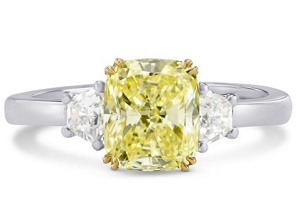
In order to certify the authenticity and quality of each diamond, Leibish & Company provides GIA appraisal certificate for every color loose diamond, in order to make Leibish’s customers feel safe and comfortable, the diamond jewellery from Leibish & Co. must strictly and accurately proofreading diamond color, carat weight and clarity grading. Leibish Company listens to the needs of customers carefully, and helping them designs the jewellery that meets customer’s requiement. Colored diamond is to be considered as a stone that is being gifted by your loved ones on your wedding day. Even your hubby can arrange a surprise for you by gifting a beautiful fancy diamond ring on your wedding day, which may be the most memorable gift you have ever got. But shopping for a beautiful colored diamond ring can bring you hasty experiences as you would not be able to compare the size and color ratings for the diamonds you desire along with the specific price tags, even after visiting a long list of jewelers. Also, problem may occur when you try to buy a brand new fancy diamond engagement ring from the diamond merchants or the jewelers, because it may seem to you that all the designs are pretty much same from the looking aspect. Then the only option remains is to plan for a custom diamond engagement ring which will be designed as per your requirement and desire, with the ultimate uniqueness signified for it.
As the member of the Israel Diamond Association and the International Association of Colored Diamond, the company take part in many exhibition such as Argyle pink diamond bidding meeting, all assessment reports signed by GIA gemstones experts, so all the colored diamonds are quality guaranteed. Leibish & Co. promises the must include information of a diamond as follows:
Fancy Color Diamond Grading Certificate
The valuation retail price
The carat weight, color and clarity of the gem
The shape of the gemstone, such as heart-shaped, pear-shaped, princess-cut, radiant cut, emerald-cut, round shape, marquise-cut, asscher-cut, oval-cut, trillion shape, and so on
Describe the jewellery completely and accurately
Materials of the jewellery setting, such as platinum, 14K gold, etc
You can create your own colored diamond engagement ring risk free at Leibish, the famous fancy color diamond and rare gemstones team is located in Ramat Gan of Israel, and there are sub offices in USA, Belgium, China and Hong Kong.
All the color diamonds are mined in Australia, Africa, India and Russia, which all legal and international confirmed, only a handful of gems can be included in the column of Leibish’s treasures, and each gemstone is carefully selected by the experts, Leibish Polnauer has more than 50 years rich experience in color diamond field, and Shmulik Polnauer, the famous gemologist graduated from Gemological Institute of America, they all believe in that the design should following the heart, every diamond from Leibish & Co. is provide with accurate product description, which is consisted of detailed actual 3d video and images. Moreover, Leibish & Co. official website is available in Australia, English, Deutsch, Traditional Chinese and Simplified Chinese.
Leibish company review
Depending on the size and the fittings which will match your colored diamond most, is also conveyed upon your choice, while you will have to provide pictures on the design that you require to the jeweler. But, at first, make it sure that the jeweler that you choose has the capability to fulfill your requirement and understands your needs regarding the design aspects of the colored diamond engagement ring. Picking up an old diamond from your some other old jeweler and creating the design based upon it may be another option for custom diamond engagement ring procurements.
Because of the super satisfaction guaranteed and 30 days free returns policy, Leibish has become one of the top fancy diamonds jewelry and rare gemstones supplier online, they can make the gems and fittings in your choice, custom fancy diamond rings can always be bought, but with the involvement of a little more amount of money. Nevertheless, the happiness of getting a unique colored diamond ring is always better when compared with paying a little bit more money. Custom fancy diamond engagement rings can be ordered to be designed by the renowned jewelers, such as Leibish & Co. which may meet as you just need to provide the information on the design as you desire. Now we introduce the pros of Leibish company for you.
Why choose Leibish & Co
Free Shipping & Easy Returns
Satisfaction Guaranteed
Exquisite Quality & Perfect Fit
Transparent Pricing & Good Quality Warranty
Responsibly Sourced Gems & Metals
Workmanship warranty & 30 days free returns policy
Expert Shopping Advice & GIA Certificate
Full Insurance & Free Professional Assessment
Concierge Service to Countries Other than USA and Canada
In a word, if we are wishing to design the colored diamond engagement ring within our budget and at a lower cost, just choose the natural colored gemstone jewelry from Leibish, as the pioneer in fancy diamond industry, which makes you more beautiful and healthy. Moreover, the package from Leibish was wonderful and beautiful-looking, join the Leibish and company newsletter list and get special offer and coupon code, then start custom our colored diamond wedding ring.
Leibish & Co Diamond Disadvantages
Because of every computer display different, Leibish & Co. does not guarantee the display we see is 100% consistent with the entity
The delivery time mainly depends on the country, it takes about three to ten business day, so you should better have free time in the next ten days to sign for your expressage.
Hello, I am Jennifer, the author of Leibish & Co diamond review, as one of the customers of Leibish company, it’s my honor to share with you my honest review. All in all, never to buy a fancy diamond before have a visit Leibish Polnauer diamonds. Contact me anytime if you have any question in fancy diamond buying.
Scope & Usage of Blue Nile UK & Europe Promo Codes
Blue Nile no longer operates separate UK and European regional websites; all shoppers now use one unified global English site. Below is the historical information about its former UK and Europe discount coupons for reference.
These old promotional codes were valid for Blue Nile’s wedding jewelry collection on the retired UK and European sites. Eligible items included ruby, sapphire and emerald jewelry, men’s and women’s wedding bands, anniversary gifts, wedding party favors, necklaces, earrings, bracelets and other gift-style accessories.
They applied to pieces crafted with all kinds of gemstones, silver, gold, pearls, platinum, 14K and 18K white and rose gold. The vouchers also covered ornaments made from palladium, tungsten, cobalt and other premium precious metals.
How to Redeem Blue Nile UK & Europe Promo Codes
Promo code: >>>> Obtain via contact email <<<<
Step 2: Add your target jewelry to the shopping cart. If your cart contains unrelated items, remove all existing goods before re-adding the eligible products.
Step 3: Enter your exclusive promo code and tap Apply instantly to unlock the biggest available discount for your order.