Not all diamonds are worth buying!!!
Both milky tint and brown hue:Tap to see full diamond info
This diamond has milky:Click view detailed diamond information
This diamond has green fluorescence.:View diamond details
This diamond has a cavity:See the diamond details
Who can relate? You’ve been racking your brain picking an engagement ring on Blue Nile just because of diamond fluorescence? So many people warn that medium fluorescence stones turn hazy and gray-looking, so I’m laying out all my honest thoughts in one go today.
First, a critical point to remember: fluorescent diamonds are not the same as milky diamonds. These two terms describe completely different stone issues and should never be mixed up.
A milky diamond has naturally cloudy crystal interiors, packed with massive cloud inclusions and white twinning lines. These flaws make the stone look dull and foggy under every type of light, no matter indoors or outdoors—it’s an unavoidable, permanent defect you can’t fix.
On the other hand, medium fluorescence only creates a faint hazy layer temporarily under strong UV rays. When you wear it indoors for daily use, the stone stays crystal clear and bright without any murky look at all.
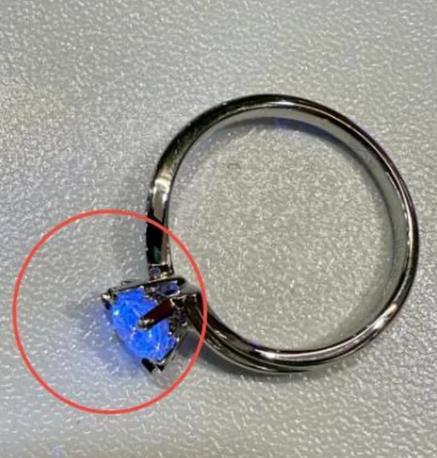
Let me break this down by diamond color grades for you.
If you’re eyeing D, E or F colorless diamonds, I honestly suggest staying away from medium fluorescence. Under direct sunlight or places with intense UV light, medium fluorescent stones will develop a thin white fog all over the surface. The diamond will look dull, gray and lifeless, losing most of its sparkle and fire instantly.
However, if you’re looking at G, H, I or J grade diamonds with slight yellow undertones, medium blue fluorescence becomes a huge bonus. The blue glow neutralizes the yellow tint inside the stone, making the diamond appear cleaner and whiter to the naked eye, with barely any gray haze showing up. The cost performance is incredible. When worn for work, dates or under regular indoor lighting, you can barely tell the difference between a medium fluorescent diamond and a non-fluorescent one—both shine beautifully enough for daily wear. The faint blue foggy effect only becomes noticeable when exposed to harsh midday sun or UV flashlights.
With identical 4C specifications, medium fluorescent diamonds cost 16% to 20% less than non-fluorescent ones, which perfectly proves the rule that rare items carry higher value. Most natural diamonds carry some level of fluorescence, just in varying strengths. Under 365nm ultraviolet light, GIA grades a diamond as non-fluorescent if its glow falls below the standard set by Faint fluorescence reference stones.
Medium fluorescence works great for you if you only wear the ring daily, have a tight budget, want a larger carat size, and have no plans to resell or trade the diamond later.
You should think twice about medium fluorescence if you crave absolute crystal clarity, plan to buy D-F top color stones, or intend to recycle or upgrade your ring in the future.
Final buying tips for diamond shoppers:
For D, E, F top color diamonds: Go for non-fluorescent or faint fluorescent stones, avoid medium fluorescence entirely.
For standard G-J colored diamonds: Medium fluorescence is totally worth buying—it saves money and brightens the stone visually.
If you are a perfectionist who chases flawless visual quality: Stick strictly to non-fluorescent diamonds.
Don’t follow online trends blindly when shopping for your wedding diamond; the most cost-effective choice always matches your personal needs. If you run into any troubles selecting diamonds on Blue Nile, feel free to reach out to us for help.