Not all diamonds are worth buying!!!
Both milky tint and brown hue:Tap to see full diamond info
This diamond has milky:Click view detailed diamond information
This diamond has green fluorescence.:View diamond details
This diamond has a cavity:See the diamond details
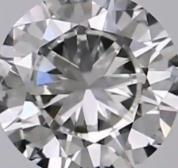
The fish eye effect is a common optical issue in diamonds. When you look straight down from the table, you can see the reflected edges of the pavilion facets. It forms a pale grey or white ring, just like the eye of a fish. A diamond with fish eye effect looks dull and lifeless. There is a dark empty circle right in the center. It lose its normal brightness and fire completely.
This problem is caused by poor cutting, which leads to serious light leakage inside the stone. The diamond looks dim and unattractive, just like a dead fish’s eye. This also tell us an important truth. We cannot choose a diamond only by the GIA Excellent cut grade. A high grade on paper does not always mean the diamond perform well in real view.
When you buy a diamond, you must check both the certificate data and the actual appearance of the stone. In this way, you will not only get a nice report, but also a real brilliant and beautiful gem.
What causes the fish eye effect?
The main reasons come from improper cutting. It mostly happens when the total depth is too shallow, and the crown angle and pavilion angle do not match well. Here are the key causes in detail.
First of all, a shallow pavilion. If the pavilion angle is too small, or the pavilion depth percentage is too low, light cannot create total internal reflection inside the diamond.
Then light leakage occurs. Instead of reflecting back to your eyes through the table, light escape directly from the sides of the pavilion. This is the core of the problem.
Because of such light loss, you can clearly see the reflection of the diamond’s girdle when looking from the top. A white grey ring will appear around the center. That is exactly the fish eye we talk about.
Here is a simple example to help you understand. Imagine a swimming pool that is too shallow. Standing on the bank, you can easily see the tile lines along the pool bottom. You cannot feel the deep sense of water at all. It is the same logic with diamonds.
How to spot potential fish eye effect from a GIA certificate?
We cannot confirm the problem 100% only by papers. But you can check the proportions section on GIA reports to rule out high-risk diamonds.
Low pavilion depth percentage is the biggest warning sign. Generally speaking, if the pavilion depth is below 40.0%, the risk of fish eye effect is very high.
A too small crown angle will make the situation worse. When crown angle is less than 30.6°, matching with a shallow pavilion, the fish eye issue become much more obvious.
Besides, an overly large table also raise the risk. When table percentage is over 62%, there are fewer facets to spread light evenly inside the diamond.
You need to keep one thing in mind. Even if the diamond is graded Excellent in cut, it may still have slight fish eye effect. GIA cut grading covers a range of proportions. Diamonds at the lower limit of Excellent grade often have much worse optical performance than top-level stones in the same grade.
How to avoid buying diamonds with fish eye effect?
Never buy a diamond just based on its certificate. This is the most important rule. Certificate is just a basic reference. Real inspection or high-definition videos are the key.
Study the proportions on GIA certificates carefully. Try to pick diamonds within the safe range. These are the ideal proportion ranges recommended in the industry:
Pavilion Depth: 42.5% to 43.5%
Crown Angle: 34° to 35.5°
Table Percentage: 54% to 58%
Total Depth: 59.0% to 62.5%
These are standard ideal ranges. A little out of the range does not definitely cause problems. But the further it deviates, the higher the risk will be.
Always check the diamond in person, or ask the seller for real videos.
If you can see the stone face to face, place it on a white paper. Look down from the table. If you notice a vague white or grey ring in the center, it has the fish eye effect.
If you shop online, ask reliable sellers for 360° high-definition videos of the diamond. Watch the video slowly. Turn the stone and check the front view again and again for any sign of fish eye. Trustworthy merchants will not sell such defective diamonds secretly. They will take initiative to tell customers about all existing flaws.